

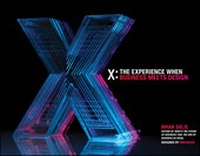
X
Description

More details
Other editions
Additional editions


Person
Content
1.0
THIS IS X
EXPERIENCE IS THE NEW BRAND. EXPERIENCES ARE THE NEW BRANDING.
THE FUTURE IS EXPERIENCE.
The most beautiful thing we can experience is the mysterious. It is the source of all true art and science.
-Albert Einstein
CLOSE YOUR EYES FOR A MOMENT AND THINK ABOUT THE LAST TIME YOU TRULY HAD A GREAT EXPERIENCE WITH A COMPANY AS A CONSUMER, AN EXPERIENCE THAT CAPTURED YOUR HEART, MIND, AND SPIRIT.
WHAT ABOUT IT WAS SPECIAL?
LET'S CALL IT "X"-THAT JE NE SAIS QUOI THAT MAKES SOMETHING SO SPECIAL.
THIS BOOK IS ABOUT X, CREATING SUCH MEMORABLE MOMENTS FOR YOUR CUSTOMERS THROUGH EVERY ENCOUNTER THEY HAVE WITH YOUR BRAND-ALL DAY, EVERY DAY.
What is X?
In math, x represents a variable to be solved for. In business, the x we must solve for is the experience we want to give our customers. Of course, the idea that businesses should focus on customer experience isn't new. But we've entered a new era in experience creation, and businesses that don't learn to craft much more satisfying experiences for their customers have a great deal to lose.
In 1998, B. Joseph Pine II and James H. Gilmore published a controversial essay in the Harvard Business Review heralding the era of "The Experience Economy."1 They put forward the idea that businesses should creatively orchestrate memorable events for their customers, and those experiences, and the memories they instilled, would become part of the product and brand. Pine and Gilmore defined experience this way: "An experience occurs when a company intentionally uses services as the stage, and goods as props, to engage individual customers in a way that creates a memorable event."
They used two great examples, which are oldies but goodies, showcasing how Chuck E. Cheese and the Discovery Zone were pioneers in productizing experiences. Both companies created complete ecosystems that enchanted children, and equally as important allowed parents to become heroes for having taken their kids there. They both, however, stopped trying to compete for relevance as consumers changed and, as such, the experience becomes dated.
Since then a great deal more has been written about the value of offering customers superior experiences. Apple showed how to do so masterfully with the launch of the iPhone in 2007 and its rich experience ecosystem, built right into the product. Yet few companies have followed effectively in Apple's footsteps even though everyone talks about doing so. So many still choose to increase profitability or tolerate mediocrity at the expense of the experience, even though it's been clearly demonstrated that consumers will pay a premium for a better experience.
We know that giving our customers delightful experiences is important, and as consumers, we know the quality of experiences we want. So why is it that when we get into work, we lose this customer perspective?
Part of the problem is that how to go about creating truly meaningful experiences for customers is still so little understood. Who in business hasn't heard the mantra, "Customer experience is the new competitive advantage?" But has anyone actually told you how to design experiences, or articulated exactly what the standard for a good experience is? People in different silos of a company will give different answers about how to deliver on experience. Product managers will say, "Design great products." Customer relations managers will say, "Make customer service matter again!" Those in marketing will focus on creative campaigns and branding.
This book introduces a transformative approach to customer experiences by design: human-centered experience architecture. This approach defines customer experience as the sum of all customer engagements in each touch-point and every "moment of truth" throughout the customer lifecycle.
Experience architecture is the art of engendering desired emotions, outcomes, and capabilities throughout the customer journey. It is the process of strategically designing and strengthening a customer's entire spectrum of interactions with a product or company.2
Creating a great customer experience used to require that companies merely present information and functionality in a usable, efficient, and enjoyable manner. But this is no longer enough. Customers are placing greater demands not just on products and services, but on the ongoing experiences that their interactions with companies offer. If they can't get what they want, they'll hack their way to it.
Experiences are more important than products now. In fact, experiences are products. They've also become a lively topic of consumer comment for all the world to hear. People increasingly share their experiences with companies and products in our connected economy, and we can either be active participants in creating and nurturing desired experiences or spend more and more time trying to react or make up for bad experiences. What's more, consumer demands continue to evolve. We're just getting started.
In order to be competitive, brands must get better not only at understanding and satisfying customers' wants and needs but at anticipating them, even before customers know what they want and need. This type of experience design is referred to as creating proactive experiences, and these are quickly becoming the new standard.3
For example, Google's Nest home thermostat understands the consumer's comings and goings, both in leaving the home and in moving around in the home during the course of the day and night. It proactively sets room temperature accordingly, saving users money. And over time, it keeps getting smarter. Nest creates an experience that becomes almost invisible and yet is delightful.
But that's not all. Nest is also a hub for other connected devices, ranging from lightbulbs to appliances. Imagine your lights turning on and some of your favorite music playing as you walk in the door from a hard day at work.
Consider what Disney is doing to improve customer experiences at Disneyland resorts and parks. The company has created a wearable computer bracelet called Magic Band, with sophisticated technology built in that provides consumers with a seamless, invisible ability to
Make purchases without a credit card or cash.
Get in and out of the park.
Review and optimize wait times.
Book FastPasses.
Open the hotel room door.
Make dinner reservations.
Receive personalized offers.
Not only are Disney's customers delighted, the company is able to mine a trove of data from each band in the aggregate, allowing it to discover new ways to
Increase loyalty.
Increase revenue.
Drive attendance up.
Uncover insights and preferences.
Introduce personalization through advanced CRM.
Improve operational efficiencies.
At the end of 2014, Disney reported that U.S. park attendance rose 7 percent in the three months that ended December 27, which is a record.4 In addition, the occupancy at Disney resort hotels also jumped up by 8 percent to 89 percent, which is considered in the resort business as close to fully booked as possible. The company also reported a 20 percent increase in income from its parks and resorts compared to the same period a year ago.
Disney's MagicBand is a brilliant representative of the possibilities of the new era of experience architecture. To get an even better sense of the possibilities, imagine a Disney MagicBand for patients, replacing ID bracelets in hospitals. Mark Rolston, who was the chief creative officer at Frog when the design firm developed the MagicBand, described how his new firm, argodesign,5 has envisioned the use of the MagicBand in hospitals:
Right now, the number of staff used to move people around is high. As we move into the future, trying to reduce costs, you might imagine a hospital being much more like a mall, with a greater deal of self-service. . . . Someone heads down to radiology, gets scanned, and they don't have to check back in.
Here, the experience is frictionless and invisible.
Now ask yourself what your company is doing to move into this new era of experience architecture.
1 http://hbr.org/1998/07/welcome-to-the-experience-economy/ar/1.
2 www.marketingprofs.com/6/duncan3.asp.
3 http://uxmag.com/articles/proactive-experiences-and-the-future-of-ux.
4 www.latimes.com/business/la-fi-attendance-at-disney-parks-up-7-review-of-magic-bracelet-strong-20150203-story.html.
1.1
CX = $
IS YOUR CUSTOMER EXPERIENCE REALLY A PRIORITY?
IF NOT, YOU'RE PAYING A PRICE
Apple, Disney, and Nest are the exceptions to the rule; the rule is that in general customers receive impersonal treatment and experience great frustration with products and services. And because so few companies offer quality experiences, customers are willing to pay more for them. Any company that shows any semblance of empathy now possesses a tremendous competitive advantage. Even so, most companies have been unable to elevate the quality of the experience they offer to anything close to what customers are demanding.
Every year, American Express releases its Global Customer Service Barometer report, which captures the state of customer sentiment.1 At the time of this book, American Express found that only one third or fewer...
