

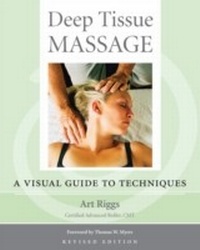
Deep Tissue Massage, Revised Edition
A Visual Guide to Techniques
1st Edition
Published on 30. October 2012
304 pages
978-1-58394-642-8 (ISBN)
Description

Featuring more than 250 photographs and 50 anatomical drawings, Deep Tissue Massage is the standard guide to the essentials of touch, biomechanics, and positioning options for a multitude of strategies to treat all major conditions encountered in a bodywork practice.The book is divided into three sections. Fundamentals covers basic skills of palpation, explaining the deeper layers of the body and presenting detailed instruction on working with these layers to release tension. This section gives clear information on the proper use of knuckles, fist, forearms, and elbows in preventing injury to the therapist. Strategies offers more precise protocols and treatment plans for the entire body with emphasis on client positioning options to stretch muscles rather than just kneading tissues. Caveats details areas in which the practitioner needs to exercise caution.Deep Tissue Massage presents a wealth of information in a way the therapist can immediately utilize. This new edition has been thoroughly revised and includes a preface to the new edition, a foreword, an index, a Suggested Reading list, and extended sections on integrating deep-tissue massage into bodywork practice and the psychology of treating injuries.
More details
Other editions
Additional editions
Book
06/2007
North Atlantic Books,U.S.
€42.50
Shipment within 3-4 weeks
Person
Art Riggs is a Certified Advanced Rolfer and massage therapist who has taught bodywork since 1988. A frequent conductor of workshops for medical professionals, including physical therapists, he lives in the San Francisco Bay Area.
Content
- Intro
- Title Page
- Copyright
- Epigraph
- Acknowledgments
- Contents
- List of Figures
- Foreword
- Preface to the 2007 Edition
- Introduction
- What Is Deep Tissue Massage?
- Why Study Deep Tissue Massage?
- Safety First: Caveats
- Caveats
- Areas for Caution
- Chapter One. General Theories
- Principles of Deep Tissue Massage
- Reading the Body
- Refining Your Touch
- Quality of Touch
- How to Cultivate Your Touch
- Receive Work from Accomplished Bodyworkers
- Take Continuing Education Classes
- Schedule a Tutorial
- Practice Palpation
- Some Aspects That Define Touch
- A Soft Touch
- The Distinction Between Compressing and Stretching Tissue
- Biomechanics
- Proper Working Distance from Client
- The All-Important Melt of Muscle Tissue
- A Few Words about Pain
- Direction of Strokes
- Some Basic Stroke Strategies
- Lengthening Strokes
- Anchor and Stretch
- Working in the Direction of Stretch
- Cross-Fiber Strokes
- Separating Muscle Compartments
- Freeing Muscles from Entrapment
- Allowing a Muscle to Shorten
- Chapter Two. General Techniques
- The Hierarchy of Power
- Just Say "No" to Thumbs
- Proper Use of the Fingers
- Use of Knuckles Instead of Thumbs
- An Example: Knuckles and Fingers-Occiput, Forehead, Temple
- Use of the Fist
- Use of the Forearm
- Use of the Elbow
- General Strategies
- Placing Muscles in a Stretched Position
- Making Use of The Side-Lying Position
- Working the Adductors in the Side-Lying Position
- Other Uses of Side-Lying
- Using a Full Range of Alternatives in Position
- Chapter Three. Specific Strategies
- Working with the Foot and Lower Leg
- High and Low Arches
- The Plantar Surface of the Foot
- Ankle Retinaculum
- Anterior Leg
- Posterior Leg
- Prone Position
- Side-Lying and Supine Position
- Working with the Upper Leg
- Working the Adductors in Side-Lying Position
- Upper Leg Variations
- Abductors of the Leg
- Tensor Fasciae Latae
- Working with the Pelvis
- Gluteus Maximus Muscle
- External Rotators of the Leg
- Other Pelvic Options
- The Sacrum
- The Coccyx
- The Sacrotuberous Ligament
- Working with the Pelvis and Low Back
- Quadratus Lumborum
- Working with the Abdomen
- Psoas and Iliacus Muscles
- Working with the Breath
- Working with the Upper and Mid-Back
- Vertebrae, Ribs, and Paraspinal Muscles
- Side-Lying Techniques
- Back Extension
- Back Flexion
- Spinal Rotation Techniques
- Working with the Shoulder Girdle and Chest
- The Chest
- The Rotator Cuff
- The Scapula
- Freeing the Lateral Scapula
- Freeing the Medial Border of the Scapula
- Working with the Arms
- Working with the Hands
- Working with the Neck
- The First Rib and Its Importance for Neck Work
- Working with the Anterior Neck
- Strategies for Prone Neck Work
- Working with the Skull
- The Occipital Ridge
- General Skull Work
- Anterior and Medial Skull Work
- Working with the Jaw and TMJ
- Cranial Decompression
- Chapter Four. Your Role in Looking out for the Health of Your Clients.
- An Ounce of Prevention
- Back Pain
- Neck Pain
- Headaches
- More Serious Conditions
- Malignant Melanoma
- Breast Cancer
- Emotions and Massage
- Chapter Five. Therapeutic Strategies for Addressing Common Complaints and Injuries
- Troubleshooting Guide
- Treating the Person and Not Just the Injury
- Planning Your Session
- The Intangibles-Your Healing Manner
- Red Tape
- Billing
- Applications
- The Ankle
- Soft Tissue Strategies
- Working in Gravity
- Strengthening Strategies
- Stretching Strategies
- Plantar Fasciaitis
- Soft Tissue Strategies
- Stretching Strategies
- The Knee
- Patellar Alignment
- Soft Tissue Strategies
- The Iliotibial Band
- Working with the Adductors
- Knee Tracking
- Strengthening Strategies
- Stretching Strategies
- Tennis Elbow and Golfer's Elbow
- Soft Tissue Strategies
- Strengthening Strategies
- Stretching Strategies
- Carpal Tunnel Syndrome
- The Low Back
- Soft Tissue Strategies
- Working the Low Back in Flexion and Extension
- Strengthening Strategies
- Stretching Strategies
- Sciatica
- Soft Tissue Strategies
- Strengthening and Stretching Strategies
- Piriformis Syndrome and Sciatica
- Locating the Piriformis
- Soft Tissue Strategies for the Piriformis
- The Shoulder
- Soft Tissue Strategies
- Strengthening Strategies
- Determining Restrictions in Arm Rotation
- Stretching Strategies
- PNF Stretches
- Chapter Six. Planning Your Session
- Establishing a Strategy for Your Session
- Primary and Secondary Tightness
- A Short and Tight Muscle Versus a Long and Tight Muscle
- Bodyreading
- Front-to-Back Balance
- Side-to-Side Balance
- Internal Versus External Patterns
- Active Versus Passive Movements
- Seated Work
- Seated Trapezius Work
- Seated Scapula Work
- Extending the Thoracic Spine
- Stretching the Lumbar Fascia
- Shoulder Girdle Work
- Integrating Strokes and Strategies into Your Massage Style
- Chapter Seven. Fulfillment Through a Thriving Practice
- Moving Forward with Your Knowledge
- Time Management
- Other Pitfalls that Limit Growth
- The Realities of Entering the Bodywork Profession
- Practical Matters
- Self-Esteem
- Distinguishing Yourself
- Fulfillment Through Self-Expression
- Suggested Reading
- About the Author
