

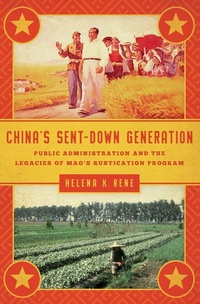
China's Sent-Down Generation
Description

During China's Cultural Revolution, Chairman Mao Zedong's "rustication program" resettled 17 million urban youths, known as "sent downs," to the countryside for manual labor and socialist reeducation. This book, the most comprehensive study of the program to be published in either English or Chinese to date, examines the mechanisms and dynamics of state craft in China, from the rustication program's inception in 1968 to its official termination in 1980 and actual completion in the 1990s.
Rustication, in the ideology of Mao's peasant-based revolution, formed a critical component of the Cultural Revolution's larger attack on bureaucrats, capitalists, the intelligentsia, and "degenerative" urban life. This book assesses the program's origins, development, organization, implementation, performance, and public administrative consequences. It was the defining experience for many Chinese born between 1949 and 1962, and many of China's contemporary leaders went through the rustication program.
The author explains the lasting impact of the rustication program on China's contemporary administrative culture, for example, showing how and why bureaucracy persisted and even grew stronger during the wrenching chaos of the Cultural Revolution. She also focuses on the special difficulties female sent-downs faced in terms of work, pressures to marry local peasants, and sexual harassment, predation, and violence. The author's parents were both sent downs, and she was able to interview over fifty former sent downs from around the country, something never previously accomplished.
China's Sent-Down Generation demonstrates the rustication program's profound long-term consequences for China's bureaucracy, for the spread of corruption, and for the families traumatized by this authoritarian social experiment. The book will appeal to academics, graduate and undergraduate students in public administration and China studies programs, and individuals who are interested in China's Cultural Revolution era.
More details
Other editions
Additional editions
Person
Helena Rene completed her PhD in public administration at American University in 2010. She is a member of the board of directors of the Washington Institute of China Studies. Previously, she was a visiting lecturer at Hong Kong Polytechnic University and an adjunct professor of political science at Hood College.
Content
Preface
1. The Problem: How Was China Able to Send Seventeen Million Urban Youth to the Countryside during the Cultural Revolution?
2. Administering Economic Development: A Prelude to the Cultural Revolution and Rustication
3. The Politics of the Cultural Revolution (1965-67): Toppling Bureaucrats, Perduring Bureaucracy
4. Rustication: Policy and Administrative Implementation
5. Public Administration and the Sent-Down Experience
6. Conclusion: Rustication as Public Administration
Appendix A: Interviewee Profiles
Appendix B: Interview Schedule
Glossary
References
Index
