

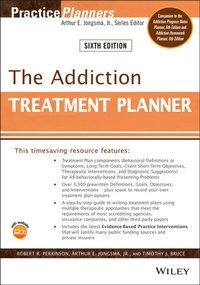
The Addiction Treatment Planner
Description

The Addiction Treatment Planner, Sixth Edition: provides all the elements necessary to quickly and easily develop formal treatment plans that satisfy the demands of HMOs, managed care companies, third-party payers, and state and federal agencies. This valuable resource contains treatment plan components for 48 behaviorally based presenting problems including depression, intimate relationship conflicts, chronic pain, anxiety, substance use, borderline personality, and more. You'll save hours by speeding up the completion of time-consuming paperwork, without sacrificing your freedom to develop customized treatment plans for clients.
This updated edition includes new and revised evidence-based objectives and interventions, new online resources, expanded references, an expanded list of client workbooks and self-help titles, and the latest information on assessment instruments. In addition, you'll find new chapters on some of today's most challenging issues- Opiod Use Disorder, Panic/Agoraphobia, Loneliness, and Vocational Stress. New suggested homework exercises will help you encourage your clients to bridge their therapeutic work to home.
* Quickly and easily develop treatment plans that satisfy third-party requirements.
* Access extensive references for treatment techniques, client workbooks and more.
* Offer effective and evidence-based homework exercises to clients with any of 48 behaviorally based presenting problems.
* Enjoy time-saving treatment goals, objectives and interventions- pluse space to record your own customized treatment plan.
This book's easy-to-use reference format helps locate treatment plan components by presenting behavioral problem or DSM-5 diagnosis. Inside, you'll also find a sample treatment plan that conforms to the requirements of most third-party payors and accrediting agencies including CARF, The Joint Commission (TJC), COA, and the NCQA. The Additction Treatment Planner, Sixth Edition: will liberate you to focus on what's really important in your clinical work.
More details
Other editions
Additional editions
Previous edition
Persons
ARTHUR E. JONGSMA, Jr., PhD, is Series Editor for the bestselling PracticePlanners. He has provided professional mental health services to both inpatient and outpatient clients for approximately 50 years. He was the Founder and Director of Psychological Consultants, a group private practice in Michigan for 25 years.
TIMOTHY J. BRUCE, PhD, is Professor and Associate Chair of the Department of Psychiatry and Behavioral Medicine at the University of Illinois College of Medicine.
Content
- Cover
- Title Page
- Copyright Page
- About The Companion Website
- Contents
- Contents Listed by Asam Assessment Dimensions
- PracticePlanners® Series Preface
- Introduction
- About PracticePlanners® Treatment Planners
- About The Addiction Treatment Planner
- How to Use This Treatment Planner
- A Final Note on Tailoring the Treatment Plan to the Client
- References
- Sample Treatment Plan
- 1. Substance Use Disorder
- 2. Diagnosis
- Chapter 1 Adult-Child-of-an-Alcoholic (ACA) Traits
- Behavioral Definitions
- Long-Term Goals
- Diagnostic Suggestions
- Chapter 2 Anger
- Behavioral Definitions
- Long-Term Goals
- Diagnostic Suggestions
- Chapter 3 Antisocial Behavior
- Behavioral Definitions
- Long-Term Goals
- Diagnostic Suggestions
- Chapter 4 Anxiety
- Behavioral Definitions
- Long-Term Goals
- Diagnostic Suggestions
- Chapter 5 Attention-Deficit/Hyperactivity Disorder (ADHD) - Adolescent
- Behavioral Definitions
- Long-Term Goals
- Diagnostic Suggestions
- Chapter 6 Attention-Deficit/Hyperactivity Disorder (ADHD) - Adult
- Behavioral Definitions
- Long-Term Goals
- Diagnostic Suggestions
- Chapter 7 Bipolar Disorder
- Behavioral Definitions
- Long-Term Goals
- Diagnostic Suggestions
- Chapter 8 Borderline Traits*
- Behavioral Definitions
- Long-Term Goals
- Diagnostic Suggestions
- Chapter 9 Childhood Trauma
- Behavioral Definitions
- Long-Term Goals
- Diagnostic Suggestions
- Chapter 10 Chronic Pain
- Behavioral Definitions
- Long-Term Goals
- Diagnostic Suggestions
- Chapter 11 Conduct Disorder/Delinquency
- Behavioral Definitions
- Long-Term Goals
- Diagnostic Suggestions
- Chapter 12 Dangerousness/Lethality
- Behavioral Definitions
- Long-Term Goals
- Diagnostic Suggestions
- Chapter 13 Dependent Traits
- Behavioral Definitions
- Long-Term Goals
- Diagnostic Suggestions
- Chapter 14 Depression - Unipolar
- Behavioral Definitions
- Long-Term Goals
- Diagnostic Suggestions
- Chapter 15 Eating Disorders and Obesity
- Behavioral Definitions
- Long-Term Goals
- Diagnostic Suggestions
- Chapter 16 Family Conflicts
- Behavioral Definitions
- Long-Term Goals
- Diagnostic Suggestions
- Chapter 17 Gambling
- Behavioral Definitions
- Long-Term Goals
- Diagnostic Suggestions
- Chapter 18 Grief/Loss Unresolved
- Behavioral Definitions
- Long-Term Goals
- Diagnostic Suggestions
- Chapter 19 Impulsivity
- Behavioral Definitions
- Long-Term Goals
- Diagnostic Suggestions
- Chapter 20 Legal Problems
- Behavioral Definitions
- Long-Term Goals
- Diagnostic Suggestions
- Chapter 21 Living Environment Deficiency
- Behavioral Definitions
- Long-Term Goals
- Diagnostic Suggestions
- Chapter 22 Medical Issues
- Behavioral Definitions
- Long-Term Goals
- Diagnostic Suggestions
- Chapter 23 Narcissistic Traits
- Behavioral Definitions
- Long-Term Goals
- Diagnostic Suggestions
- Chapter 24 Nicotine Abuse/Dependence
- Behavioral Definitions
- Long-Term Goals
- Diagnostic Suggestions
- Chapter 25 Obsessive-Compulsive and Related Disorders
- Behavioral Definitions
- Long-Term Goals
- Diagnostic Suggestions
- Chapter 26 Occupational Problems
- Behavioral Definitions
- Long-Term Goals
- Diagnostic Suggestions
- Chapter 27 Opioid Use Disorder
- Behavioral Definitions
- Long-Term Goals
- Diagnostic Suggestions
- Chapter 28 Oppositional Defiant Behavior
- Behavioral Definitions
- Long-Term Goals
- Diagnostic Suggestions
- Chapter 29 Panic Disorder/Agoraphobia
- Behavioral Definitions
- Long-Term Goals
- 29.3. Diagnostic Suggestions
- Chapter 30 Parent-Child Relational Problem
- Behavioral Definitions
- Long-Term Goals
- Diagnostic Suggestions
- Chapter 31 Partner Relational Conflicts
- Behavioral Definitions
- Long-Term Goals
- Diagnostic Suggestions
- Chapter 32 Peer Group Negativity
- Behavioral Definitions
- Long-Term Goals
- Diagnostic Suggestions
- Chapter 33 Posttraumatic Stress Disorder (PTSD)
- Behavioral Definitions
- Long-Term Goals
- Diagnostic Suggestions
- Chapter 34 Psychosis
- Behavioral Definitions
- Long-Term Goals
- Diagnostic Suggestions
- Chapter 35 Readiness to Change
- Behavioral Definitions
- Long-Term Goals
- Diagnostic Suggestions
- Chapter 36 Relapse Proneness
- Behavioral Definitions
- Long-Term Goals
- Diagnostic Suggestions
- Chapter 37 Self-Care Deficits - Primary*
- Behavioral Definitions
- Long-Term Goals
- Diagnostic Suggestions
- Chapter 38 Self-Care Deficits - Secondary
- Behavioral Definitions
- Long-Term Goals
- Diagnostic Suggestions
- Chapter 39 Self-Harm
- Behavioral Definitions
- Long-Term Goals
- Diagnostic Suggestions
- Chapter 40 Sexual Abuse
- Behavioral Definitions
- Long-Term Goals
- Diagnostic Suggestions
- Chapter 41 Sexual Promiscuity
- Behavioral Definitions
- Long-Term Goals
- Diagnostic Suggestions
- Chapter 42 Sleep Disturbance
- Behavioral Definitions
- Long-Term Goals
- Diagnostic Suggestions
- Chapter 43 Social Anxiety
- Behavioral Definitions
- Long-Term Goals
- Diagnostic Suggestions
- Chapter 44 Spiritual Confusion
- Behavioral Definitions
- Long-Term Goals
- Diagnostic Suggestions
- Chapter 45 Substance-Induced Disorders
- Behavioral Definitions
- Long-Term Goals
- Diagnostic Suggestions
- Chapter 46 Substance Intoxication/Withdrawal
- Behavioral Definitions
- Long-Term Goals
- Diagnostic Suggestions
- Chapter 47 Substance Use Disorders
- Behavioral Definitions
- Long-Term Goals
- Diagnostic Suggestions
- Chapter 48 Suicidal Ideation
- Behavioral Definitions
- Long-Term Goals
- Diagnostic Suggestions
- Appendix A Bibliotherapy Suggestions
- General
- Adult-Child-of-an-Alcoholic (ACA) Traits
- Anger
- Antisocial Behavior
- Anxiety
- Attention-Deficit/Hyperactivity Disorder (ADHD) - Adolescent and Adult
- Bipolar Disorder
- Borderline Traits
- Childhood Trauma
- Chronic Pain
- Conduct Disorder/Delinquency
- Dangerousness/Lethality
- Dependent Traits
- Depression - Unipolar
- Eating Disorders and Obesity
- Family Conflicts
- Gambling
- Grief/Loss Unresolved
- Impulsivity
- Legal Problems
- Living Environment Deficiency
- Medical Issues
- Narcissistic Traits
- Nicotine Abuse/Dependence
- Obsessive-Compulsive and Related Disorders
- Occupational Problems
- Opioid Use Disorder
- Oppositional Defiant Behavior
- Panic Disorder/Agoraphobia
- Parent-Child Relational Problem
- Partner Relational Conflicts
- Peer Group Negativity
- Posttraumatic Stress Disorder (PTSD)
- Psychosis
- Readiness to Change
- Relapse Proneness
- Self-Care Deficits - Primary
- Self-Care Deficits - Secondary
- Self-Harm
- Sexual Abuse
- Sexual Promiscuity
- Sleep Disturbance
- Social Anxiety
- Spiritual Confusion
- Substance-Induced Disorders
- Substance Intoxication/Withdrawal
- Substance Use Disorders
- Suicidal Ideation
- Appendix B References to Clinical Resources for Evidence-Based Chapters
- Homework Planners
- Anger Control Problems
- Anxiety
- Attention Deficit Disorder - Adolescent
- Attention Deficit Disorder - Adult
- Bipolar Disorder - Depression
- Bipolar Disorder - Mania
- Borderline Traits
- Chronic Pain
- Conduct Disorder/Delinquency
- Depression-Unipolar
- Eating Disorders and Obesity
- Anorexia Nervosa
- Bulimia Nervosa
- Binge Eating Disorder
- Obesity
- Family Conflicts
- Gambling
- Grief/Loss Unresolved
- Medical Issues
- Nicotine Abuse/Dependence
- Obsessive-Compulsive Disorder
- Occupational Problems
- Opioid Use Disorder
- Oppositional Defiant Behavior
- Panic Disorder/Agoraphobia
- Parent - Child Relational Problem
- Partner Relational Conflicts
- Posttraumatic Stress Disorder
- Psychosis
- Readiness to Change
- Relapse Proneness
- Self-Harm
- Sleep Disturbance
- Social Anxiety
- Substance Use Disorders
- Suicidal Ideation
- Vocational Stress
- Appendix C Recovery Model: Core Principles, Objectives, and Interventions
- Long-Term Goals
- Appendix D Client Satisfaction Surveys: Resource Material
- Appendix E ASAM Six Assessment Dimensions: A Checklist Example
- Dimension 1: Detoxification/Withdrawal (Acute Intoxication/Withdrawal Potential)
- Dimension 2: Biomedical Conditions and Complications
- Dimension 3: Emotional/Behavioral Conditions and Complications
- Dimension 4: Readiness to Change
- Dimension 5: Relapse, Continued Use, or Continued Problem Potential
- Dimension 6: Recovery Environment
- Appendix F Alphabetical Index of Sources for Assessment Instruments and Clinical Interview Forms Cited in Interventions
- EULA
INTRODUCTION
ABOUT PRACTICEPLANNERS® TREATMENT PLANNERS
Pressure from third-party payers, accrediting agencies, and other outside parties has increased the need for clinicians to quickly produce effective, high-quality treatment plans. Treatment Planners provide all the elements necessary to quickly and easily develop formal treatment plans that satisfy the needs of most third-party payers and state and federal review agencies.
Each Treatment Planner
- Saves you hours of time-consuming paperwork.
- Offers the freedom to develop customized treatment plans.
- Includes over 1,000 clear statements describing the behavioral manifestations of each relational problem, and includes long-term goals, short-term objectives, and clinically tested treatment options.
- Has an easy-to-use reference format that helps locate treatment plan components by behavioral problem or psychiatric diagnosis.
As with the rest of the books in the PracticePlanners® series, our aim is to clarify, simplify, and accelerate the treatment planning process so you spend less time on paperwork and more time with your clients.
ABOUT THE ADDICTION TREATMENT PLANNER
The Addiction Treatment Planner has been written for individual, group, and family counselors and psychotherapists who are working with adults and adolescents who are struggling with addictions to mood-altering chemicals, gambling, abusive eating, nicotine, or sexual promiscuity. The problem list of chapter titles reflects those addictive behaviors and the emotional, behavioral, interpersonal, social, personality, legal, medical, and vocational issues associated with those addictions. Whereas the focus of the original Chemical Dependence Treatment Planner was limited exclusively to substance abuse and its associated problems, the focus of later editions has been expanded to include other common addictive behaviors as well as other behavioral problems and psychiatric conditions in which addictive behavior may occur.
This sixth edition of The Addition Treatment Planner has been improved in many ways:
- Updated with new and revised evidence-based objectives and interventions
- Addition at the outset of every chapter of an evidence-based Objective and two Therapeutic Interventions highlighting the importance of establishing a positive relationship with the client
- Revised, expanded, and updated References to Empirical Support for Evidence-based Chapters (Appendix G) are now listed online at www.wiley.com/go/jongsma/addictiontp6e
- Revised, expanded, and updated self-help book list in the Bibliotherapy Suggestions (Appendix A)
- More suggested homework assignments from Homework Planners integrated into the interventions
- Updated Appendix F, which provides an Alphabetical Index of Sources for the Assessment Instruments and Clinical Interview Forms Cited in Interventions
- New chapters on Opioid Use and Panic Disorder/Agoraphobia
- Renamed chapters for Depression - Unipolar (formerly Unipolar Depression) and Readiness for Change (formerly Treatment Resistance)
- Exclusive use of DSM-5 (ICD-10-CM) diagnostic labels and codes into the Diagnostic Suggestions section of each chapter
This edition of the Planner continues to give special attention to the Patient Placement Criteria (PPC) developed by the American Society of Addiction Medicine (ASAM). In the ASAM contents we have listed our presenting problem chapters under each of the six assessment dimensions:
- Dimension 1: Acute intoxication and/or withdrawal potential
- Dimension 2: Biomedical conditions and complications
- Dimension 3: Emotional, behavioral, or cognitive conditions and complications
- Dimension 4: Readiness to change
- Dimension 5: Relapse, continued use, or continued problem potential
- Dimension 6: Recovery/living environment
The Addiction Treatment Planner has treatment planning content applicable to problems discovered in all of the six assessment dimensions.
Also included (Appendix D) is a form that can be used to assess the client under the six ASAM dimensions. The checklist provides material for efficient evaluation of the client on each of the six dimensions. This form has been developed and is utilized by the staff at Keystone Treatment Center, Canton, South Dakota, where Dr. Perkinson is the clinical director. It is not copyrighted and may be used or adapted for use by our readers.
Interventions can be found in each chapter that reflect a 12-step recovery program approach, but you will also find interventions based on a broader psychological and pharmacological model. Because addiction treatment is often done in a residential setting through a team approach, interventions have been created that can be assigned to staff members of various disciplines and modalities: nursing, medical, group counseling, family therapy, or individual therapy. We hope that we have provided a broad, eclectic menu of objectives and interventions from which you can select to meet your client's unique needs. Ideally, we have also provided a stimulus for you to create new objectives and interventions from your own clinical experience that have proven to be helpful to addictive clients.
Evidence-based practice (EBP) is steadily becoming the standard of care in mental health care as it has in medical health care. Professional organizations such as the American Psychological Association (APA), National Association of Social Workers, and the American Psychiatric Association, as well as consumer organizations such the National Alliance for the Mentally Ill (NAMI) have all endorsed the use of EBP. In some practice settings, EBP is becoming mandated. Some third-party payers are requiring use of EBP for reimbursement. It is clear that the call for evidence and accountability is being increasingly sounded. So, what is EBP and how is its use facilitated by this Planner?
Borrowing from the Institute of Medicine's definition (Institute of Medicine, 2001), the APA has defined EBP as, "the integration of the best available research with clinical expertise in the context of patient characteristics, culture, and preferences" (APA Presidential Task Force on EBP, 2006). Consistent with this definition, we have identified those psychological treatments with the best available supporting evidence, added Objectives and Interventions consistent with them in the pertinent chapters, and identified these with this symbol: . As most practitioners know, research has shown that although these treatment methods may have demonstrated efficacy, factors such as the individual psychologist (e.g. Wampold, 2001), the treatment relationship (e.g. Norcross, 2019), and the patient (e.g. Bohart & Tallman, 1999) are also vital contributors to optimizing a client's response to psychotherapy. As noted by the APA, "Comprehensive evidence-based practice will consider all of these determinants and their optimal combinations." (APA, 2006, p. 275). For more information and instruction on constructing evidence-based psychotherapy treatment plans, see our 12 DVD-based training videos entitled Evidence-based Psychotherapy Treatment Planning (Jongsma & Bruce, 2010-2012).
The sources we used to identify the evidence-based treatments integrated into this Planner are multiple and, we believe, high quality. They include rigorous meta-analyses, current critical, expert reviews, as well as EBP guideline recommendations. Examples of specific sources include the Cochrane Collaboration reviews; the work of the Society of Clinical Psychology identifying research-supported psychological treatments; evidence-based treatment reviews (e.g. David, Lynn, & Montgomery, 2018; Nathan & Gorman, 2015), as well as critical analyses of the process through which EBP is defined (e.g. Dimidjian, 2019; Norcross, Hogan, Koocher, & Maggio, 2017). EBP guidelines informing the selection process include those from the APA, American Psychiatric Association, the National Institute for Health and Clinical Excellence (NICE) in the United Kingdom, and the National Institute on Drug Abuse (NIDA) to name a few.
Although sources may vary slightly in the criteria they use for judging levels of empirical support, we favored those that use more rigorous criteria, typically requiring demonstration of efficacy through randomized controlled trials or clinical replication series, good experimental methodology, and independent replication. Our approach was to evaluate these various sources and include those treatments supported by the highest level of evidence and for which there was consensus across most of these sources. For any chapter in which EBP is indicated, references to the sources used to identify them can be found online at www.wiley.com/go/jongsma/addictiontp6e. In addition to these references to empirical support, we have also included a Professional Reference appendix listing references to Clinical Resources. Clinical Resources are books, manuals, and other resources for clinicians that describe the details of the application, or the "how to," of the treatment approaches described in a chapter.
We recognize that there is debate regarding EBP among mental health professionals, who are not always in agreement regarding the best...
