

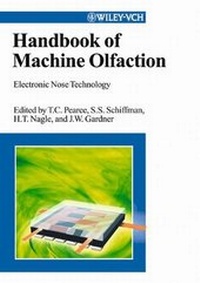
Handbook of Machine Olfaction
Electronic Nose Technology
1st Edition
Published on 24. January 2006
XXXII, 592 pages
978-3-527-60563-7 (ISBN)
Description

"Electronic noses" are instruments which mimic the sense of smell. Consisting of olfactory sensors and a suitable signal processing unit, they are able to detect and distinguish odors precisely and at low cost. This makes them very useful for a remarkable variety of applications in the food and pharmaceutical industry, in environmental control or clinical diagnostics and more.
The scope covers biological and technical fundamentals and up-to-date research. Contributions by renowned international scientists as well as application-oriented news from successful "e-nose" manufacturers give a well-rounded account of the topic, and this coverage from R&D to applications makes this book a must-have read for e-nose researchers, designers and users alike.
The scope covers biological and technical fundamentals and up-to-date research. Contributions by renowned international scientists as well as application-oriented news from successful "e-nose" manufacturers give a well-rounded account of the topic, and this coverage from R&D to applications makes this book a must-have read for e-nose researchers, designers and users alike.
Reviews / Votes
"...This book is a valuable information source...This reviewer was captivated that he ended up with enough notes for a book review of several thousand words!..."Measurement & Control
"Providing a comprehensive and timely overview of our current state of knowledge of the use of electronic noses, the Handbook of Machine Olfaction covers the biological, chemical and technical basis of the technology as well as the latest up-to-date research and advancements.
Constributions by renowned international scientists as well as application-oriented news from succesful "e-nose" manufacturers give a well-rounded account of the topic, and this coverage from R&D to applications makes this book a must-have read for e-nose researchers, designers and user alike."
Insight
"This 600-page book is an excellent primer and collection of core material; including a very large number of authoritative literature references. It is quite impossible in a short review, to do justice to the rich worldwide collection of ideas and research...The chapter on drift compensation, standarts and calibration methods should be required reading for all involved in investigating the quality of data from on-line instruments. This book is a valuable information source for the workers in the field, measurement and control students...This reviewer was so captivated that the he ended up with enough notes for a book review of several thousend word!"
Michael Scott
In: Measurement + Control, 2003
"...comprehensive and timely overview of our current state of knowledge of the use of electronic notes...well-rounded account of the topic,...this coverage from R&D to applications makes this book a must-have read for e-nose researchers, designers and users alike."
Insight, 2003
More details
Other editions
Additional editions
Tim C. Pearce | Susan S. Schiffman | H. Troy Nagle
Handbook of Machine Olfaction
Electronic Nose Technology
Book
01/2003
1st Edition
Wiley-VCH
€265.00
Article exhausted; check different version
Persons
Content
INTRODUCTION TO OLFACTION: PERCEPTION, ANATOMY, PHYSIOLOGY AND MOLECULAR BIOLOGY
Introduction to Olfaction
Odor Classification Schemes Based on Adjective Descriptors
Odor Classification Based on Chemical Properties
Physiology and Anatomy of Olfaction
Molecualr Biology of Olfaction
Taste
Final Comment
CHEMICAL SENSING IN HUMANS AND MACHINES
Human Chemosensory Perception of Airborne Chemicals
Nasal Chemosensory Detection
Olfactory and Nasal Chemesthetic Detection of Mixtures of Chemicals
Physicochemical Determinants of Odor and Nasal Pugency
Human Chemical Sensing: Olfactometry
Instruments for Chemical Sensing: Gas Chromatography-Olfactometry
ODOUR HANDLING AND DELIVERY SYSTEMS
Introduction
Physics of Evaporation
Sample Flow System
Static System
Preconcentrator
Measurement of Sensor Directly Exposed to Ambient Vapor
Summary
INTRODUCTION TO CHEMOSENSORS
Introduction
Survey and Classification of Chemosensors
Chemoresistors
Chemocapcitors
Potentiometric odor Sensors
Gravimetric Odor Sensors
Optical Odor Sensors
Thermal (Calorimetric) Sensors
Amperometric Sensors
Summary of Chemical Sensors
SIGNAL CONDITIONING AND PREPROCESSING
Introduction
Interface Circuits
Signal Conditioning
Signal Preprocessing
Noise in Senors and Circuits
Outlook
Conclusions
Acknowledgements
PATTERN ANALYSIS FOR ELECTRONIC NOSES
Introduction
Statistical Pattern Analysis Techniques
Outlook and Conclusions
COMMERCIAL E-NOSE INSTRUMENTS
Introduction
Commercvial Availability
Some Market Considerations
OPTICAL ELECTRONIC NOSES
Introduction
Optical Vapor Sensing
The Tufts Artificial Nose
Conclusion
HAND-HELD AND PALM-TOP MICROSENSOR SYSTEMS FOR GAS ANALYSIS
Introduction
Conventional Hand-Held Systems
Silicon-Based Microsensors
Summary and Outlook
INTEGRATED E-NOSES AND MICROSYSTEMS FOR CHEMCIAL ANALYSIS
Introduction
Microcomponents for Fluid Handling
Integrated E-nose Systems
Microsystems for Chemical Analysis
Future Outlook
ELECTRONIC TONGUES AND COMBINATIONS OF ARTIFICIAL SENSES
Introduction
Electronic Tongues
The Combination or Fusion of Artificial Senses
DYNAMIC PATTERN RECOGNITION METHODS AND SYSTEM IDENT.
Introduction
Dynamic Models and System Identification
Identifying a Model
Dynamic Models and Intelligent Sensor Systems
Outlook
DRIFT COMPENSATION,STANDARDS, and CALIBRATION METHODS
Physical Reasons for Drift and Sensor Poisoning
Examples of Sensor Drift
Comparison of Drift nd Noise
Model Building Strategies
Calibration Transfer
Drift Compensaton
Conclusions
CHEMICAL SENSOR ARRAY OPTIMIZATION: GEOMETRIC AND INFORMATION - THEORETIC APPROACHES
The Need for Array Performance Definition and Optimization
Historical Perspective
Geometric Interpretation
Noise Considerations
Non-linear Transformations
Array Performance as a Statistical Estimation Problem
Fisher Information Matrix and the Best Unbiased Estimator
Performance Optimization
Conclusions
CORRELATING EN-DATA AND SENSORY PANEL DATA
Sensory Panel Methods
Applications of ENs for Correlating Sensory Data
Algorithms for Correlating Sensor Array data with Sensory Panels
Correlation of EN-Data with Sensory Panel Data
Conclusions
MACHINE OLFACTION FOR MOBILE ROBOTS
Introduction
Olfactory-Guided Behavior of Animals
Sensors and Signal Processing in Mobile Robots
Trail Following Robots
Plume Tracking Robots
Other Technologies in Developing Plume Tracking Systems
Concluding Remarks
ENVIRONMENTAL MONITORING
Introduction
Special Considerations for Environmental Monitoring
Case Study 1: Livestock Odor Classification
Case Study 2: Swine odor Detection Thresholds
Case Study 3: Biofilter Evaluation
Case Study 4: Mold Detection
Future Directions
MEDICAL DIAGNOSTICS AND HEALTH MONITORING
Introduction
Special Consideratons in Medical /Healthcare Applications
Monitoring Metabolic Defects in Humans using a Conducting Polymer Sensor Array to Measure Odor
The Use of EN for the Detection of Bacterial Vaginosis
Conclusion
RECOGNITION OF NATURAL PRODUCTS
Introduction
PROCESS MONITORING
FOOD AND BEVERAGE QUALITY ASSURANCE
AUTOMOTIVE AND
Introduction to Olfaction
Odor Classification Schemes Based on Adjective Descriptors
Odor Classification Based on Chemical Properties
Physiology and Anatomy of Olfaction
Molecualr Biology of Olfaction
Taste
Final Comment
CHEMICAL SENSING IN HUMANS AND MACHINES
Human Chemosensory Perception of Airborne Chemicals
Nasal Chemosensory Detection
Olfactory and Nasal Chemesthetic Detection of Mixtures of Chemicals
Physicochemical Determinants of Odor and Nasal Pugency
Human Chemical Sensing: Olfactometry
Instruments for Chemical Sensing: Gas Chromatography-Olfactometry
ODOUR HANDLING AND DELIVERY SYSTEMS
Introduction
Physics of Evaporation
Sample Flow System
Static System
Preconcentrator
Measurement of Sensor Directly Exposed to Ambient Vapor
Summary
INTRODUCTION TO CHEMOSENSORS
Introduction
Survey and Classification of Chemosensors
Chemoresistors
Chemocapcitors
Potentiometric odor Sensors
Gravimetric Odor Sensors
Optical Odor Sensors
Thermal (Calorimetric) Sensors
Amperometric Sensors
Summary of Chemical Sensors
SIGNAL CONDITIONING AND PREPROCESSING
Introduction
Interface Circuits
Signal Conditioning
Signal Preprocessing
Noise in Senors and Circuits
Outlook
Conclusions
Acknowledgements
PATTERN ANALYSIS FOR ELECTRONIC NOSES
Introduction
Statistical Pattern Analysis Techniques
Outlook and Conclusions
COMMERCIAL E-NOSE INSTRUMENTS
Introduction
Commercvial Availability
Some Market Considerations
OPTICAL ELECTRONIC NOSES
Introduction
Optical Vapor Sensing
The Tufts Artificial Nose
Conclusion
HAND-HELD AND PALM-TOP MICROSENSOR SYSTEMS FOR GAS ANALYSIS
Introduction
Conventional Hand-Held Systems
Silicon-Based Microsensors
Summary and Outlook
INTEGRATED E-NOSES AND MICROSYSTEMS FOR CHEMCIAL ANALYSIS
Introduction
Microcomponents for Fluid Handling
Integrated E-nose Systems
Microsystems for Chemical Analysis
Future Outlook
ELECTRONIC TONGUES AND COMBINATIONS OF ARTIFICIAL SENSES
Introduction
Electronic Tongues
The Combination or Fusion of Artificial Senses
DYNAMIC PATTERN RECOGNITION METHODS AND SYSTEM IDENT.
Introduction
Dynamic Models and System Identification
Identifying a Model
Dynamic Models and Intelligent Sensor Systems
Outlook
DRIFT COMPENSATION,STANDARDS, and CALIBRATION METHODS
Physical Reasons for Drift and Sensor Poisoning
Examples of Sensor Drift
Comparison of Drift nd Noise
Model Building Strategies
Calibration Transfer
Drift Compensaton
Conclusions
CHEMICAL SENSOR ARRAY OPTIMIZATION: GEOMETRIC AND INFORMATION - THEORETIC APPROACHES
The Need for Array Performance Definition and Optimization
Historical Perspective
Geometric Interpretation
Noise Considerations
Non-linear Transformations
Array Performance as a Statistical Estimation Problem
Fisher Information Matrix and the Best Unbiased Estimator
Performance Optimization
Conclusions
CORRELATING EN-DATA AND SENSORY PANEL DATA
Sensory Panel Methods
Applications of ENs for Correlating Sensory Data
Algorithms for Correlating Sensor Array data with Sensory Panels
Correlation of EN-Data with Sensory Panel Data
Conclusions
MACHINE OLFACTION FOR MOBILE ROBOTS
Introduction
Olfactory-Guided Behavior of Animals
Sensors and Signal Processing in Mobile Robots
Trail Following Robots
Plume Tracking Robots
Other Technologies in Developing Plume Tracking Systems
Concluding Remarks
ENVIRONMENTAL MONITORING
Introduction
Special Considerations for Environmental Monitoring
Case Study 1: Livestock Odor Classification
Case Study 2: Swine odor Detection Thresholds
Case Study 3: Biofilter Evaluation
Case Study 4: Mold Detection
Future Directions
MEDICAL DIAGNOSTICS AND HEALTH MONITORING
Introduction
Special Consideratons in Medical /Healthcare Applications
Monitoring Metabolic Defects in Humans using a Conducting Polymer Sensor Array to Measure Odor
The Use of EN for the Detection of Bacterial Vaginosis
Conclusion
RECOGNITION OF NATURAL PRODUCTS
Introduction
PROCESS MONITORING
FOOD AND BEVERAGE QUALITY ASSURANCE
AUTOMOTIVE AND
