

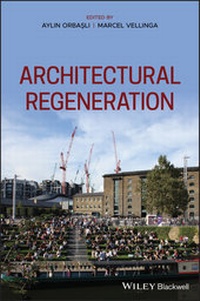
Architectural Regeneration
Description

The combined processes of globalisation, urbanisation, environmental change, population growth and rapid technological development have resulted in an increasingly complex, dynamic and interrelated world, in which concerns about the meaning of cultural heritage and identity continue to grow. As the need for culturally and environmentally sustainable design grows, the challenge for professionals involved in the management of inherited built environments is to respond to this ever-changing context in a critical, dynamic and creative way.
Our knowledge and understanding of the principles, approaches and methods to sustainably adapt existing buildings and places is rapidly expanding. Architectural Regeneration contributes to this knowledge-base through a holistic approach that links policy with practice and establishes a theoretical framework within which to understand architectural regeneration. It includes extensive case studies of the regeneration, rehabilitation and revitalisation of architectural heritage from around the world. Different scales and contexts of architectural regeneration are discussed, including urban, suburban, rural and temporary.
At a time when regeneration policy has shifted to the recognition that 'heritage matters' and that the historic environment and creative industries are a vital driver of regeneration, an increasing workload of architectural practices concerns the refurbishment, adaptive re-use or extension of existing buildings. As a result, this book is ideal for undergraduate and graduate students of architecture, historic conservation, urban and environmental design, sustainability, and urban regeneration, as well as for practitioners and decision makers working in those fields.
More details
Other editions
Additional editions
Persons
AYLIN ORBASLI is Reader in Architectural Regeneration and MARCEL VELLINGA is Professor of Anthropology of Architecture, both at Oxford Brookes University, UK.
Content
Author Biographies xiii
Architectural Regeneration: An Introduction xxi
Aylin Orbasl¿¿¿¿ and Marcel Vellinga
Theory xxii
Context xxiv
Design xxvii
Acknowledgements xxix
Bibliography xxx
Part I Theory 1
1 Architectural Regeneration and its Theoretical Context 3
Aylin Orbasl¿¿¿¿ and Marcel Vellinga
Introduction 3
Theoretical Context 4
Processes of Transformation 4
Architecture as a Dynamic Process 5
Conservation Theory 7
Defining a Continuum: Re-Merging Conservation and Design in Architecture 8
Architecture as a Transformative Tool 9
Architectural (Design) Theory 10
Regeneration Theories 11
Theories of Place Identity and Authenticity 12
Speeding Up and Time Theories 13
The Principles that Shape Architectural Regeneration 14
Architecture is a Cultural Process 14
Context/Environment Matters 15
Adaptive Capacity and Robustness 15
The Art of Adding and Subtracting 17
Contextual Complexity and Interconnectedness 17
Design Adds Value 21
Conclusion 21
Further Reading 22
Bibliography 22
2 Making the Case for Architectural Regeneration 27
Aylin Orbasl¿¿¿¿
Introduction 27
Heritage-Led Regeneration 28
Economic Benefits and Cycles of Architectural Regeneration 30
Environmental Benefits of Architectural Regeneration 37
Intangible and Social Benefits of Architectural Regeneration 38
Conclusion 41
Further Reading 43
Bibliography 43
3 Decision-making in Regeneration Practice 47
Juliet Carpenter
Introduction 47
Urban Regeneration Governance Within a Theoretical Context 48
Evolution of Decision-making for Urban Regeneration 49
Public vs Private-led Regeneration 49
Community Engagement in Regeneration 51
Post-2008 Regeneration 53
Conclusion 55
Further Reading 56
Bibliography 57
4 Creativity, Newcomers, and the Transformation of Inner Cityscapes 61
Stephen J. Shaw
Introduction 61
Conceptual Framework: Reconstructing 'Creativity', Space, and Place 63
The Long View: Polity, Policy, and Practice in the UK 67
Street-level Developments: New Hotspots for Creativity and Growth? 69
Conclusion 75
Further Reading 77
Bibliography 77
Case Study 1 Architectural Regeneration in Oxford, UK 81
Geoffrey Randell
Introduction 81
Regeneration and Industry 82
Regeneration of Oxford Castle and Prison 83
Reflections 92
Acknowledgements 95
Bibliography 95
Part II Context 97
5 Urban Conservation and Regeneration 99
Aylin Orbasl¿¿¿¿
Introduction 99
The Context of Urban Conservation 100
What's in a Name? 100
The Urban Conservation Movement: A Brief History 101
Urban Conservation in the Planning Context 105
Urban Conservation in Practice 106
Hip Neighbourhoods and Gentrification 106
Historic Places as Tourism Destinations 110
Flagship Projects and Branded Quarters 113
Industrial Areas 115
Reimaging and Reimagining Historic Urban Quarters 117
Making Urban ConservationWork 119
Conclusion 121
Further Reading 121
Bibliography 122
6 Suburban Regeneration: An Exercise in Perpetual Place-Making 127
Denise Lawrence-Zúñiga
Introduction 127
Gentrifying Bungalow Neighbourhoods 130
Mansionising the Modern Suburb 136
Regenerating Suburban Communities with Immigrants 139
Conclusion 141
Further Reading 143
Bibliography 143
7 Rural Regeneration 145
Sanja Loncar and Marcel Vellinga
Introduction 145
Conceptualising Rurality 147
Rural Realities 150
Architecture in Rural Areas 152
Architectural Regeneration and Counter-urbanisation 154
Architectural Regeneration in Abandoned Rural Areas 156
Architectural Regeneration in Protected Areas 158
Architectural Regeneration as Part of Thematic Routes 160
Conclusion 162
Further Reading 163
Bibliography 163
8 Temporariness in Architectural Regeneration 169
Aylin Orbasl¿¿¿¿ and Joanna Karmowska
Introduction 169
The Notion of Temporariness and Organisational Temporariness 171
Defining 'Temporary' in the Urban Context 172
Key Players and Drivers 174
The Role of Temporary Interventions in Regeneration 177
Longer-term Impacts and Unintended Consequences 179
Conclusion 182
Further Reading 183
Bibliography 184
9 Regenerating Unfinished Buildings 189
Igea Troiani and Andrew Dawson
Introduction: Unfinished Buildings in an Age of Uncertainty 189
Research on Unfinished Buildings: From Venezuela to Italy, to Greece and Beyond 191
The Evolution of Concrete Frame Construction: From Maison Domino to Polykatoikia 194
Design Tactics for Unfinished Athens 195
Sustainable Design for Unfinished Buildings 200
The Temporary Design of Unfinished Buildings 201
The Socio-cultural Engagement of Unfinished Buildings 203
Ethical Design Practice for Unfinished Buildings 203
Socio-political, Activist Critique of Unfinished Buildings 206
Conclusion: Reflections on Unfinished Athens and Architecture's Relationship with Capitalism 207
Acknowledgements 209
Bibliography 211
Case Study 2 Architectural Regeneration in Istanbul, Turkey 215
Deniz Ikiz Kaya
Introduction 215
Regeneration Approaches and Practices in Istanbul 216
Planning and Regulatory Systems 216
Culture-led Regeneration in the Post-industrial Waterfronts 217
Tourism-led Regeneration in Historic Residential Areas 219
Reconstruction as a Tool of Regeneration 222
Conclusion 224
Bibliography 225
Part III Design 227
10 Adaptive Reuse as a Design Process 229
Jonathan Bassindale
Introduction 229
The Research-based Approach 230
Evidential Value 231
Historical Value 231
Aesthetic Value 232
Communal Value 232
Building Recording and Baseline Information 233
Feasibility 235
Design Interventions 237
Summary and Conclusions 241
Further Reading 241
Bibliography 242
11 Sustainability in Architectural Regeneration 245
Paola Sassi
Introduction 245
Sustainability and the Built Environment: A Framework for Architectural Regeneration 246
Regeneration: Challenges and Opportunities for Sustainable Solutions 251
Synergistic Aims of Regeneration and Sustainability 252
Compatible Aims of Regeneration and Sustainability 253
Conflicting and Challenging Aims of Regeneration and Sustainability 256
Heritage Versus Sustainable Building Operation 258
Conclusion 262
Acknowledgements 263
Further Reading 263
Bibliography 264
12 Architectural Regeneration Practice in Different Contexts 267
Julia Wedel
Introduction 267
'The Best of AllWorlds': Heritage Regeneration in International Development 267
AccessingWork in Heritage Conservation and International Development 268
Garnering Local Support: Negotiating the Interface Between Regeneration and Development 269
Project Funding, Community Gains, and CollaborativeWorking 271
Shaping Mentalities Towards a Shared Sense of Ownership 271
Decision-Making Between Conservation, Repair, and Replacement 272
Creative Reuse in Architectural Practice 273
Lessons from Engaging with Local Communities 275
The Architect as BriefWriter 277
Improving Environmental Performance in Existing Building: Redefining Achievable and Desirable 278
The Future of Financing Architectural Regeneration 279
Regeneration Practice in a London Local Authority 279
Balancing Competing Needs Across the Scales of Area Regeneration 280
Addressing Housing Challenges Within Multiple Constraints 281
Making Space for Conservation in Local Authority Regeneration 282
Opportunities and Priorities for Creative Regeneration Practice in Municipal Settings 282
Regeneration Practice as Citizenship: Negotiating Social Histories in Times of Transition and Crisis 283
Client Relationships as Advocacy for Dialogue and Participation 283
Shaping Policy to Protect Cultural Heritage in Times of Socio-Political Transition 284
Architectural Intervention in Existing Contexts 285
Conclusions 287
Acknowledgements 288
Bibliography 289
13 Design in Context 291
Matt Gaskin
Introduction 291
Method 292
Context 294
Working with Layers 295
Articulation and Layering 296
Facadism 301
Wider Context and Education 301
Conclusion 303
Further Reading 304
Bibliography 304
Case Study 3 Architectural Regeneration Through Public Education in Portugal 307
Sofia Aleixo
Introduction 307
The Significance of Public Historic Schools 307
The Heritage Values of liceus 308
Safeguarding Portuguese liceus 310
The Adaptive Reuse Context 310
Challenges Encountered in Managing Change 311
The Assessment of Heritage Significance 312
Adaptive Reuse Design Principles and Strategies 313
Conclusion 318
Acknowledgements 318
Bibliography 319
14 Teaching Architectural Regeneration 321
Aylin Orbasl¿¿¿¿, Marcel Vellinga, Julia Wedel, and Geoffrey Randell
Introduction 321
Approach and Framework 323
The Value of Research 324
Being Realistic 327
Resource Sensitivity 330
Programme Management 333
Fitting it all in 333
Practices of Engagement 335
Achieving Impact Through Education 338
Conclusion 339
Acknowledgements 340
Bibliography 340
Index 343
Author Biographies
Sofia Aleixo
Sofia Aleixo is an Assistant Professor in Architecture at Évora University in Portugal, where she has taught Design Studios since 2002. She holds a DPhil in Architecture from Oxford Brookes University, UK. Sofia is a researcher at Lisbon Nova University and Évora University, and founder-partner of victor mestre|sofia aleixo architects in Lisbon. Specialized in architectural conservation practice and consultancy, Sofia's work includes a range of design interventions in Portuguese historic and listed buildings, some of which have received national and international awards. Recently, she acted as a consultant for the revision of Portugues legislation related to the technical standards of building rehabilitation. Sofia has been a judge for various architectural competitions organised by the Portuguese Order of Architects. Her latest book on architectural conservation, entitled Heritage: Between Time and Movement (Uzina 2011), explores the intervention in Lyceu Passos Manuel that was awarded the EU Prize for Cultural Heritage/Europa Nostra Award 2013, in the Conservation category. Sofia has been an invited speaker at national and international conferences on architectural practice in heritage conservation and heritage education, topics on which she has published various book and conference proceedings chapters.
Jonathan Bassindale
Jonathan Bassindale is an architect and Senior Lecturer in Architecture at The University of West of England in Bristol. He is currently the Programme Leader of the Architecture and Planning degree and teaches in the Design Studio at undergraduate and postgraduate level. Prior to his career in education he practiced architecture at firms based in London and Bath, including Assael Architecture, Greenhill Jenner Architects and Feilden Clegg Bradley Studios, while also teaching at Oxford Brookes University as an Associate Lecturer. Jonathan's work in practice demonstrated a significant emphasis on the historic built environment and the application of design interventions within both historic buildings and historic urban areas, working for clients including English Heritage and The National Trust. He has led multidisciplinary teams on projects of varying scales, working with both Grade I listed buildings and within Scheduled Monuments. He is interested in how the intersection of contemporary urban design, landscape design and architecture can open historic areas and buildings to new uses and visitors. Through his work in practice and teaching he has developed areas of expertise in adaptive re-use, masterplanning in historic environments and the planning process from an architect's perspective. He also enjoys sketching and drawing.
Juliet Carpenter
Juliet Carpenter is a Senior Research Fellow at Oxford Brookes University. She holds a PhD in urban geography from the University of Sheffield and currently works at the interface of debates within a variety of disciplines, including geography, urban planning, political science and sociology. In particular, Juliet's research interests lie in urban regeneration and the role of communities in the governance of regeneration, exploring spaces for participation and the dynamics of engagement within urban regeneration settings. From 2017-2020, Juliet held a three year Marie Curie Global Fellowship, in collaboration with the University of British Colombia, Vancouver, working on an international comparison of urban regeneration and governance in the context of social sustainability. She has a particular interest in exploring arts-based methods as a means of giving voice to marginalized communities in an urban planning context. Juliet has extensive experience of leading and participating in interdisciplinary projects in a variety of contexts, in particular in France, Brazil, Mexico and Canada. She has presented her work internationally and has published in leading international journals. She is also co-editor of two books: Regards Croisés sur la Banlieue (Brussels: Peter Lang 2015) and Voices and Images from the Banlieue (Oxford: Oxford Brookes Publishing 2014) both with Christina Horvath.
Andrew Dawson
Andrew Dawson has been practicing architecture since 1996, working in Oxford; Brisbane and Melbourne, Australia; and Münster, Germany. In 2008, he was a founding director of Original Field of Architecture. A graduate of the Royal Melbourne Institute of Technology (RMIT), Andrew has been co-teaching architectural design studio with Igea Troiani for more than 20 years and since 2013 Dawson and Troiani have been undertaking design research on unfinished buildings and ghost urbanisations in Greece, Spain and Cuba. Original Field of Architecture have extensive experience of working within heritage settings and with listed buildings, and have won awards for their responsive, innovative designs in historically sensitive contexts.
Matt Gaskin
Matt Gaskin is the Head of the School of Architecture at Oxford Brookes University, havingtaken up the position in 2011. He leads a School that is recognised globally for the quality of its design education and its emphasis on live projects, and that is at the forefront of academia-practice collaboration through the Higher Degree Apprenticeship Programme for Architecture and the RIBA Studio. Matt is a highly experienced academic and specialises in the teaching of design, and history and theory. He has run both undergraduate and postgraduate programmes, all with professional recognition from the ARB and RIBA. Matt has been a judge for the RIBA Dissertation Medal and has chaired numerous RIBA validation boards in the United Kingdom and overseas. He has been an external examiner and is the liaison manager for the Save the Children accredited programme with Oxford Brookes University. Matt is a judge on the International Property Awards. He has practiced architecture with Keppie Henderson Architects, Sir Alexander Gibbs, and the British Army.
Joanna Karmowska
Joanna Karmowska is a Senior Lecturer in Organisation Studies and International Management at Oxford Brookes University. Her research interests focus on organisational temporariness, creative organisations, international work and SME internationalisation. Her work has been published in journals like International Business Review, Journal of World Business, British Journal of Management, and Urban Studies, and she is a recipient of the British Academy for the Humanities and Social Sciences' Rising Star Engagement Award. Joanna is a member of various professional organisations concerned with management as well as cultural heritage. She is a co-ordinator of Standing Working Group 'Organisation & Time' at EGOS (European Group for Organizational Studies), a member of the International Scientific Board for Research Network 17 'Work, Employment and Industrial Relations' of the European Sociological Association, and a member of the International Scientific Cultural Tourism Committee of ICOMOS. She has been a member of the Jury for EU/Europa Nostra Prize in Cultural Heritage, Category: Research (2016-2019). Joanna is associated with the Centre for Organizational Time at Copenhagen Business School.
Deniz Ikiz Kaya
Deniz Ikiz Kaya is a Postdoctoral Researcher in the Department of Built Environment at Eindhoven University of Technology (TU/e), the Netherlands. Trained as an architect specialised in heritage management and sustainability discourses, she holds a MSc. degree in Architectural Conservation and a PhD degree in Architecture awarded by the School of Architecture at Oxford Brookes University, UK. For almost a decade, she has combined research, teaching and consultancy practices in Oxford, Istanbul and Eindhoven. As part of her current Postdoctoral role, she works as Project Leader on behalf of the TU/e team for the CLIC EU Horizon2020 project, focusing on circular investments leveraging investments in cultural heritage adaptive reuse. Parallel to the CLIC project, her current research project focuses on the management of historic urban landscapes located within global cities with a focus on heritage management practices, specifically in the Global South. This project will result in a single-authored research monograph. Deniz has widely published on the broader topics of contested and shared heritage, identity building, heritage protection, the reuse of industrial heritage and urban regeneration, specifically in Europe and the Middle East.
Denise Lawrence-Zúñiga
Trained as a socio-cultural anthropologist (PhD. UC Riverside 1979), Denise Lawrence-Zúñiga teaches in the area of behavioral factors and environmental behavior in the Department of Architecture and Lyle Center for Regenerative Studies at the College of Environmental Design at California State Polytechnic. Her research focuses on socio-cultural aspects of vernacular and modern housing, historic preservation and domestic resource consumption. She has conducted research in rural southern Portugal and in southern Californian communities such as Pasadena, Alhambra, Monrovia, Ontario, and Riverside. She is an author and co-editor of House Life: Space, Place and Family in Europe (Berg 1999) and The Anthropology of Space and Place (Blackwell 2003). She is also the author of Protecting Suburban America: Gentrification, Advocacy and the Historic Imaginary (Bloomsbury 2016). More recently she has written for online publications promoting the application of space and place theories...
