


Translating as a Purposeful Activity
Functionalist Approaches Explained
2nd Edition
Published on 19. February 2018
166 pages
978-1-351-18933-0 (ISBN)
Description

This bestselling text is a comprehensive overview of functionalist approaches to translation in English. Christiane Nord, one of the leading figures in translation studies, explains the complexities of theories and terms in simple language with numerous examples. Covering how the theories developed, illustrations of the main ideas, and specific applications to translator training, literary translation, interpreting and ethics, Translating as a Purposeful Activity concludes with a concise review of both criticisms and perspectives for the future. Now with a Foreword by Georges Bastin and a new chapter covering the recent developments and elaborations of the theory, this is an essential text for students of translation studies and for translator training.
Reviews / Votes
"This widely used and highly popular book is back - in revised form. With an added chapter on the spread of functionalism throughout the world and numerous small revisions, it promises to keep functionalism growing. Both students and researchers should find it enlightening and challenging - of both theory and practice."Kobus Marais, University of the Free State, South Africa
"This timely new edition of Christiane Nord's landmark work takes functionalist approaches into the next generation. The consideration of recent trends and applications reflects the author's deep vision and pedagogical talent. The result is a most comprehensive and readable overview for anyone seeking to understand translation as professional communication."
Fernando Prieto Ramos, University of Geneva, Switzerland
More details
Series
Edition
2nd edition
Language
English
Place of publication
London
United Kingdom
Publishing group
Taylor & Francis Ltd
Target group
College/higher education
Product notice
Reflowable
Illustrations
3 s/w Tabellen, 1 s/w Photographie bzw. Rasterbild, 2 s/w Zeichnungen, 6 s/w Abbildungen
3 Tables, black and white; 2 Line drawings, black and white; 1 Halftones, black and white; 6 Illustrations, black and white
File size
1,89 MB
ISBN-13
978-1-351-18933-0 (9781351189330)
Copyright in bibliographic data and cover images is held by Nielsen Book Services Limited or by the publishers or by their respective licensors: all rights reserved.
Schweitzer Classification
Other editions
New editions
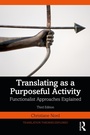
E-Book
approx. 06/2026
3rd Edition
Routledge
€55.49
Available for download
Additional editions

Book
03/2018
2nd Edition
Routledge
€60.70
Shipment within 10-20 days
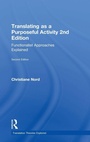
Book
03/2018
2nd Edition
Routledge
€207.10
Shipment within 10-20 days
Person
Christiane Nord is Professor Emerita of Translation Studies and Specialized Communication at the University of Applied Sciences of Magdeburg, Germany, and Visiting Professor at several universities of the People's Republic of China. She also holds the position of Professor Extraordinary and Research Fellow at the University of the Free State, South Africa. Her homepage can be found at www.christiane-nord.de.
Content
Foreword to the new English edition
Introduction
1. Historical Overview
Early Views
Katharina Reiss and the Functional Category of Translation Criticism
Hans J. Vermeer: Skopostheorie and Beyond
Justa Holz-Maenttaeri and the Theory of Translational Action
Fuctionalist Methodology in Translator Training
2. Translating and the Theory of Action
Translating as a Form of Translational Interaction
Translating as Intentional Interaction
Translating as Interpersonal Interaction
Translating as a Communicative Action
Translating as Intercultural Action
Translating as a Text-Processing Action
3. Basic Concepts of Skopostheorie
Skopos, Aim, Purpose, Intention, Function and Translation Brief
Intratextual and Intertextual Coherence
The Concept of Culture and Culture-Specificity
Adequacy and Equivalence
The Role of Text Classifications
4. Functionalism in Translator Training
A Translation-Oriented Model of Communicative Functions in Texts
A Functional Typology of Translations
Norms and Conventions in Functional Translation
Source-text Analysis, Translation Briefs and Identifying Translation Problems
A Functional Hierarchy of Translation Problems
Translation Units Revisited
Translation Errors and Translation Evaluation
5. Functionalism in Literary Translation
Actional Aspects of Literary Communication
Literary Communication across Culture Barriers
Skopos and Assignment in Literary Translation
Some examples
6. Functionalism Approaches to Interpreting
The Role of Interpreting in Spokostheorie
Translator Training: From Interpreting to Translation
A Functionalist Approach to Simulteanous Interpreting
7. Criticisms
Criticism 1: Not All Actions Have an Intention
Criticism 2: Not All Translations Have a Purpose
Criticism 3: Functional Approaches Transgress the Limits of Translation Proper
Criticism 4: Skopostheorie Is Not an Original Theory
Criticism 5: Functionalism Is Not Based on Empirical Findings
Criticism 6: Functionalism Produces Mercenary Experts
Criticism 7: Functionalism Does Not Respect the Original
Criticism 8: Functionalism Is a Theory of Adaptation
Criticism 9: Functionalism Does Not Work in Literary Translation
Criticism 10: Functionalism Is Marked by Cultural Relativism
8. Function plus Loyalty
9. Future Perspectives at the end of the 1990s
Functionalism in the Profession
Functionalism in Academia
Functionalism in the English-speaking World
Functional Translation and Democracy
10. Skopos Theory and Functionalism in the New Millenium
The Academic World
The Wranslator's Workplace
Functionalism in Legal Translation
Functionalism in Literary and Religious Texts
Adaptation and Transfer Studies
Glossary
Bibliographical References
Introduction
1. Historical Overview
Early Views
Katharina Reiss and the Functional Category of Translation Criticism
Hans J. Vermeer: Skopostheorie and Beyond
Justa Holz-Maenttaeri and the Theory of Translational Action
Fuctionalist Methodology in Translator Training
2. Translating and the Theory of Action
Translating as a Form of Translational Interaction
Translating as Intentional Interaction
Translating as Interpersonal Interaction
Translating as a Communicative Action
Translating as Intercultural Action
Translating as a Text-Processing Action
3. Basic Concepts of Skopostheorie
Skopos, Aim, Purpose, Intention, Function and Translation Brief
Intratextual and Intertextual Coherence
The Concept of Culture and Culture-Specificity
Adequacy and Equivalence
The Role of Text Classifications
4. Functionalism in Translator Training
A Translation-Oriented Model of Communicative Functions in Texts
A Functional Typology of Translations
Norms and Conventions in Functional Translation
Source-text Analysis, Translation Briefs and Identifying Translation Problems
A Functional Hierarchy of Translation Problems
Translation Units Revisited
Translation Errors and Translation Evaluation
5. Functionalism in Literary Translation
Actional Aspects of Literary Communication
Literary Communication across Culture Barriers
Skopos and Assignment in Literary Translation
Some examples
6. Functionalism Approaches to Interpreting
The Role of Interpreting in Spokostheorie
Translator Training: From Interpreting to Translation
A Functionalist Approach to Simulteanous Interpreting
7. Criticisms
Criticism 1: Not All Actions Have an Intention
Criticism 2: Not All Translations Have a Purpose
Criticism 3: Functional Approaches Transgress the Limits of Translation Proper
Criticism 4: Skopostheorie Is Not an Original Theory
Criticism 5: Functionalism Is Not Based on Empirical Findings
Criticism 6: Functionalism Produces Mercenary Experts
Criticism 7: Functionalism Does Not Respect the Original
Criticism 8: Functionalism Is a Theory of Adaptation
Criticism 9: Functionalism Does Not Work in Literary Translation
Criticism 10: Functionalism Is Marked by Cultural Relativism
8. Function plus Loyalty
9. Future Perspectives at the end of the 1990s
Functionalism in the Profession
Functionalism in Academia
Functionalism in the English-speaking World
Functional Translation and Democracy
10. Skopos Theory and Functionalism in the New Millenium
The Academic World
The Wranslator's Workplace
Functionalism in Legal Translation
Functionalism in Literary and Religious Texts
Adaptation and Transfer Studies
Glossary
Bibliographical References
