

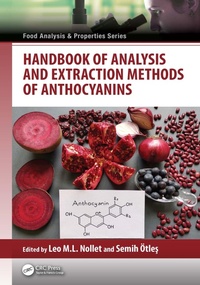
Handbook of Analysis and Extraction Methods of Anthocyanins
1st Edition
Published on 11. April 2025
310 pages
978-1-040-32516-2 (ISBN)
Description

Handbook of Analysis and Extraction Methods of Anthocyanins provides a comprehensive guide to learning about the properties of anthocyanins, which have gained increasing importance in recent years and have attracted widespread attention from industry, academia, and government, as well as the precise, applicable, and modern methods of their analysis developed to date. The first part of the book introduces the structure, biochemical properties, health effects, and high antioxidant capacity of anthocyanins based on scientific developments in recent years. The second part of the book is aimed at the technological use of anthocyanins in industry, focusing on the effects of food processing methods on anthocyanins, encapsulation, the possibilities of using them as colorants in industry, and their importance as a functional ingredient, as well as a healthy ingredient. The third part of the book presents in detail the extraction and purification methods of anthocyanins in different food products as well as sensitive, quantitative, applicable, and newly developed NMR, HPLC, UHPLC, GC/MS, UHPLC/MS, and LC/MS methods.
Key Features:
Minimal Prerequisites: No prior functional food experience is needed, making the content accessible to a wide audience.
New and Real-World Data: Learn with real-scientific information on anthocyanins, including all biological properties of anthocyanins, antioxidant activities, and new datasets on health protection, functional food development, encapsulation, and uses of anthocyanins as food colorant.
Expanded Theoretical and Practical Data on Methods of Analysis of Anthocyanins: Includes deeper coverage of theory-based approaches of modern methods of analysis of anthocyanins, their connection with GC/MS, LC/MS etc.-based approaches, and a presentation of newly developed and formal aspects of these methods of anthocyanins.
Ideal for those interested in or looking to deepen their knowledge of functional foods and nutraceuticals, this edition provides a clear introduction to the antioxidant structure and health-protective properties of anthocyanins and current modern analysis methods.
Key Features:
Minimal Prerequisites: No prior functional food experience is needed, making the content accessible to a wide audience.
New and Real-World Data: Learn with real-scientific information on anthocyanins, including all biological properties of anthocyanins, antioxidant activities, and new datasets on health protection, functional food development, encapsulation, and uses of anthocyanins as food colorant.
Expanded Theoretical and Practical Data on Methods of Analysis of Anthocyanins: Includes deeper coverage of theory-based approaches of modern methods of analysis of anthocyanins, their connection with GC/MS, LC/MS etc.-based approaches, and a presentation of newly developed and formal aspects of these methods of anthocyanins.
Ideal for those interested in or looking to deepen their knowledge of functional foods and nutraceuticals, this edition provides a clear introduction to the antioxidant structure and health-protective properties of anthocyanins and current modern analysis methods.
More details
Series
Edition
1. Auflage
Language
English
Place of publication
London
United Kingdom
Publishing group
Taylor & Francis Ltd
Target group
Professional and scholarly
Illustrations
22 Tables, black and white; 19 Line drawings, color; 12 Line drawings, black and white; 19 Illustrations, color; 12 Illustrations, black and white
File size
15,06 MB
ISBN-13
978-1-040-32516-2 (9781040325162)
Copyright in bibliographic data and cover images is held by Nielsen Book Services Limited or by the publishers or by their respective licensors: all rights reserved.
Schweitzer Classification
Other editions
Additional editions
Leo M.L. Nollet | Semih Otles
Handbook of Analysis and Extraction Methods of Anthocyanins
Book
approx. 07/2026
1st Edition
CRC Press
€71.00
Not yet published
Leo M.L. Nollet | Semih Otles
Handbook of Analysis and Extraction Methods of Anthocyanins
Book
04/2025
1st Edition
CRC Press
€265.10
Shipment within 10-20 days
Persons
Leo M. L. Nollet earned an MS (1973) and PhD (1978) in biology from the Katholieke Universiteit Leuven, Belgium. He is an editor and associate editor of numerous books. He edited for M. Dekker, New York-now CRC Press of Taylor & Francis Publishing Group-the first, second, and third editions of Food Analysis by HPLC and Handbook of Food Analysis. The last edition is a two-volume book. Dr. Nollet also edited the Handbook of Water Analysis (first, second, and third editions) and Chromatographic Analysis of the Environment, third and fourth editions (CRC Press). With F. Toldra, he coedited two books published in 2006, 2007, and 2017: Advanced Technologies for Meat Processing (CRC Press) and Advances in Food Diagnostics with another publisher. With M. Poschl, he coedited the book Radionuclide Concentrations in Foods and the Environment, also published in 2006 (CRC Press). Dr. Nollet has also co-edited with Y. H. Hui and other colleagues on several books: Handbook of Food Product Manufacturing, Handbook of Food Science, Technology, and Engineering (CRC Press, 2005), Food Biochemistry and Food Processing (first and second editions; and the Handbook of Fruits and Vegetable Flavors. In addition, he edited the Handbook of Meat, Poultry, and Seafood Quality, first and second editions.
From 2008 to 2011, he published five volumes on animal product-related books with F. Toldra: Handbook of Muscle Foods Analysis, Handbook of Processed Meats and Poultry Analysis, Handbook of Seafood and Seafood Products Analysis, Handbook of Dairy Foods Analysis (2nd edition in 2021), and Handbook of Analysis of Edible Animal By-Products. Also, in 2011, with F. Toldra, he coedited two volumes for CRC Press: Safety Analysis of Foods of Animal Origin and Sensory Analysis of Foods of Animal Origin. In 2012, they published the Handbook of Analysis of Active Compounds in Functional Foods. In a co-edition with Hamir Rathore, Handbook of Pesticides: Methods of Pesticides Residues Analysis was marketed in 2009; Pesticides: Evaluation of Environmental Pollution in 2012; Biopesticides Handbook in 2015; and Green Pesticides Handbook: Essential Oils for Pest Control in 2017. Other finished book projects include Food Allergens: Analysis, Instrumentation, and Methods (with A. van Hengel; CRC Press, 2011) and Analysis of Endocrine Compounds in Food. Dr. Nollet's recent projects include Proteomics in Foods with F. Toldra and Transformation Products of Emerging Contaminants in the Environment: Analysis, Processes, Occurrence, Effects, and Risks with D. Lambropoulou.
In the series Food Analysis & Properties, he edited (with C. Ruiz-Capillas) Flow Injection Analysis of Food Additives (CRC Press, 2015) and Marine Microorganisms: Extraction and Analysis of Bioactive Compounds (CRC Press, 2016). With A.S. Franca, he coedited Spectroscopic Methods in Food Analysis (CRC Press, 2017), and with Horacio Heinzen and Amadeo R. Fernandez-Alba he coedited Multiresidue Methods for the Analysis of Pesticide Residues in Food (CRC Press, 2017). Further volumes in the series Food Analysis & Properties are Phenolic Compounds in Food: Characterization and Analysis (with Janet Alejandra Gutierrez-Uribe, 2018), Testing and Analysis of GMO-containing Foods and Feed (with Salah E. O. Mahgoub, 2018), Fingerprinting Techniques in Food Authentication and Traceability (with K. S. Siddiqi, 2018), Hyperspectral Imaging Analysis and Applications for Food Quality (with N.C. Basantia, Leo M.L. Nollet, Mohammed Kamruzzaman, 2018), Ambient Mass Spectroscopy Techniques in Food and the Environment (with Basil K. Munjanja, 2019), Food Aroma Evolution: During Food Processing, Cooking, and Aging (with M. Bordiga, 2019), Mass Spectrometry Imaging in Food Analysis (2020), Proteomics in Food Authentication (with S. OEtles, 2020), Analysis of Nanoplastics and Microplastics in Food (with K.S. Siddiqi, 2020), Chiral Organic Pollutants, Monitoring and Characterization in Food and the Environment (with Edmond Sanganyado and Basil K. Munjanja, 2020), Sequencing Technologies in Microbial Food Safety and Quality (with Devarajan Thangardurai, Saher Islam, Jeyabalan Sangeetha, 2021), Nanoemulsions in Food Technology: Development, Characterization, and Applications (with Javed Ahmad, 2021), Mass Spectrometry in Food Analysis (with Robert Winkler, 2022), Bioactive Peptides from Food: Sources, Analysis, and Functions (with Semih OEtles, 2022), and Nutriomics: Well-being through Nutrition (with Devarajan Thangadurai, Saher IslamJuliana Bunmi Adetunji, 2022). In 2023 he published with Javed Ahmad Analysis of Naturally Occurring Food Toxins of Plant Origin.
The last published books are as follows: Biopesticides Handbook 2nd Ed. (with S. Mir), Handbook of Seafood and Seafood Products Analysis (with F. Toldra), Flavoromics, an Integrated to Flavor and Sensory Assessment (with M. Bordiga), Analysis of Food Sices (with J. Ahmad and J. Ahamad), Global Regulations of Medicinal, Pharmaceutical, and Food Products (with F. Ali) and Bioactive Compounds from FoodBenefits and Analysis (with J. Ahmad).
A native of Izmir, Tuerkiye, Professor Semih OEtles obtained his B.Sc. degree from the Department of Food Engineering (Ege University) in 1980. During his assistantship at Ege University, in 1985, he received a M.S. in Food Chemistry, and in 1989, after completing his thesis research on the instrumental analysis and chemistry of vitamins in foods he received a Ph.D. in Food Chemistry from Ege University. In 1991-92, he completed postdoctoral training on meat proteins including OECD - Postdoctoral Fellowship, in the Research Center Melle at Gent University, Belgium. Afterword, he joined the Department of Food Engineering at Ege University as a scientist of Food Chemistry, being promoted to Associate Professor in 1993 and to Professor in 2000. He was Vice Dean at Engineering Faculty (2003-2009), Head of the Department of Nutrition and Dietetics (2008-2011), and Vice Rector in Ege University (2012-2016). The research activities of Professor Otles have been focused on instrumental methods of food analysis. Otles began a series of projects on the separation and instrumental analysis techniques, first for analysis of vitamins in foods, then protein chemistry, carbohydrates, carotenoids, proteomics, and most recently bioactive peptides. Other activies span the fields of instrumental food analysis like UPLC, GC, GC/MS, LC/MS/MS analysis, hyphenated techniques, soy chemistry, aromatics, medical & functional foods and nutraceutical chemistry. Included are multiresidue analysis of various foods, n-3 fatty acids in fish oils, and medical & functional foods.
From 2008 to 2011, he published five volumes on animal product-related books with F. Toldra: Handbook of Muscle Foods Analysis, Handbook of Processed Meats and Poultry Analysis, Handbook of Seafood and Seafood Products Analysis, Handbook of Dairy Foods Analysis (2nd edition in 2021), and Handbook of Analysis of Edible Animal By-Products. Also, in 2011, with F. Toldra, he coedited two volumes for CRC Press: Safety Analysis of Foods of Animal Origin and Sensory Analysis of Foods of Animal Origin. In 2012, they published the Handbook of Analysis of Active Compounds in Functional Foods. In a co-edition with Hamir Rathore, Handbook of Pesticides: Methods of Pesticides Residues Analysis was marketed in 2009; Pesticides: Evaluation of Environmental Pollution in 2012; Biopesticides Handbook in 2015; and Green Pesticides Handbook: Essential Oils for Pest Control in 2017. Other finished book projects include Food Allergens: Analysis, Instrumentation, and Methods (with A. van Hengel; CRC Press, 2011) and Analysis of Endocrine Compounds in Food. Dr. Nollet's recent projects include Proteomics in Foods with F. Toldra and Transformation Products of Emerging Contaminants in the Environment: Analysis, Processes, Occurrence, Effects, and Risks with D. Lambropoulou.
In the series Food Analysis & Properties, he edited (with C. Ruiz-Capillas) Flow Injection Analysis of Food Additives (CRC Press, 2015) and Marine Microorganisms: Extraction and Analysis of Bioactive Compounds (CRC Press, 2016). With A.S. Franca, he coedited Spectroscopic Methods in Food Analysis (CRC Press, 2017), and with Horacio Heinzen and Amadeo R. Fernandez-Alba he coedited Multiresidue Methods for the Analysis of Pesticide Residues in Food (CRC Press, 2017). Further volumes in the series Food Analysis & Properties are Phenolic Compounds in Food: Characterization and Analysis (with Janet Alejandra Gutierrez-Uribe, 2018), Testing and Analysis of GMO-containing Foods and Feed (with Salah E. O. Mahgoub, 2018), Fingerprinting Techniques in Food Authentication and Traceability (with K. S. Siddiqi, 2018), Hyperspectral Imaging Analysis and Applications for Food Quality (with N.C. Basantia, Leo M.L. Nollet, Mohammed Kamruzzaman, 2018), Ambient Mass Spectroscopy Techniques in Food and the Environment (with Basil K. Munjanja, 2019), Food Aroma Evolution: During Food Processing, Cooking, and Aging (with M. Bordiga, 2019), Mass Spectrometry Imaging in Food Analysis (2020), Proteomics in Food Authentication (with S. OEtles, 2020), Analysis of Nanoplastics and Microplastics in Food (with K.S. Siddiqi, 2020), Chiral Organic Pollutants, Monitoring and Characterization in Food and the Environment (with Edmond Sanganyado and Basil K. Munjanja, 2020), Sequencing Technologies in Microbial Food Safety and Quality (with Devarajan Thangardurai, Saher Islam, Jeyabalan Sangeetha, 2021), Nanoemulsions in Food Technology: Development, Characterization, and Applications (with Javed Ahmad, 2021), Mass Spectrometry in Food Analysis (with Robert Winkler, 2022), Bioactive Peptides from Food: Sources, Analysis, and Functions (with Semih OEtles, 2022), and Nutriomics: Well-being through Nutrition (with Devarajan Thangadurai, Saher IslamJuliana Bunmi Adetunji, 2022). In 2023 he published with Javed Ahmad Analysis of Naturally Occurring Food Toxins of Plant Origin.
The last published books are as follows: Biopesticides Handbook 2nd Ed. (with S. Mir), Handbook of Seafood and Seafood Products Analysis (with F. Toldra), Flavoromics, an Integrated to Flavor and Sensory Assessment (with M. Bordiga), Analysis of Food Sices (with J. Ahmad and J. Ahamad), Global Regulations of Medicinal, Pharmaceutical, and Food Products (with F. Ali) and Bioactive Compounds from FoodBenefits and Analysis (with J. Ahmad).
A native of Izmir, Tuerkiye, Professor Semih OEtles obtained his B.Sc. degree from the Department of Food Engineering (Ege University) in 1980. During his assistantship at Ege University, in 1985, he received a M.S. in Food Chemistry, and in 1989, after completing his thesis research on the instrumental analysis and chemistry of vitamins in foods he received a Ph.D. in Food Chemistry from Ege University. In 1991-92, he completed postdoctoral training on meat proteins including OECD - Postdoctoral Fellowship, in the Research Center Melle at Gent University, Belgium. Afterword, he joined the Department of Food Engineering at Ege University as a scientist of Food Chemistry, being promoted to Associate Professor in 1993 and to Professor in 2000. He was Vice Dean at Engineering Faculty (2003-2009), Head of the Department of Nutrition and Dietetics (2008-2011), and Vice Rector in Ege University (2012-2016). The research activities of Professor Otles have been focused on instrumental methods of food analysis. Otles began a series of projects on the separation and instrumental analysis techniques, first for analysis of vitamins in foods, then protein chemistry, carbohydrates, carotenoids, proteomics, and most recently bioactive peptides. Other activies span the fields of instrumental food analysis like UPLC, GC, GC/MS, LC/MS/MS analysis, hyphenated techniques, soy chemistry, aromatics, medical & functional foods and nutraceutical chemistry. Included are multiresidue analysis of various foods, n-3 fatty acids in fish oils, and medical & functional foods.
Content
Section I General Introduction, Sources, and Chemistry 1. State of the Art of Anthocyanins: Antioxidant Activity, Sources, Bioavailability, and Therapeutic Effect in Human Health. 2. Stability of Anthocyanins during Food Processing. 3. Encapsulation of Anthocyanins - Insights on Technological Strategies to Increase Its Stability During Food Processing and Digestion. 4. Anthocyanins as Food Colorants. 5. Antioxidant Properties of Anthocyanins. 6. Health Effects of Anthocyanins. 7. Anthocyanins as Functional Foods. Section II Extraction Methods and Analysis of Anthocyanins 8. Extraction and Purification of Anthocyanins: A Review. 9. Extraction Methods of Anthocyanins. 10. HPLC and UHPLC Analysis of Anthocyanins. 11. LC-MS Analysis of Anthocyanins. 12. UHPLC/MS Analysis of Anthocyanins. 13. NMR Analysis of Anthocyanins. 14. Spectroscopic Methods in Analysis of Anthocyanins. 15. GC/MS Analysis of Anthocyanins.
