

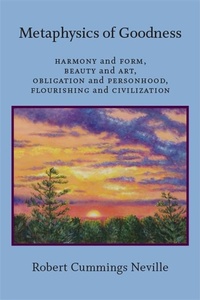
Metaphysics of Goodness
Harmony and Form, Beauty and Art, Obligation and Personhood, Flourishing and Civilization
1st Edition
Published on 15. October 2019
400 pages
978-1-4384-7744-2 (ISBN)
Description

In Metaphysics of Goodness, Robert Cummings Neville extends Alfred North Whitehead's project of cultural studies, which was based on a new metaphysics that Whitehead developed in Adventures of Ideas. Neville's focus is value or goodness in many modes. The metaphysics treated in this book derive from the Platonic and Confucian traditions, with significant modifications of Whitehead, Peirce, Dewey, Confucius, Xunzi, and Zhou Dunyi. Part one develops a theory of form based on a metaphysics of harmony. Part two elaborates a theory of art based on a metaphysics of beauty. Part three sketches a theory of personhood based on a metaphysics of obligation. Part four discusses civilization in a systematic way based on a metaphysics of flourishing. Throughout the book, Neville elaborates a theory of interpretation that is inspired by Peirce, Dewey, and Xunzi but is not limited to their ideas. While the reasoning of the book is concise, it employs methodologies from many kinds of philosophy, art criticism, ethics, and cultural studies, and sees philosophy as needing to learn from all these disciplines.
All prices
More details
Other editions
Additional editions

Robert Cummings Neville
Metaphysics of Goodness
Harmony and Form, Beauty and Art, Obligation and Personhood, Flourishing and Civilization
Book
07/2020
State University of New York Press
€45.50
Shipment within 10-20 days

Robert Cummings Neville
Metaphysics of Goodness
Harmony and Form, Beauty and Art, Obligation and Personhood, Flourishing and Civilization
Book
10/2019
State University of New York Press
€101.50
Shipment within 10-20 days
Person
Robert Cummings Neville is Professor Emeritus of Philosophy, Religion, and Theology and Dean Emeritus of the School of Theology at Boston University. He is the author of many books, including Defining Religion: Essays in Philosophy of Religion and The Good Is One, Its Manifestations Many: Confucian Essays on Metaphysics, Morals, Rituals, Institutions, and Genders, both also published by SUNY Press.
Content
Preface: A Philosophy of Goodness
Philosophical Background and Context
The Plot
Acknowledgments
Part I. Goodness in Harmony and Form
1. Goodness in Experience
Ubiquity, Evolution, and Aesthetic Perception
Harmonies Defined, and Ecosystems
Situations, Perspectives, and Sunsets
Goodness Experienced
2. A Metaphysics of Form as Goodness
Density of Being and Existential Fields
Quantity, Complexity, Simplicity, and Elegance
Narrowness, Width, Vagueness, and Triviality
Focus, Field, Intensity, and Immediacy
3. A Cosmology of Form as Goodness
Possibilities, Determinism, Indeterminism, and Temporality
Actuality, Becoming, Conditions, and Loci of Goodness
Goodness-Identity
4. Testing the Theory
The Question of the Meaning of Goodness
Imaginative Analytic of Goodness
Immediacy and Mediacy in Framing Intensity
Goodness, Engagement, Relations, and Experience
Part II. Goodness in Beauty and Art
5. Beauty in Form
Beauty as What Is Good in Itself
Beauty as Ubiquitous and Ultimate
Beauty as Simplification
Beauty as Experienced
6. Beauty in Art
Art as an Elementary Human Process
Art in Motivation and Creativity
Art as a Basic Response to Existence
Art and Religion
7. To Appreciate Arts
Beauty for Appreciation
Beauty in Form
Beauty in Actualizing Form
Beauty in Repose
8. To Create Arts
To Seek Beauty
To Seek Beauty in Form
To Seek Beauty in Actualizing Form
Beauty in Achieving Beauty: The Artistic Life
Part III. Goodness in Obligation and Personhood
9. Goodness in Being True
Goodness as Conformity
The Goodness of Truth
Being True
The Obligation to Inquiry
10. Goodness in Being Moral
Morality as a Two-Term Relation
Obligation with Freedom
Obligation without Freedom
Achievement of Responsible Identity
11. Goodness in Being Right
Engagement
Appropriate Engagement with the Contours of the World
Engagement as Self-Constitution
Engagement as Finite Limitation
12. Goodness in Being Virtuous
Conformation to the Ultimate Content of Life
The Harmony of Virtue
Virtue-Identity
Virtue and the World's Goodness
Part IV. Goodness in Flourishing and Civilization
13. Goodness in Human Flourishing
Goodness in Contexts
Civilization
Flourishing
The Global Context of High Civilizations
14. Goodness in Rituals and Institutions
A General Theory of Ritual
Rituals in Human Flourishing
Institutions in High Civilization
Rituals in Global Society and Civilization
15. Goodness in Creativity and Spirit
Initiative
Making a Life
Pursuit of Beauty
The Spirit of Creativity
16. The Goodness in Civilization
Culture and Civilization
Spirit of Civilization: Character
Energy
Creativity
Notes
Bibliography
Index
Philosophical Background and Context
The Plot
Acknowledgments
Part I. Goodness in Harmony and Form
1. Goodness in Experience
Ubiquity, Evolution, and Aesthetic Perception
Harmonies Defined, and Ecosystems
Situations, Perspectives, and Sunsets
Goodness Experienced
2. A Metaphysics of Form as Goodness
Density of Being and Existential Fields
Quantity, Complexity, Simplicity, and Elegance
Narrowness, Width, Vagueness, and Triviality
Focus, Field, Intensity, and Immediacy
3. A Cosmology of Form as Goodness
Possibilities, Determinism, Indeterminism, and Temporality
Actuality, Becoming, Conditions, and Loci of Goodness
Goodness-Identity
4. Testing the Theory
The Question of the Meaning of Goodness
Imaginative Analytic of Goodness
Immediacy and Mediacy in Framing Intensity
Goodness, Engagement, Relations, and Experience
Part II. Goodness in Beauty and Art
5. Beauty in Form
Beauty as What Is Good in Itself
Beauty as Ubiquitous and Ultimate
Beauty as Simplification
Beauty as Experienced
6. Beauty in Art
Art as an Elementary Human Process
Art in Motivation and Creativity
Art as a Basic Response to Existence
Art and Religion
7. To Appreciate Arts
Beauty for Appreciation
Beauty in Form
Beauty in Actualizing Form
Beauty in Repose
8. To Create Arts
To Seek Beauty
To Seek Beauty in Form
To Seek Beauty in Actualizing Form
Beauty in Achieving Beauty: The Artistic Life
Part III. Goodness in Obligation and Personhood
9. Goodness in Being True
Goodness as Conformity
The Goodness of Truth
Being True
The Obligation to Inquiry
10. Goodness in Being Moral
Morality as a Two-Term Relation
Obligation with Freedom
Obligation without Freedom
Achievement of Responsible Identity
11. Goodness in Being Right
Engagement
Appropriate Engagement with the Contours of the World
Engagement as Self-Constitution
Engagement as Finite Limitation
12. Goodness in Being Virtuous
Conformation to the Ultimate Content of Life
The Harmony of Virtue
Virtue-Identity
Virtue and the World's Goodness
Part IV. Goodness in Flourishing and Civilization
13. Goodness in Human Flourishing
Goodness in Contexts
Civilization
Flourishing
The Global Context of High Civilizations
14. Goodness in Rituals and Institutions
A General Theory of Ritual
Rituals in Human Flourishing
Institutions in High Civilization
Rituals in Global Society and Civilization
15. Goodness in Creativity and Spirit
Initiative
Making a Life
Pursuit of Beauty
The Spirit of Creativity
16. The Goodness in Civilization
Culture and Civilization
Spirit of Civilization: Character
Energy
Creativity
Notes
Bibliography
Index
