

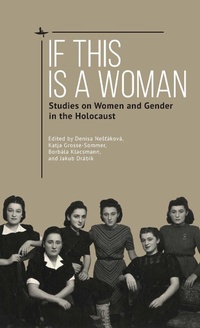
If This Is a Woman
Studies on Women and Gender in the Holocaust
1st Edition
Published on 14. December 2021
292 pages
978-1-64469-712-2 (ISBN)
Description

The present volume contains thirteen articles based on work presented at the "XX. Century Conference: If This Is A Woman" at Comenius University Bratislava in 2019. The papers focus on various aspects of gendered experiences during World War II and the Holocaust.
More details
Other editions
Additional editions
Denisa Nekov | Katja Grosse-Sommer | Borbla Klacsmann
If This Is a Woman
Studies on Women and Gender in the Holocaust
Book
12/2021
Academic Studies Press
€121.50
Shipment within 3-4 weeks
Persons
Nestáková Denisa:
Denisa Nestáková holds a PhD in history. Her main interest is on the history of the Holocaust and gender studies in East-Central Europe. She is an external researcher at Comenius University, Bratislava, where she is working on her postdoctoral project "Women and Men in the Labor Camp Sered, Slovakia." As a research associate at the Herder Institute, she focuses on the history of family planning in Czechoslovakia.Grosse-Sommer Katja:
Katja Grosse-Sommer is a PhD student at the University of Hamburg. She holds a master's degree in Holocaust and Genocide studies from the University of Amsterdam and is a graduate of the Paideia Jewish Studies Program. She has been involved in organizing various conferences, events, and exhibitions related to National Socialist persecution and its remembrance. Her research focuses on Holocaust memory and commemoration, and modern Jewish history.Klacsmann Borbála:
Borbála Klacsmann received a master's in history from Eötvös Loránd University and a master's in comparative history with a specialization in Jewish studies from Central European University (2012). Since September 2015 she has been a doctoral student at the Department of History at the University of Szeged and a member of the Hungarian research group of Yad Vashem. Her work centers on the Holocaust and its aftermath in Hungary.Drábik Jakub:
Jakub Drábik is a historian mainly interested in comparative fascism studies, but covers a broad range of twentieth-century history topics in his research and teaching. He completed his doctorate at Charles University in Prague in 2014, and since 2016 has worked at the Institute of History, Slovak Academy of Sciences, and taught at Masaryk University in Brno.Denisa Nestáková holds a PhD in history. Her main interest is the history of the Holocaust and gender studies in East-Central Europe. She is an external researcher at Comenius University, Bratislava, where she is working on her postdoctoral project "Women and Men in the Labor Camp Sered, Slovakia." As a research associate at the Herder Institute, she focuses on the history of family planning in Czechoslovakia. Katja Grosse-Sommer is a PhD student at the University of Hamburg. She holds a master's degree in Holocaust and Genocide studies from the University of Amsterdam and is a graduate of the Paideia Jewish Studies Program. She has been involved in organizing various conferences, events, and exhibitions related to National Socialist persecution and its remembrance. Her research focuses on Holocaust memory and commemoration, and modern Jewish history. Borbála Klacsmann received a master's in history from Eötvös Loránd University and a master's in comparative history with a specialization in Jewish studies from Central European University (2012). Since September 2015 she has been a doctoral student at the Department of History at the University of Szeged and a member of the Hungarian research group of Yad Vashem. Her work centers on the Holocaust and its aftermath in Hungary. Jakub Drábik is a historian mainly interested in comparative fascism studies, but covers a broad range of twentieth-century history topics in his research and teaching. He completed his doctorate at Charles University in Prague in 2014, and since 2016 has worked at the Institute of History, Slovak Academy of Sciences, and taught at Masaryk University in Brno.
Denisa Nestáková holds a PhD in history. Her main interest is on the history of the Holocaust and gender studies in East-Central Europe. She is an external researcher at Comenius University, Bratislava, where she is working on her postdoctoral project "Women and Men in the Labor Camp Sered, Slovakia." As a research associate at the Herder Institute, she focuses on the history of family planning in Czechoslovakia.Grosse-Sommer Katja:
Katja Grosse-Sommer is a PhD student at the University of Hamburg. She holds a master's degree in Holocaust and Genocide studies from the University of Amsterdam and is a graduate of the Paideia Jewish Studies Program. She has been involved in organizing various conferences, events, and exhibitions related to National Socialist persecution and its remembrance. Her research focuses on Holocaust memory and commemoration, and modern Jewish history.Klacsmann Borbála:
Borbála Klacsmann received a master's in history from Eötvös Loránd University and a master's in comparative history with a specialization in Jewish studies from Central European University (2012). Since September 2015 she has been a doctoral student at the Department of History at the University of Szeged and a member of the Hungarian research group of Yad Vashem. Her work centers on the Holocaust and its aftermath in Hungary.Drábik Jakub:
Jakub Drábik is a historian mainly interested in comparative fascism studies, but covers a broad range of twentieth-century history topics in his research and teaching. He completed his doctorate at Charles University in Prague in 2014, and since 2016 has worked at the Institute of History, Slovak Academy of Sciences, and taught at Masaryk University in Brno.Denisa Nestáková holds a PhD in history. Her main interest is the history of the Holocaust and gender studies in East-Central Europe. She is an external researcher at Comenius University, Bratislava, where she is working on her postdoctoral project "Women and Men in the Labor Camp Sered, Slovakia." As a research associate at the Herder Institute, she focuses on the history of family planning in Czechoslovakia. Katja Grosse-Sommer is a PhD student at the University of Hamburg. She holds a master's degree in Holocaust and Genocide studies from the University of Amsterdam and is a graduate of the Paideia Jewish Studies Program. She has been involved in organizing various conferences, events, and exhibitions related to National Socialist persecution and its remembrance. Her research focuses on Holocaust memory and commemoration, and modern Jewish history. Borbála Klacsmann received a master's in history from Eötvös Loránd University and a master's in comparative history with a specialization in Jewish studies from Central European University (2012). Since September 2015 she has been a doctoral student at the Department of History at the University of Szeged and a member of the Hungarian research group of Yad Vashem. Her work centers on the Holocaust and its aftermath in Hungary. Jakub Drábik is a historian mainly interested in comparative fascism studies, but covers a broad range of twentieth-century history topics in his research and teaching. He completed his doctorate at Charles University in Prague in 2014, and since 2016 has worked at the Institute of History, Slovak Academy of Sciences, and taught at Masaryk University in Brno.
Content
Table of ContentsAcknowledgementsForeword: Unholy Alliances
Andrea PetoIntroduction
DenisaNestáková, Katja Grosse-Sommer, Borbála Klacsmann, and Jakub DrábikPart One: Theoretical Reflections on a Gender Focus in Holocaust Studies1. "Will You Hear My Voice?" Women in the Holocaust: Memory and Analysis
Dalia Ofer2. A Familial Turn in Holocaust Scholarship?
Natalia AleksiunPart Two: Gender in Times of Occupation and Authoritarianism: Expectation and Reality3. Masculinities under Occupation: Considerations of a Gender Perspective on Everyday Life under German Occupation
Agnes Laba4. New Slovak Woman: The Feminine Ideal in the Authoritarian Regime of the Slovak State, 1939-1945
Eva SkorvankováPart Three: Women's Lives in Camps5. "Our mother organized it all": The Role of Mothers of Sered Camp in the Memories of Their Children
Denisa Nestáková6. Women in the Ilava Camp as Political Detainees in 1939
Marína ZavackáPart Four: Women in Positions of Community Leadership7. Women in Dror and Gendered Experiences of the Holocaust?
Anna Nedlin-Lehrer8. Female Involvement in the "Jewish Councils" of the Netherlands and France: Gertrude van Tijn and Juliette Stern
Laurien VastenhoutPart Five: Women in the Resistance9. "Ma'am, do you know that a Jew lives here?" The Betrayal of Polish Women and the Jewish Children They Hid during the Holocaust-the Case of Cracow
Joanna Sliwa10. "And with these boots, I'm gonna run away from here":The Significance of Female Narratives in the Sobibor Uprising and Its Aftermath
Hannah Wilson11. "After all, I was a 'female' and a 'yid' to boot." Jewish Women among Partisans in Lithuania, 1941-1944Modiane Zerdoun-DanielPart Six: Sexuality and Sexual Violence12. Listening to Women's Voices: Jewish Rape Survivors' Testimonies in Soviet War Crimes Trials
Marta Havryshko13. Male Jewish Teenage Sexuality in Nazi Germany
Florian ZabranskyContributors
Andrea PetoIntroduction
DenisaNestáková, Katja Grosse-Sommer, Borbála Klacsmann, and Jakub DrábikPart One: Theoretical Reflections on a Gender Focus in Holocaust Studies1. "Will You Hear My Voice?" Women in the Holocaust: Memory and Analysis
Dalia Ofer2. A Familial Turn in Holocaust Scholarship?
Natalia AleksiunPart Two: Gender in Times of Occupation and Authoritarianism: Expectation and Reality3. Masculinities under Occupation: Considerations of a Gender Perspective on Everyday Life under German Occupation
Agnes Laba4. New Slovak Woman: The Feminine Ideal in the Authoritarian Regime of the Slovak State, 1939-1945
Eva SkorvankováPart Three: Women's Lives in Camps5. "Our mother organized it all": The Role of Mothers of Sered Camp in the Memories of Their Children
Denisa Nestáková6. Women in the Ilava Camp as Political Detainees in 1939
Marína ZavackáPart Four: Women in Positions of Community Leadership7. Women in Dror and Gendered Experiences of the Holocaust?
Anna Nedlin-Lehrer8. Female Involvement in the "Jewish Councils" of the Netherlands and France: Gertrude van Tijn and Juliette Stern
Laurien VastenhoutPart Five: Women in the Resistance9. "Ma'am, do you know that a Jew lives here?" The Betrayal of Polish Women and the Jewish Children They Hid during the Holocaust-the Case of Cracow
Joanna Sliwa10. "And with these boots, I'm gonna run away from here":The Significance of Female Narratives in the Sobibor Uprising and Its Aftermath
Hannah Wilson11. "After all, I was a 'female' and a 'yid' to boot." Jewish Women among Partisans in Lithuania, 1941-1944Modiane Zerdoun-DanielPart Six: Sexuality and Sexual Violence12. Listening to Women's Voices: Jewish Rape Survivors' Testimonies in Soviet War Crimes Trials
Marta Havryshko13. Male Jewish Teenage Sexuality in Nazi Germany
Florian ZabranskyContributors
