

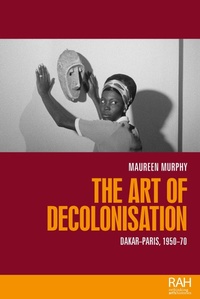
The art of decolonisation
Description

The art of decolonisation examines how artists challenged colonial legacies and reconfigured power through transnational networks of art and diplomacy. Adopting a global and transhistorical perspective, it explores artistic, political, and institutional relations between France and Senegal during decolonisation and the Cold War. From the emergence of a national modern art in Senegal to contested cultural policies and high-profile exhibitions-such as those featuring Picasso and Soulages in Dakar, or contemporary Senegalese art in Paris-this book traces the circulation of artworks, ideas, and influence across borders. It reveals how visual artists and filmmakers shaped a new artistic geopolitics between 1950 and 1970.
Reconsidering the accepted chronology of the 'global turn', The art of decolonisation shows that the roots of global art discourse run deeper than the 1990s, and were already forming during the era of independence struggles.
More details
Other editions
Additional editions
Person
Content
Preface to the translation: Outside in the French academic machine
Introduction
1 Exchanging rather than returning
2 Behind the masks
3 Overthrowing colonial legacies
4 Creating a new art for a new nation
5 The Musée dynamique: platform for decolonisation
6 The école de Dakar in Paris
Epilogue
Sources
