

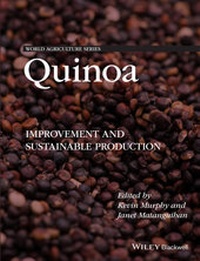
Quinoa
Description

More details
Other editions
Additional editions
Persons
Dr. Kevin Murphy is a Plant Breeder and Assistant Professor at Washington State University focusing on quinoa, barley, and several other alternative grain crops. Dr. Murphy currently is the lead project director on a $1.6M, multistate and multidisciplinary NIFA-funded quinoa research project spanning much of the western United States. Dr. Murphy actively collaborates and communicates with most of the leading quinoa researchers worldwide and leads a vibrant quinoa breeding program at Washington State University. He has published over 20 peer reviewed journal articles on plant breeding and agronomy, including three book chapters. Dr. Murphy is an Associate Editor with Agronomy Journal and has served as a guest editor of a special issue of the peer-reviewed journal Sustainability. He is working with the United Nations Food and Agriculture Organization Academic Impact Team as it prepares for the 2013 International Year of Quinoa.
Janet B. Matanguihan, Department of Crop and Soil Sciences, Washington State University Pullman, WA, USA.
Content
List of Contributors ix
Preface xi
1 Quinoa: An Incan Crop to Face Global Changes in Agriculture 1
Juan Antonio González, Sayed S. S.Eisa, Sayed A. E. S. Hussin, and Fernando Eduardo Prado
Introduction 1
A Brief History of Quinoa Cultivation 2
Nutritional Value of Quinoa Seed 2
Botanical and Genetic Characteristics of the Quinoa Plant 5
Quinoa and Environmental Stresses:Drought and Salinity 7
Conclusion 12
References 12
2 History of Quinoa: Its Origin,Domestication,Diversification,and Cultivation with Particular Reference to the Chilean Context 19
Enrique A. Martínez, Francisco F.Fuentes, and Didier Bazile
Quinoa Origins in the Central Andes 19
Ancient Expansion to Southern Latitudes in Chile 20
Reintroduction of Quinoa in Arid Chile after Local Extinction 20
Final Remarks 23
References 23
3 Agroecological and Agronomic Cultural Practices of Quinoa in South America 25
Magali Garcia, Bruno Condori, and Carmen Del Castillo
Introduction 25
Andean Domestication 26
Botanical and Taxonomical Description 27
Genetic Background and Research on Quinoa Genetics 28
Ecology and Phytogeography 30
Cultivation and Agronomic Practices in South America 30
Quinoa Production 31
Soil conditions 31
Climate 32
Drought resistance 32
Temperature and photoperiod 33
Hail 34
Cultivation 34
Sowing 34
Fertilization of quinoa 36
Cultural practices 37
Crop water requirements and irrigation 37
Biotic threats: pests and diseases 38
Seed harvest and postharvest technology 39
References 41
4 Trends in Quinoa Yield over the Southern Bolivian Altiplano:Lessons from Climate and Land-Use Projections 47
Serge Rambal, Jean-Pierre Ratte, Florent Mouillot, and Thierry Winkel
Summary 47
Introduction 48
Materials and Methods 49
The study area 49
Recent past and present climate 49
Source of climate scenarios 50
Simulating the yield index at local or plot scale 50
The soil water balance model 50
Scenarios of land-use/land-cover changes 51
Scaling local yield index up to the region 51
Results 52
Drought history over the area 52
Climate projections and soil drought limitation 52
Time variation of yield at local or plot scale 54
Model results at landscape level 56
Discussion 57
Acknowledgments 60
References 60
5 The Potential of Using Natural Enemies and Chemical Compounds in Quinoa for Biological Control of Insect Pests 63
Mariana Valoy, Carmen Reguilón,and Griselda Podazza
Introduction 63
Insects in Quinoa 64
Insect pests of quinoa 65
Beneficial insects in quinoa 65
Chemical responses of quinoa to insect herbivory 72
Quinoa secondary metabolites 74
Potential of Biological Control in Quinoa 76
Potential for Ecological Management of Quinoa 77
References 80
6 Quinoa Breeding 87
Luz Gomez-Pando
History - Domestication Process 87
Collection of Genetic Resources 88
Goals and Methods of Quinoa Breeding 92
Requirement of the farmers 92
Requirements of the industry and consumers 95
Methods in genetic improvement 96
Quinoa Breeding Methods 98
Selection 98
Participatory plant breeding (PPB) 98
Introduction of foreign germplasm 99
Hybridization 99
Interspecific and intergeneric crosses 102
Backcross method 102
Using heterosis in quinoa 102
Mutagenesis 103
Marker-assisted selection (MAS) 103
Conclusion 103
References 103
7 Quinoa Cytogenetics, Molecular Genetics, and Diversity 109
Janet B. Matanguihan, Peter J.Maughan, Eric N. Jellen, and Bozena Kolano
Introduction 109
Cytogenetics and Genome Structure of Chenopodium Quinoa 109
Crossability of Quinoa and Allied Tetraploid Taxa 111
DNA Sequence Evidence for Quinoa's Genomic Origins 112
Quinoa GeneticMarkers and Linkage Maps 113
Quinoa Diversity 115
Phenotypic diversity 115
Genetic diversity 117
Summary 118
References 120
8 Ex Situ Conservation of Quinoa:The Bolivian Experience 125
Wilfredo Rojas and Milton Pinto
Introduction 125
Centers of Origin and Diversity of Quinoa 126
Geographical Distribution of Quinoa 127
Genebanks of the Andean Region 128
Bolivian Collection of Quinoa
Germplasm 130
History and management of the quinoa germplasm 130
Current status of quinoa germplasm 132
Steps for Ex Situ Management and
Conservation of Quinoa 132
Collection of quinoa germplasm 133
Technical procedure for quinoa germplasm collection 133
History and evolution of quinoa germplasm collections 134
Distribution of quinoa germplasm collection 136
Preliminary multiplication of quinoa germplasm 136
Storage and conservation of quinoa germplasm 138
Short- and medium-term storage (1 to 20 years) 138
Long-term storage (80 to 100 years) 138
Characterization and evaluation of the quinoa germplasm 140
Stages of germplasm characterization and evaluation 140
Agromorphological variables 141
Agro-food and nutritional value variables 143
Molecular characterization 144
Multiplication and regeneration of quinoa germplasm 144
Monitoring of seed quantity and percentage of seed germination 145
Technical procedure for multiplication and/or regeneration 145
Regeneration schedule 146
Documentation and information on quinoa germplasm 147
Utilization of quinoa germplasm 148
Conclusions 155
References 158
9 Quinoa Breeding in Africa:History, Goals, and Progress 161
Moses F.A. Maliro and Veronica Guwela
Introduction 161
Origin of quinoa 161
Introducing quinoa in Africa 161
Ecological adaptation of quinoa 163
Goals of Quinoa Breeding in Africa 164
Quinoa studies underMalawi conditions 164
Quinoa studies in Kenya 166
Challenges and Considerations for Future Research 169
Plant lodging 169
Acceptability 169
Agronomic practices 170
Rain-fed versus irrigated cropping systems 170
Conclusion 170
References 170
10 Quinoa Cultivation for Temperate North America:Considerations and Areas for Investigation 173
Adam J. Peterson and Kevin M. Murphy
Introduction 173
Tolerance to Abiotic Stresses 173
Heat tolerance 173
Drought tolerance 174
Cold tolerance 175
Salinity tolerance 176
Production Aspects 177
Variety selection 177
Fertilization 178
Planting/spacing 179
Maturity and harvesting 181
Challenges to Quinoa Production 182
Waterlogging and preharvest sprouting 182
Disease 183
Insect pests 184
Weed control 185
Saponins 186
Alternative Uses of Quinoa 186
Forage 186
Feed 187
Conclusion 187
Acknowledgments 188
References 188
11 Nutritional Properties of Quinoa 193
Geyang Wu
Introduction 193
Protein 193
Carbohydrates 196
Starch 196
Sugar 198
Dietary fiber 198
Lipids 199
Vitamins 200
Minerals 201
Anti-Nutritional Factors of Quinoa 202
Bioactive Compounds 204
Phenolic compounds 204
Phenolic acid 204
Flavonoids 204
Carotenoids 205
Summary 205
References 205
12 Quinoa's Calling 211
Sergio Núñez de Arco
Introduction 211
A Snapshot of the Economics of a Smallholder Farmer in Bolivia and the International Market 212
The Quinoa Market: Supply and Demand 213
Bolivia, Peru, and Ecuador increase quinoa acreage 213
Evolution of quinoa,(Figs. 12.7-12.10 and Fig. 12.3) acreage in Bolivia 213
The US quinoa market and evolution of prices 215
Quinoa in the eye of a market storm 215
The quinoa grower rises out of poverty 217
Current Production Practices, Increased
Acreage, and Thoughts on Sustainability 221
Living Well, Reversed Migration, and Cultural Identity 224
Opportunities for the Bolivian Farmer 225
Index 227
Preface
The seeds of this book took root in the summer of 2010, during the first year of our multilocation quinoa trials across three major climatic regions of Washington State. We began growing and evaluating quinoa thanks to generous funding from the Organic Farming Research Foundation, and growers around the state looked on with keen interest. In that first year we tested 44 varieties of quinoa sourced from almost as many diverse geographical locations and we were mildly surprised when only 12 of these actually produced seed in our northern latitude. That first year we were introduced to many of the ongoing challenges we continue to face 5 years later, including susceptibility to preharvest sprouting and downy mildew, photoperiod insensitivity, pollen sterilization resulting from high summer temperatures with little to no rainfall or supplemental irrigation, and the negative effects of aphid and lygus predation. We quickly realized that if quinoa were to become a successfully grown crop in the Pacific Northwest region of the United States, it would require a concerted effort of a transdisciplinary cadre of scientists with a range of expertise, a forward-thinking and risk-taking group of innovative farmers, and a strong supporting cast of distributors, processors, and consumers. From that first year, with only one junior faculty and one undergraduate research intern collaborating with three farmers, the quinoa group at Washington State University has grown into diverse team of over 10 faculty and 10 graduate students, each addressing a key component of quinoa breeding, agronomy, sociology, entomology, or food science. This book is intended to lay the groundwork for the latest quinoa research worldwide and to assist faculty and students new to the crop to gain a foothold of understanding into quinoa genomics and breeding, global agronomy and production, and marketing.
In August 2013, Washington State University hosted the International Quinoa Research Symposium (IQRS). One hundred and sixty enthusiastic participants from 24 countries descended on Pullman, Washington and shared knowledge, questions, obstacles, observations, and ideas on the path forward during an intense, vibrant and thought-provoking 3 days of talks, field visits, poster sessions, and quinoa vodka infused social exploration. Many of the co-authors of the various chapters in this book were attendees and/or presenters at the IQRS, and the symposium provided a safe forum for the open discussion of ideas that have found their way into the chapters of this book. Symposium attendees who have contributed to this book include Didier Bazille, Juan Antonio Gonzalez, Luz Gomez Pando, Rick Jellen, Moses Maliro, Enrique Martinez (in absentia), Jeff Maughan, Sergio Núñez de Arco, Adam Peterson, Wilfredo Rojas, Geyang Wu, and co-editors Janet Matanguihan and Kevin Murphy.
Keynote speakers at the IQRS included Sven-Erik Jacobsen, renowned quinoa researcher from University of Copenhagen, Tania Santivanez from the United Nations Food and Agriculture Organization, and John McCamant, a long-time quinoa farmer and researcher from White Mountain Farms in Colorado, USA. Other esteemed presenters not mentioned included Daniel Bertero from the University of Buenos Aires, Argentina, Morgan Gardner of Washington State University, Frank Morton of Wild Garden Seeds in Oregon, and Hassan Munir of the University of Agriculture Faisalabad, Pakistan, as well as numerous poster presentations. Finally, the highlight of the symposium for many attendees was the eloquent thoughts delivered by a group of five Bolivian farmers, who traveled to the United States for the first time to join in the international discussion on the many social and political aspects of quinoa cultivation.
This book reflects the many presentations and discussions that took place at the IQRS, and is intended to provide the reader with a comprehensive base knowledge of the current body of knowledge of the ever-expanding, global scientific research of quinoa. In Chapter 1, Gonzalez et al. provide a solid overview of quinoa as an Incan crop, primarily in Peru and Bolivia, now facing a diversity of global challenges. Chapter 2 follows up on this introduction by discussing the origin, domestication, diversification, and cultivation of quinoa from a Chilean perspective.
Chapter 3 by Garcia et al. encapsulates many of the wide-ranging agronomic and agroecological cultural practices of quinoa throughout the major growing regions of South America as a whole. This broad chapter provides a botanical and taxonomical description of quinoa, ecology and phytogeography of quinoa, and many tangible production practices across a wide range of climates, soils, and growing conditions that can be emulated in nontraditional growing regions around the world. Rambal et al. follow this with a description of the historical trends in quinoa yield in the southern Bolivian altiplano, including important lessons from climate and land-use projections in Chapter 4. Valoy et al. then discuss in Chapter 5 the potential of using natural enemies and chemical compounds in quinoa for biological control of pests. This chapter follows up on the agroecological themes discussed in Chapter 3, and compiles and elucidates a vast array of knowledge gained through previous research in this realm of quinoa science, and provides the thoughtful reader many potential ideas for new research in this direction.
In Chapter 6, Peruvian plant breeder Gomez-Pando describes the historical and modern context of quinoa breeding in the Andean regions. Beginning with the effect of farmer selection on seed color, dormancy, seed size and seed coat thickness, salt and drought tolerance, and adaptation to multiple and countless microclimates, Gomez-Pando then moves on to highlight the rise of modern quinoa breeding in the 1960s, the collection of quinoa genetic resources and in situ conservation, and the goals and methodology employed by current quinoa breeders.
Matanguihan et al. follow this with an in-depth discussion on the cytogenetics, genomic structure, and diversity of quinoa in Chapter 7. Information on close genetic relatives of Chenopodium quinoa are discussed, along with DNA-based molecular genetic tools and linkage maps which can facilitate and accelerate the transfer of exotic genes into C. quinoa. Also included in Chapter 7 is a review of phenotypic and genetic diversity studies which show that the genetic variability of quinoa has a spatial structure and distribution. The congruence between genetic differentiation and ecogeography suggests that quinoa all over the southern Andes may be undergoing similar processes of genetic differentiation. Not surprisingly, human activities, specifically seed exchange routes, have significantly affected the genetic structure of quinoa.
In Chapter 8, Rojas and Pinto discuss the ex-situ conservation of quinoa genetic resources from a Bolivian perspective. According to Rojas and Pinto, the Bolivian quinoa germplasm collection has the greatest diversity in the world, and this diversity represents the cultural importance of quinoa in Bolivian customs, indigenous consumption, and production. Chapter 8 also provides insight into the center of origin and diversity of quinoa, the geographical distribution of quinoa, and steps needed for the ex situ management and conservation of quinoa.
Chapters 9 and 10 discuss quinoa cultivation n two continents, Africa and North America, that are considered nontraditional quinoa production environments. In Chapter 9, Maliro and Guwela describe the necessity of stabilizing food security and alleviating malnutrition in Africa, and the potential for quinoa as a novel crop to make a positive contribution to these efforts. The goals of quinoa breeding in Africa and information from recent quinoa trials in Malawi and Kenya are discussed in an effort to address the challenges and considerations for future quinoa research in Africa. Key among these considerations is the acceptability of quinoa into African diets. In Chapter 10, Peterson and Murphy discuss quinoa introduction to the United States as a crop approximately 30 years ago, and the key breeding, research, and production events in the time period after its introduction. Recent research at Washington State University is highlighted in this chapter.
In Chapter 11, Wu describes the nutritional properties of quinoa that have played an important role in bringing the crop to worldwide attention. Finally, in a refreshing departure from the scientific writing in the previous chapters, Nuñez de Arco provides an insider's view into the marketing of quinoa in Chapter 12. Of particular interest are the personal descriptions and snapshots of the lives of smallholder farmers, of which an estimated 35,000 produce quinoa in Bolivia, who discuss their philosophy of marketing quinoa under the current fluctuations in the supply and demand of this increasingly popular crop.
This book is a reflection of the increasing importance of quinoa in the global market. The roster of contributors-from South America, Europe, Africa and North America-also reflects the expansion of quinoa from its origins to new production areas in the world. It was a pleasure to work with colleagues from countries who have grown quinoa for centuries, and with colleagues from countries which are growing quinoa for the first time. We are indebted to these authors for their willingness to share their expertise and for their cooperation in the process of shaping this book. It is our hope that this book will contribute to quinoa knowledge to benefit growers, students,...
