

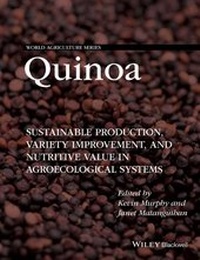
Quinoa
Improvement and Sustainable Production
Published on 18. September 2015
Book
Hardback
256 pages
978-1-118-62805-8 (ISBN)
Description
Quinoa is an ancient grain that has grown in popularity in recent years. It has been known as a good source of both protein and fiber. As the demand for quinoa increases a comprehensive and up-to-date reference on the biology and production of the crop is essential. Quinoa: Improvement and Sustainable Production brings together authors from around the world to provide a complete assessment of the current state of global quinoa research and production. Topics covered include quinoa history and culture, genomics and breeding, agronomy, nutrition, marketing, and end-uses. The book focuses in particular on the emerging role of quinoa in providing increased food security to smallholder farmers and communities throughout the world. Quinoa will interest quinoa researchers, producers, crop scientists, agronomists, and plant geneticists, as well as advanced students working with this important grain.
More details
Series
Edition
1. Auflage
Language
English
Place of publication
Hoboken
United Kingdom
Publishing group
John Wiley and Sons Ltd
Target group
Professional and scholarly
Product notice
sewn/stitched
Cloth over boards
Dimensions
Height: 246 mm
Width: 193 mm
Thickness: 18 mm
Weight
590 gr
ISBN-13
978-1-118-62805-8 (9781118628058)
Schweitzer Classification
Other editions
Persons
Dr. Kevin Murphy is a Plant Breeder and Assistant Professor at Washington State University focusing on quinoa, barley, and several other alternative grain crops. Dr. Murphy currently is the lead project director on a $1.6M, multistate and multidisciplinary NIFA-funded quinoa research project spanning much of the western United States. Dr. Murphy actively collaborates and communicates with most of the leading quinoa researchers worldwide and leads a vibrant quinoa breeding program at Washington State University. He has published over 20 peer reviewed journal articles on plant breeding and agronomy, including three book chapters. Dr. Murphy is an Associate Editor with Agronomy Journal and has served as a guest editor of a special issue of the peer-reviewed journal Sustainability. He is working with the United Nations Food and Agriculture Organization Academic Impact Team as it prepares for the 2013 International Year of Quinoa.
Janet B. Matanguihan, Department of Crop and Soil Sciences, Washington State University Pullman, WA, USA.
Janet B. Matanguihan, Department of Crop and Soil Sciences, Washington State University Pullman, WA, USA.
Content
Chapter 1 Quinoa: an Incan Crop to Face Global Changes in Agriculture
Juan Antonio González,Sayed Eisa, Sayed Hussin, and Fernando E. Prado
Introduction
A Brief History of Quinoa Cultivation
Nutritional Value of Quinoa Seed
Botanical and Genetic Characteristics of the Quinoa Plant
Quiona and Environmental Stresses: Drought and Salinity
Conclusion
References
Chapter 2 History of Quinoa: Its Origin, Domestication, Diversification and Cultivation with Particular Reference to the Chilean Context
Enrique A. Martínez, Francisco F. Fuentes, Didier Bazile
Abstract
Quinoa Origins in the Central Andes
Ancient Expansion to Southern Latitudes in Chile
Re-introduction of Quinoa in Arid Chile after Local Extinction
Final remarks
References
Chapter 3 Agroecological and Agronomic Cultural Practices of Quinoa in South America
Magali Garcia, Bruno Condori, and Carmen Del Castillo
Introduction
Andean Domestication
Botanical and Taxonomical Description
Genetic Background and Research on Quinoa Genetics
Ecology and Phytogeography
Quinoa Production
Climate
Drought Resistance
Temperature and Photoperiod
Hail
Cultivation
Sowing
Fertilization of Quinoa
Cultural Practices
Crop Water Requirements and Irrigation
Biotic Threats: Pests and Diseases
Seed Harvest and Post-harvest Technology
References
Chapter 4 Trends in Quinoa Yield Over the Southern Bolivian Altiplano: Lessons from Climate and Land-Use Projections
Serge Rambal, Jean-Pierre Ratte, Florent Mouillot, and Thierry Winkel
Summary
Introduction
Material and Methods
The Study Area
Recent Past and Present Climate
Source of Climate Scenarios
Simulating the Yield Index at Local or Plot Scale
The Soil Water Balance Model
Scenarios of Land Use / Land Cover Changes
Scaling Local Yield Index up to the Region
Results
Drought History Over the Area
Climate Projections and Soil Drought Limitation
Time Variation of Yield at Local or Plot Scale
Model Results at Landscape Level
Discussion
Acknowledgements
References
Chapter 5 The Potential of Using Natural Enemies and Chemical Compounds in Quinoa for Biological Control of Insect Pests
Mariana Valoy, Carmen Reguilón, and Griselda Podazza
Introduction
Insects in Quinoa
Insect Pests of Quinoa
Beneficial Insects in Quinoa
Parasitoids
Predators
Entomophatogens
Chemical Responses of Quinoa to Insect Herbivory
Quinoa Secondary Metabolites
Terpenoid Compounds
Phenolic Compounds
Potential of Biological Control in Quinoa
Potential for Ecological Management in Quinoa
References
Chapter 6 Quinoa Breeding
Luz Gomez Pando
History-Domestication Process
Collection of Genetic Resources
Goals and Methods of Quinoa Breeding
Requirement of the farmers
Higher Yield
Plant Height
Stalk Strength
Life Cycle
Resistance to Biotic Stresses
Resistance to Abiotic Stresses
Plant Morphology
Harvest Index
Requirement of the Industry and Consumers
Protein Content and Composition
Seed Characteristics
Methods in Genetic Improvement
Reproductive Biology
Polyploidy Level
Quinoa Breeding Methods
Selection
Individual Selection
Mass Selection
Participatory Plant Breeding (PPB)
Introduction of Foreign Germplasm
Hybridization
Selection of Parents
Flowering Biology
Emasculation and Pollination Procedure
Bulk or Mass selection
Individual or Pedigree Selection
Combination of Individual and Mass Selection
Single - Seed Descent
Interspecific and Intergeneric Crosses
Backcross Method
Using Heterosis in Quinoa
Mutagenesis
Marker-Assisted Selection (MAS)
Conclusion
References
Chapter 7 Quinoa Cytogenetics, Molecular Genetics and Diversity
Janet B. Matanguihan,Peter J. Maughan, Eric N. Jellen, and Bozena Kolano
Introduction
Cytogenetics and Genome Structure of Chenopodium quinoa
Crossability of Quinoa and Allied Tetraploid Taxa
DNA Sequence Evidence for Quinoa's Genomic Origins
Quinoa Genetic Markers and Linkage Maps
Quinoa Diversity
Phenotypic diversity
Genetic diversity
Summary
References
Chapter 8 Ex-situ Conservation of Quinoa: the Bolivian Experience
Wilfredo Rojas and Milton Pinto
Introduction
Centers of Origin and Diversity of Quinoa
Geographical Distribution of Quinoa
Genebanks of the Andean Region
Bolivian Collection of Quinoa Germplasm
History and Management of the Quinoa Germplasm
Current Status of Quinoa Germplasm
Steps for Ex-Situ Management and Conservation of Quinoa
Collection of Quinoa Germplasm
Technical Procedure for Quinoa Germplasm Collection
History and Evolution of Quinoa Germplasm Collections
Distribution of Quinoa Germplasm Collection
Preliminary Multiplication of Quinoa Germplasm
Storage and Conservation of Quinoa Germplasm
Short and Medium Term Storage (1 to 20 years)
Long Term Storage (80 to 100 years)
Characterization and Evaluation of the Quinoa Germplasm
Stages of Germplasm Characterization and Evaluation
Agro-morphological Variables
Agro-food and Nutritional Value Variables
Molecular Characterization
Multiplication and Regeneration of Quinoa Germplasm
Monitoring of Seed Quantity and Percentage of Seed Germination
Technical Procedure for Multiplication and/or Regeneration
Regeneration Schedule
Documentation and Information on Quinoa Germplasm
Utilization of Quinoa Germplasm
Direct Use
Procedure to Apply Participatory Evaluation Techniques for Quinoa
Participatory Assessments with Quinoa Germplasm
Training Courses on the Varied Uses of Quinoa
Indirect Use
Quinoa Core Collection
Social Use
Promotion and Dissemination
Formal and Informal Education
Conclusions
References
Chapter 9 Quinoa Breeding in Africa: History, Goals and Progress
Moses Maliro and Veronica Guwela
Introduction
Origin of quinoa
Introducing Quinoa in Africa
Food Security in Africa
Prevalence of Malnutrition
Nutritional Value of Quinoa
Quinoa as Alternative Crop in Malawi
Increasing Awareness About Quinoa
Ecological Adaptation of Quinoa
Goals of Quinoa Bredding in Africa
Quinoa Studies Under Malawi Conditions
Cultivars Introduced
General Climate Conditions
Plant Growth Performance
Genotype Performance
Quinoa Studies in Kenya
Experimental Sites and Climatic Conditions
Plant Growth and Grain Yield
Pests and Diseases
Challenges and Considerations for Future Research
Plant Lodging
Acceptability
Agronomic Practices
Rainfed Versus Irrigated Cropping Systems
Conclusion
References
Chapter 10 Quinoa Cultivation for Temperate North America: Considerations and Areas for Investigation
Adam Peterson and Kevin Murphy
Introduction
Tolerance to Abiotic Stresses
Heat Tolerance
Drought Tolerance
Cold Tolerance
Salinity Tolerance
Production Aspects
Variety selection
Fertilization
Planting/Spacing
Maturity and Harvesting
Challenges to Quinoa Production
Waterlogging and Sprouting
Disease
Insect Pests
Weed Control
Saponins
Alternative Uses of Quinoa
Forage
Feed
Conclusion
References
Chapter 11 Nutritional Properties of Quinoa
Geyang Wu
Introduction
Protein
Carbohydrates
Starch
Sugar
Dietary Fiber
Lipids
Vitamins
Minerals
Anti-nutritional Factors of Quinoa
Bioactive Compounds
Phenolic compounds
Carotenoids
Summary
References
Chapter 12 Quinoa's Calling
Sergio Núñez de Arco