

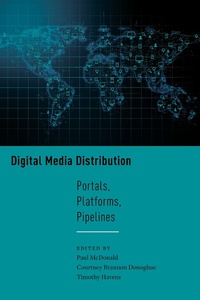
Digital Media Distribution
Portals, Platforms, Pipelines
Published on 7. September 2021
277 pages
978-1-4798-0680-5 (ISBN)
Description

A deep dive into the new era of digital content production and distribution
In the twenty-first century, the platforms that both create and host content have become nearly as important as media itself. Companies such as Netflix, Spotify, and YouTube have attained a massive hold on the public imagination and have become an almost ineluctable part of people's everyday lives. While the workings of media distribution had until very recently remained inconsequential to the average consumer, the recent popularization of various online platforms has made the question of distribution immediate to everyone.
Digital Media Distribution: Portals, Platforms, Pipelines provides a timely examination of the multifaceted distribution landscape in a moment of transformation and conceptualizes media distribution as a complex site of power, privilege, and gatekeeping. These tensions have local, national, and global consequences on the autonomy of creative workers, as well as on how we gain access to, engage with, and understand cultural products. Drawing on original research into distribution practices in industries as diverse as television, film, videogames, literature, and adult entertainment, each chapter explores how digitization has changed media distribution and its broader economic, industrial, social, and cultural implications.
Bringing together experts from around the world and across the media industries, Digital Media Distribution: Portals, Platforms, Pipelines presents a vast array of critical approaches and illustrative case studies for understanding the factors that have an impact on the way media travels and moves throughout our digital lives.
In the twenty-first century, the platforms that both create and host content have become nearly as important as media itself. Companies such as Netflix, Spotify, and YouTube have attained a massive hold on the public imagination and have become an almost ineluctable part of people's everyday lives. While the workings of media distribution had until very recently remained inconsequential to the average consumer, the recent popularization of various online platforms has made the question of distribution immediate to everyone.
Digital Media Distribution: Portals, Platforms, Pipelines provides a timely examination of the multifaceted distribution landscape in a moment of transformation and conceptualizes media distribution as a complex site of power, privilege, and gatekeeping. These tensions have local, national, and global consequences on the autonomy of creative workers, as well as on how we gain access to, engage with, and understand cultural products. Drawing on original research into distribution practices in industries as diverse as television, film, videogames, literature, and adult entertainment, each chapter explores how digitization has changed media distribution and its broader economic, industrial, social, and cultural implications.
Bringing together experts from around the world and across the media industries, Digital Media Distribution: Portals, Platforms, Pipelines presents a vast array of critical approaches and illustrative case studies for understanding the factors that have an impact on the way media travels and moves throughout our digital lives.
Reviews / Votes
"A collection of cutting-edge scholarship defining one of the most vital areas in media studies today. As distribution practices, logics, and markets continue to transform, this book provides the conceptual tools that make it all meaningful. A critical resource for all students and scholars of media industries." (Jennifer Holt, University of California, Santa Barbara) "A rich and varied collection on a crucial issue for the thriving field of media industry studies." (David Hesmondhalgh, University of Leeds)More details
Series
Language
English
Place of publication
New York
United States
Target group
Professional and scholarly
Illustrations
5 b/w illustrations
ISBN-13
978-1-4798-0680-5 (9781479806805)
Copyright in bibliographic data and cover images is held by Nielsen Book Services Limited or by the publishers or by their respective licensors: all rights reserved.
Schweitzer Classification
Other editions
Additional editions
Paul McDonald | Courtney Brannon Donoghue | Timothy Havens
Digital Media Distribution
Portals, Platforms, Pipelines
Book
09/2021
New York University Press
€39.50
Shipment within 10-20 days
Persons
Paul McDonald is Professor of Media Industries at King's College London. His publications include Video and DVD Industries (2007) and Hollywood Stardom (2013), and the co-editing of The Contemporary Hollywood Film Industry (2008) and Hollywood and the Law (2015). He co-edits the International Screen Industries book series from the British Film Institute.
Courtney Brannon Donoghue is an Assistant Professor in the Department of Media Arts at the University of North Texas. Her publications include Localising Hollywood (British Film Institute Press, 2017) and have appeared in Cinema Journal, Feminist Media Studies, Media, Culture & Society, and various edited collections.
Timothy Havens is Associate Professor of Television and Media Studies in the Department of Communication Studies, the Program in African American Studies, and the Program in International Studies at the University of Iowa.
Courtney Brannon Donoghue is an Assistant Professor in the Department of Media Arts at the University of North Texas. Her publications include Localising Hollywood (British Film Institute Press, 2017) and have appeared in Cinema Journal, Feminist Media Studies, Media, Culture & Society, and various edited collections.
Timothy Havens is Associate Professor of Television and Media Studies in the Department of Communication Studies, the Program in African American Studies, and the Program in International Studies at the University of Iowa.
