

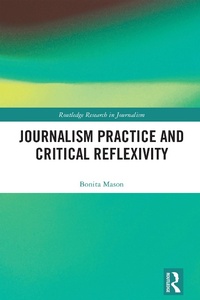
Journalism Practice and Critical Reflexivity
1st Edition
Published on 14. July 2023
226 pages
978-0-429-89011-6 (ISBN)
Description

Journalism Practice and Critical Reflexivity is a theoretical- and practice-based response to the crisis of mission and credibility in journalism studies that is heightened by online and social media. It describes, analyses and offers new approaches and models for critically reflexive journalism research, practice and education.
With specific theoretical and conceptual approaches employed, such as Pierre Bourdieu's reflexive sociology along with the analytical, practice-based, reflective and narrative techniques of Donald Schoen and autoethnography, this book provides possible responses to these crises of purpose and legitimacy, and to transformation, in Western corporate journalism. With journalists working in mainstream media under increasing pressure, the book considers the possibility of either slowing journalism down or having elements of a more reflexive journalism practice set alongside other routine practices. It proposes reciprocity as a core value to guide much investigative and news journalism.
Scholars and practitioners of journalism, researchers and post-graduate students interested in journalism, critical reflexivity and reflective practice in relevant disciplines can apply the concepts and techniques of critical reflexivity in their own research or teaching. Journalists, criminologists and others concerned with Indigenous deaths in custody, prisons, the institutional duty of care, social and/or legal justice and effective government administration will also find the study rewarding.
With specific theoretical and conceptual approaches employed, such as Pierre Bourdieu's reflexive sociology along with the analytical, practice-based, reflective and narrative techniques of Donald Schoen and autoethnography, this book provides possible responses to these crises of purpose and legitimacy, and to transformation, in Western corporate journalism. With journalists working in mainstream media under increasing pressure, the book considers the possibility of either slowing journalism down or having elements of a more reflexive journalism practice set alongside other routine practices. It proposes reciprocity as a core value to guide much investigative and news journalism.
Scholars and practitioners of journalism, researchers and post-graduate students interested in journalism, critical reflexivity and reflective practice in relevant disciplines can apply the concepts and techniques of critical reflexivity in their own research or teaching. Journalists, criminologists and others concerned with Indigenous deaths in custody, prisons, the institutional duty of care, social and/or legal justice and effective government administration will also find the study rewarding.
More details
Series
Edition
1. Auflage
Language
English
Place of publication
London
United Kingdom
Publishing group
Taylor & Francis Ltd
Target group
College/higher education
ISBN-13
978-0-429-89011-6 (9780429890116)
Copyright in bibliographic data and cover images is held by Nielsen Book Services Limited or by the publishers or by their respective licensors: all rights reserved.
Schweitzer Classification
Other editions
Additional editions
Bonita Mason
Journalism Practice and Critical Reflexivity
Book
11/2024
1st Edition
Routledge
€63.20
Shipment within 10-20 days
Bonita Mason
Journalism Practice and Critical Reflexivity
Book
07/2023
1st Edition
Routledge
€206.30
Shipment within 10-20 days
Person
Bonita Mason is a senior lecturer and head of journalism in UniSA Creative, at the University of South Australia. She is an award-winning journalist who has also worked for governments, as a policy developer and analyst, and with national and regional First Nations land rights and other organisations in Australia. Her award-winning PhD and subsequent research advocate critically reflexive journalism research and practice.
Content
Prologue
Chapter 1: Journalism practice and critical reflexivity - an introduction
Case study 1: "The Girl in Cell 4"
Chapter 2: Context: On not paying attention
Chapter 3: Reflexive narrative: A death in custody story about practice
Chapter 4: Observations, lessons, application - habitus, practice and power
Case study 2: "Blood on the tracks"
Chapter 5: "It's almost like the truth is just right there"
Chapter 6: Analysis and aftermath: "the bigger questions"
Case study 3: "The Ghosts are not silent"
Chapter 7: Sam Carmody, a massacre and a family reckoning
Chapter 8: Analysis, aftermath, legitimacy and transformation
Chapter 9: On reciprocal journalism - a conclusion
Epilogue
Chapter 1: Journalism practice and critical reflexivity - an introduction
Case study 1: "The Girl in Cell 4"
Chapter 2: Context: On not paying attention
Chapter 3: Reflexive narrative: A death in custody story about practice
Chapter 4: Observations, lessons, application - habitus, practice and power
Case study 2: "Blood on the tracks"
Chapter 5: "It's almost like the truth is just right there"
Chapter 6: Analysis and aftermath: "the bigger questions"
Case study 3: "The Ghosts are not silent"
Chapter 7: Sam Carmody, a massacre and a family reckoning
Chapter 8: Analysis, aftermath, legitimacy and transformation
Chapter 9: On reciprocal journalism - a conclusion
Epilogue
