


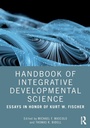
Handbook of Integrative Developmental Science
Essays in Honor of Kurt W. Fischer
1st Edition
Published on 20. March 2020
536 pages
978-1-000-04099-9 (ISBN)
Description

Although integrative conceptions of development have been gaining increasing interest, there have been few attempts to bring together the various threads of this emerging trend. The Handbook of Integrative Developmental Science seeks ways to bring together classic and contemporary theory and research in developmental psychology with an eye toward building increasingly integrated theoretical and empirical frameworks. It does so in the form of a festschrift for Kurt Fischer, whose life and work have both inspired and exemplified integrative approaches to development.
Building upon and inspired by the comprehensive scope of Fischer's Dynamic Skill Theory, this book examines what an integrated theory of psychological development might look like. Bringing together the work of prominent integrative thinkers, the volume begins with an examination of philosophical presuppositions of integrative approaches to development. It then shows how Dynamic Skill Theory provides an example of an integrative model of development. After examining the question of the nature of integrative developmental methodology, the volume examines the nature of developmental change processes as well as pathways and processes in the development of psychological structures both within and between psychological domains. The team of expert contributors cover a range of psychological domains, including the macro- and micro-development of thought, feeling, motivation, self, intersubjectivity, social relations, personality, and other integrative processes. It ends with a set of prescriptions for the further elaboration of integrative developmental theory, and a tribute to Kurt Fischer and his influence on developmental psychology.
This book will be essential reading for graduate students and researchers of developmental psychology and human development, specifically developmental science.
Building upon and inspired by the comprehensive scope of Fischer's Dynamic Skill Theory, this book examines what an integrated theory of psychological development might look like. Bringing together the work of prominent integrative thinkers, the volume begins with an examination of philosophical presuppositions of integrative approaches to development. It then shows how Dynamic Skill Theory provides an example of an integrative model of development. After examining the question of the nature of integrative developmental methodology, the volume examines the nature of developmental change processes as well as pathways and processes in the development of psychological structures both within and between psychological domains. The team of expert contributors cover a range of psychological domains, including the macro- and micro-development of thought, feeling, motivation, self, intersubjectivity, social relations, personality, and other integrative processes. It ends with a set of prescriptions for the further elaboration of integrative developmental theory, and a tribute to Kurt Fischer and his influence on developmental psychology.
This book will be essential reading for graduate students and researchers of developmental psychology and human development, specifically developmental science.
More details
Edition
1. Auflage
Language
English
Place of publication
London
United Kingdom
Publishing group
Taylor & Francis Ltd
Target group
College/higher education
Illustrations
16 Tables, black and white; 122 Line drawings, black and white; 1 Halftones, black and white; 1 Illustrations, black and white
ISBN-13
978-1-000-04099-9 (9781000040999)
Copyright in bibliographic data and cover images is held by Nielsen Book Services Limited or by the publishers or by their respective licensors: all rights reserved.
Schweitzer Classification
Other editions
Additional editions

Michael F. Mascolo | Thomas R. Bidell
Handbook of Integrative Developmental Science
Essays in Honor of Kurt W. Fischer
Book
04/2020
1st Edition
Routledge
€377.50
Shipment within 10-20 days
Michael F. Mascolo | Thomas R. Bidell
Handbook of Integrative Developmental Science
Essays in Honor of Kurt W. Fischer
Book
04/2020
1st Edition
Routledge
€144.80
Shipment within 10-20 days
Persons
Michael F. Mascolo is Professor of Psychology at Merrimack College, US.
Thomas R. Bidell is an independent scholar who formerly taught at Boston College.
Thomas R. Bidell is an independent scholar who formerly taught at Boston College.
Content
List of Contributors
What is an Integrative Theory of Development - And Why Do We Need One?
FOUNDATIONS
Philosophical Background to Integrative Theories of Human Development
Between the Natural and the Normative: The Concept of Development in Integrative Theories of Human Development
Equilibration, Development, and Epistemic Adequacy
Dynamic Skill Theory: An Integrative Model of Psychological Development
METHODS FOR AN INTEGRATIVE PSYCHOLOGY OF DEVELOPMENT
Methodology without the Method: Re-building Psychology into a Developmental Science
Education and Development as Complex Dynamic Agent Systems: How Theory Informs Methodology
CHANGE PROCESSES: HOW DEVELOPMENT HAPPENS
Epigenesis without Preformationism: Taking Development Seriously
Motor Experience and Action Understanding: A Developmental Systems Perspective
Of Interest and Engagement: The Emotional Force of Learning and Development
From Reflex to Meaning via Shared Routines
The Puzzle of Microdevelopment: Variability, Fractals, and Why Developmental Change is So Different and Still the Same
The Cultural Framing of Development
PATHWAYS AND PROCESSES WITHIN AND BETWEEN PSYCHOLOGICAL DOMAINS
One Person, Many Selves: A Relational-Developmental Conception of Self and Personality
The Landscape of Identity: Integrating Commitment Strength and Quality within a Developmental Framework
The Developmental Integration of Self in Relationships
The Relational Origins of Morality and Its Development
Rethinking Educational Assessment in Light of Strong Theory of Development
MOVING FORWARD
Looking Forward: Contributions of the Neurocognitive Sciences on Teaching and Learning in the Digital Environment
Steps Toward an Integrative Theory of Psychological Development
Kurt W. Fischer: Developmental Scientist Extraordinaire!
Kurt W. FIscher's Insight
Index
What is an Integrative Theory of Development - And Why Do We Need One?
FOUNDATIONS
Philosophical Background to Integrative Theories of Human Development
Between the Natural and the Normative: The Concept of Development in Integrative Theories of Human Development
Equilibration, Development, and Epistemic Adequacy
Dynamic Skill Theory: An Integrative Model of Psychological Development
METHODS FOR AN INTEGRATIVE PSYCHOLOGY OF DEVELOPMENT
Methodology without the Method: Re-building Psychology into a Developmental Science
Education and Development as Complex Dynamic Agent Systems: How Theory Informs Methodology
CHANGE PROCESSES: HOW DEVELOPMENT HAPPENS
Epigenesis without Preformationism: Taking Development Seriously
Motor Experience and Action Understanding: A Developmental Systems Perspective
Of Interest and Engagement: The Emotional Force of Learning and Development
From Reflex to Meaning via Shared Routines
The Puzzle of Microdevelopment: Variability, Fractals, and Why Developmental Change is So Different and Still the Same
The Cultural Framing of Development
PATHWAYS AND PROCESSES WITHIN AND BETWEEN PSYCHOLOGICAL DOMAINS
One Person, Many Selves: A Relational-Developmental Conception of Self and Personality
The Landscape of Identity: Integrating Commitment Strength and Quality within a Developmental Framework
The Developmental Integration of Self in Relationships
The Relational Origins of Morality and Its Development
Rethinking Educational Assessment in Light of Strong Theory of Development
MOVING FORWARD
Looking Forward: Contributions of the Neurocognitive Sciences on Teaching and Learning in the Digital Environment
Steps Toward an Integrative Theory of Psychological Development
Kurt W. Fischer: Developmental Scientist Extraordinaire!
Kurt W. FIscher's Insight
Index
