

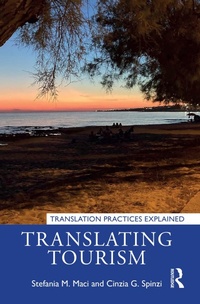
Translating Tourism
1st Edition
Published on 30. September 2025
286 pages
978-1-040-41148-3 (ISBN)
Description

This engaging textbook provides an in-depth examination of tourist discourse and communication and a guide to translating tourism texts.
Through analysis of the linguistic, intercultural, and socially inclusive aspects of tourist communication, this volume covers both conventional and digital forms of tourist texts and explores the unique attributes of tourist discourse, including its lexical, syntactic, and textual qualities, and how these affect translation processes. Special emphasis is placed on the translation of digital tourist information, guided tours, and accessible tourism discourse, highlighting the need for a functional and flexible translation methodology. The authors posit that tourist translation transcends simple language transmission, functioning as a mediatory act that necessitates cultural adaptation, knowledge of accessibility, and persuasive methods customised for varied audiences.
Synthesising concepts from tourist studies, discourse analysis, and translation studies, this accessible textbook merges theoretical views with practical examples to provide a key resource for researchers, translators, and professionals in translation studies, tourism communication, English language and linguistics.
Through analysis of the linguistic, intercultural, and socially inclusive aspects of tourist communication, this volume covers both conventional and digital forms of tourist texts and explores the unique attributes of tourist discourse, including its lexical, syntactic, and textual qualities, and how these affect translation processes. Special emphasis is placed on the translation of digital tourist information, guided tours, and accessible tourism discourse, highlighting the need for a functional and flexible translation methodology. The authors posit that tourist translation transcends simple language transmission, functioning as a mediatory act that necessitates cultural adaptation, knowledge of accessibility, and persuasive methods customised for varied audiences.
Synthesising concepts from tourist studies, discourse analysis, and translation studies, this accessible textbook merges theoretical views with practical examples to provide a key resource for researchers, translators, and professionals in translation studies, tourism communication, English language and linguistics.
Reviews / Votes
"Translating Tourism" promises to be a popular and highly influential addition to the field of tourism studies pedagogy. The book tackles the critically important topic of translation from a tourism studies perspective. Translation is an exceptionally challenging aspect of tourism, and one that is very high-stakes given its economic implications: indeed, the quality and effectiveness of translations for tourists can have a major impact on the number of tourists who visit a destination. Translating Tourism Explained provides timely, vital information to help ensure the success of tourism translation. The book is thorough, well-researched, and clear"Michael J. Zerbe, Professor, York College of Pennsylvania, USA
More details
Series
Edition
1. Auflage
Language
English
Place of publication
London
United Kingdom
Publishing group
Taylor & Francis Ltd
Target group
College/higher education
Professional and scholarly
Illustrations
8 Tables, black and white; 31 Halftones, color; 1 Halftones, black and white; 31 Illustrations, color; 1 Illustrations, black and white
File size
23,06 MB
ISBN-13
978-1-040-41148-3 (9781040411483)
Copyright in bibliographic data and cover images is held by Nielsen Book Services Limited or by the publishers or by their respective licensors: all rights reserved.
Schweitzer Classification
Other editions
Additional editions
Stefania M. Maci | Cinzia G. Spinzi
Translating Tourism
Book
09/2025
1st Edition
Routledge
€206.70
Shipment within 10-20 days
Stefania M. Maci | Cinzia G. Spinzi
Translating Tourism
Book
09/2025
1st Edition
Routledge
€63.60
Shipment within 10-20 days
Persons
Stefania M. Maci is Full Professor of English Language, Linguistics and Translation at the University of Bergamo, where she is the coordinator of the MA in Text Sciences and Culture Enhancement in the Digital Age. She has extensively published in tourism discourse and is the co-editor of The Routledge Handbook of Scientific Communication and The Routledge Handbook of Discourse and Disinformation.
Cinzia G. Spinzi is Associate Professor at the University of Bergamo, where she is the coordinator of the MA in Planning and Management of Tourism Systems.
Cinzia G. Spinzi is Associate Professor at the University of Bergamo, where she is the coordinator of the MA in Planning and Management of Tourism Systems.
Content
List of Figures
Acknowledgments
List of Acronyms
IntroductionUsing this Book
Structure of the Book
CHAPTER 1 - Tourism Discourses
What is Tourism?
The Role of Discourse in the Tourism Industry
Language or Discourse? Some Definitions
Studies in Tourism Discourse
Tourism Discourse vs General Discourse
Understanding Tourism Analogue and Digital Genres and Text Types
Tourism as a Form of Specialized Discourse
Concluding Remarks
Activities and Exercises
CHAPTER 2 - Translation and Tourism
Introduction: Why Translation Matters in Tourism Discourse
Tourism Translation
Tourism Communication: Working with Tourism Text
Digital Strand: Navigating New Frontiers
Conclusion
Activities and Exercises
CHAPTER 3 - Accessibility and Inclusion through Tourism Translation
Introduction
Accessibility and Disability
Accessibility, Tourism, and Translation
A Brief Overview of Accessible Practices of Audiovisual Translation
Accessible Communication for All: The Linguistic Landscape in Tourism
Conclusion
Activities and Exercises
CHAPTER 4 - Tourist Guides at Work
Introduction
Tourists or Travellers?
The Tourist Guide
Tourist Guide at Work
Contextualizing and Profiling the Tourist Guide
The Genre of the Guided Tour
Cultural Mediation in the Guided Tour
Concluding Remarks
Activities and Exercises
CHAPTER 5 - Tourism Goes Digital
Introduction
Localising Websites
Tourism Digitisation and Mediatisation
Conclusion
Activities and Exercises
Appendix
References
Acknowledgments
List of Acronyms
IntroductionUsing this Book
Structure of the Book
CHAPTER 1 - Tourism Discourses
What is Tourism?
The Role of Discourse in the Tourism Industry
Language or Discourse? Some Definitions
Studies in Tourism Discourse
Tourism Discourse vs General Discourse
Understanding Tourism Analogue and Digital Genres and Text Types
Tourism as a Form of Specialized Discourse
Concluding Remarks
Activities and Exercises
CHAPTER 2 - Translation and Tourism
Introduction: Why Translation Matters in Tourism Discourse
Tourism Translation
Tourism Communication: Working with Tourism Text
Digital Strand: Navigating New Frontiers
Conclusion
Activities and Exercises
CHAPTER 3 - Accessibility and Inclusion through Tourism Translation
Introduction
Accessibility and Disability
Accessibility, Tourism, and Translation
A Brief Overview of Accessible Practices of Audiovisual Translation
Accessible Communication for All: The Linguistic Landscape in Tourism
Conclusion
Activities and Exercises
CHAPTER 4 - Tourist Guides at Work
Introduction
Tourists or Travellers?
The Tourist Guide
Tourist Guide at Work
Contextualizing and Profiling the Tourist Guide
The Genre of the Guided Tour
Cultural Mediation in the Guided Tour
Concluding Remarks
Activities and Exercises
CHAPTER 5 - Tourism Goes Digital
Introduction
Localising Websites
Tourism Digitisation and Mediatisation
Conclusion
Activities and Exercises
Appendix
References
