

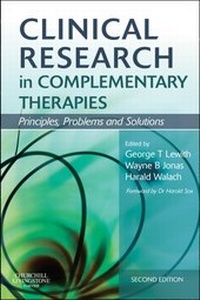
Clinical Research in Complementary Therapies
Description

The use of complementary therapies is exploding, increasing the pressure to establish a rigorous science to support its practice. Clinical Research in Complementary Therapies: Principles, Problems and Solutions provides students with the tools they need to research complementary and integrative medicine (CIM) and so fill this gap. Essential for both undergraduate and postgraduate students, this second edition is significantly updated and enhanced.
Part 1 deals with research strategies and methods, explaining the major types of clinical research in CIM and how these inter-relate. New chapters are included on whole systems research, qualitative research and questionnaire development. Not all therapies can be treated the same way nor channeled through the signal process of randomized controlled trials. Therefore, detailed description of mixed methods approaches including observational, qualitative, cost-benefit and comparative effectiveness research are described. Part 2 deals with specific complementary therapies and how they are invested by experts in each field.
The book analyses the key questions asked and the controversies debated in complementary medicine research and offers clear and innovative guidance for answering these questions.
FEATURES
. Provides an overarching synthesis of methods in CIM and how they are to be used collectively including the role of comparative effectiveness research . Suggests both general and specific factors which need to be considered in assessing or planning complementary therapy research . Pinpoints aspects of research which are different in orthodox research and complementary therapy research . Reviews the types of research carried out in specific complementary therapies and analyses issues which arise . Includes information on measuring the economic cost and benefits of complementary medicine, clinical audit and the role of placebos use . Builds upon recent research results, looks at the lessons these provide for all complementary therapies and suggests key issues to address in future research.
. Provides an overarching synthesis of methods in CIM and how they are to be used collectively including the role of comparative effectiveness research . Suggests both general and specific factors which need to be considered in assessing or planning complementary therapy research . Pinpoints aspects of research which are different in orthodox research and complementary therapy research . Reviews the types of research carried out in specific complementary therapies and analyses issues which arise . Includes information on measuring the economic cost and benefits of complementary medicine, clinical audit and the role of placebos use . Builds upon recent research results, looks at the lessons these provide for all complementary therapies and suggests key issues to address in future research.
All prices
More details
Other editions
Additional editions
Content
- Front Cover
- Clinical Research in Complementary Therapies
- Copyright Page
- Contents
- Contributors
- Foreword
- References
- Preface
- Section I: Standards of quality in Cam research
- 1: Toward standards of evidence for CAM research and practice
- Introduction
- Science and Values
- The Audience and the Evidence
- How is Evidence Actually Used in Practice?
- Knowledge Domains and Research Methods
- Alternative Strategies to The Hierarchy
- Quality Criteria for Clinical Research
- Applying Research Strategies In Cam
- Special Cam Research Issues
- Improving Standards of Evidence-Based Medicine for Cam
- Conclusion: Cam and Evolution of the Scientific Method
- References
- 2: Qualitative research methods: a focus on understandingexperiences and meaning
- Introduction
- Overview of Qualitative Research Methods
- Qualitative Research Methods Applied to Cam
- Conclusion
- References
- Further reading
- 3: The role of outcomes and observational research in evaluating integrative medicine
- Introduction
- History and Value of Rcts In The Evaluation of Medical Interventions
- General Principles of Rcts
- Issues and Limitations Related to Rcts
- Research in Complementary And Integrative Medicine
- The Role of Outcomes Research and Observational Studies In Integrative Medicine
- Measuring Non-Specific Effects
- Incorporating Outcomes Integrative Medicine and Whole-Systems Research
- Capturing The Impact of Personalized Integrative Care In The Era of Genomic Medicine
- Clear And Rigorous Reporting of Observational Studies
- References
- 4: Laboratory researchand biomarkers
- Introduction
- Cam Research: Reverse-Course Hypothesis
- Experimental Design
- Basic Science Research and Cam
- Cellular Models
- Animal Models
- Impact of Cutting-Edge Technologies on Cam Research
- High-Throughput Systems of Analysis: The Omics
- Bioinformatic Analysis
- Role of Biomarkers in Cam Basic Research
- Standards, Quality and Application in Cam Basic Science Research
- Toward Standards in Cam Laboratory Research
- Conclusion
- References
- 5: Randomized controlled trials
- Introduction
- Confirmatory and Exploratory Studies
- Study Hypothesis and Hypothesis Testing
- Determining the Sample Size
- The Essential Elements of a Randomized Controlled Trial
- Randomization
- Blinding
- Controls
- The Influence of Expectation
- Study Designs
- Pragmatic Versus Experimental Studies
- Analysing Randomized Controlled Trials
- Conclusion
- References
- Further reading
- 6: Systematic reviews and meta-analyses in CAM:
- Introduction
- The Protocol
- The Question
- Searching the Literature
- Selecting the Relevant Studies
- Extracting Information
- Assessing Quality
- Summarizing the Results
- Checking the Robustness of Results
- Who Should do Systematic Reviews?
- How to Identify Existing Systematic Reviews
- Limitations of Systematic Reviews
- How Should We Use Systematic Reviews in Cam?
- References
- Further Reading
- 7: Health services research as a form of evidence and Cam
- Introduction
- What is Health Services Research?
- What Kind of Evidence Does Hsr Collect and What Kind of Methods Does it Use?
- The Marriage of Cam And Hsr
- Whole-Systems Research
- Is Hsr Whole-Systems Research?
- Case Studies and Programme Evaluation
- Conclusion
- References
- Section II: Special isues in establishing Cam research quality
- 8: Research in herbal medicine
- Introduction
- The Evidence Fragments
- Prospects for Herbal Research
- Conclusions and Recommendations
- References
- 9: Scientific researchin homeopathy
- Introduction
- History
- Scientific Questions Raised by Homeopathy
- Systematic Reviews And Meta-Analyses of Clinical Trials of Homeopathy
- Randomized Controlled Clinical Trials of Homeopathy
- Summary of Clinical Research
- Research and Methodological Implications
- Cost-Effectiveness of Homeopathy
- Clinical Observational Studies
- Safety And 'Aggravation'
- Homeopathic Pathogenetic Trials
- Basic Science
- Biological Models
- Biological Models of Similitude
- The Physical Basis of Ultramolecular Effects
- Conclusions
- References
- 10: Massage therapy research methods
- An Evolving Research Process
- Specific Considerations For Specific Conditions
- Statistical Analyses
- Acknowledgements
- References
- 11: Acupuncture
- Introduction
- The Acupuncture Intervention
- Control Interventions
- Outcomes
- Expectation
- Comment on Study Design (Explanatory and Pragmatic Studies)
- Conclusion
- References
- Further Reading
- 12: Research methodology for studies of prayer and distant healing
- Introduction
- Defining the Intervention
- Target Systems
- Outcome Measures
- Establishing Causality
- Interpretation of Data
- Interpreting Results: Qualitative And Mixed-Methods Approaches
- Ethical Issues
- Mechanism of Effect
- Barriers to Research
- Why do Distant Healing Research?
- Summary
- References
- Further Reading
- 13: Manipulation
- Introduction
- What is Manipulation?
- The Mechanical Dysfunction Model
- How do We Investigate the Mechanical Dysfunction Model?
- How Safe is Manipulation?
- The Manipulation 'Package of Care'
- Researching Clinical Effectiveness
- Research and Access to Manipulation in the Uk
- Conclusion
- References
- 14: Mind-body medicineapproaches
- Introduction
- Stress Physiology
- The Relaxation Response
- Use and Efficacy of The Mind-Body Techniques
- Theories of Mechanisms of Action
- Conclusions
- References
- Further Reading
- Section III: Applying research standards in Cam
- 15: Inspiration and perspiration: what every researcher needs to know before they start
- Introduction
- Questions
- Protocols
- People
- Study Manual
- Management
- Data
- Patients
- Conclusion
- Further Reading
- 16: Placebo, meaning and context issues in research
- Definition of Placebo and The Meaning Response
- The Magnitude of Placebo Analgesia Effects
- Context and Meaning
- Psycho-Neuro-Physiological Mechanisms
- Implications of Meaning Responses for Study Design And Conduct
- Concluding Remarks: Harnessing Meaning Responses
- Acknowledgement
- References
- 17: Innovative designsand analyses
- Introduction
- Conventional Wisdom and Novel Approaches
- Early-Phase Research: Inference
- The Conditional Change Model
- Time-Dependent Treatments
- Novel Analyses
- Conclusions
- References
- 18: Questionnaires - development, validation, usage
- Conceptual Foundations
- Practical Solutions
- Practical Issues
- Final Words
- References
- 19: Economic evaluation
- Introduction
- What is an Economic Evaluation?
- The Principles of Economic Evaluation
- Practical Issues in an Economic Evaluation
- Existing Economic Evaluations of Cam Interventions
- Conclusion
- References
- 20: Evidence-based practice:
- Introduction
- Evidence-Based Practice: Towards A Definition
- Hierarchies of Evidence
- What Is Sound Evidence?
- Finding Evidence
- Mechanisms For Applying Evidence to Practice
- Mindlines
- Communities of Practice
- Continuing Challenges for The Traditional Model of Ebp
- The Challenge for Cam Practitioners
- References
- Further Reading

