

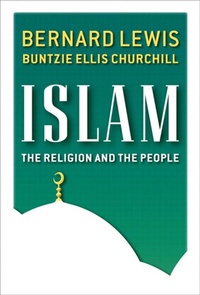
Islam
The Religion and the People
1st Edition
Published on 17. October 2008
254 pages
978-0-13-715493-7 (ISBN)
Description

This is the eBook version of the printed book. If the print book includes a CD-ROM, this content is not included within the eBook version.
Praise for Bernard Lewis
"For newcomers to the subject[el]Bernard Lewis is the man."
TIME Magazine
"The doyen of Middle Eastern studies."
The New York Times
"No one writes about Muslim history with greater authority, or intelligence, or literary charm."
British historian Hugh Trevor-Roper
"Bernard Lewis has no living rival in his field."
Al Ahram, Cairo (the most influential Arab world newspaper)
"When it comes to Islamic studies, Bernard Lewis is the father of us all. With brilliance, integrity, and extraordinary mastery of languages and sources, he has led the way for[el]investigators seeking to understand the Muslim world."
National Review
"Bernard Lewis combines profound depth of scholarship with encyclopedic knowledge of the Middle East and, above all, readability."
Daily Telegraph (London)
"Lewis speaks with authority in prose marked by lucidity, elegance, wit and force."
Newsday (New York)
"Lewis' style is lucid, his approach, objective."
Philadelphia Inquirer
"Lewis writes with unsurpassed erudition and grace."
Washington Times
An objective, easy-to-read introduction to Islam by Bernard Lewis, one of the West's leading experts on Islam
For many people, Islam remains a mystery. Here Bernard Lewis and Buntzie Ellis Churchill examine Islam: what its adherents believe and how their religion has shaped them, their rich and diverse cultures, and their politics over more than 14 centuries. Considered one of the West's leading experts on Islam, Lewis, with Churchill, has written an illuminating introduction for those who want to understand the faith and the global challenges it confronts and presents. Whatever your political, personal, or religious views, this book will help you understand Islam's reality.
Lewis and Churchill answer questions such as...
* How does Islam differ from Judaism and Christianity?
* What are the pillars of the Islamic faith?
* What does Islam really say about peace and jihad?
* How does the faith regard non-Muslims?
* What are the differences between Sunni and Shi'a?
* What does Islam teach about the position of women in society?
* What does Islam say about free enterprise and profit?
* What caused the rise of radical Islam?
* What are the problems facing Muslims in the U.S. and Europe and what are the challenges posed by those minorities?
Praise for Bernard Lewis
"For newcomers to the subject[el]Bernard Lewis is the man."
TIME Magazine
"The doyen of Middle Eastern studies."
The New York Times
"No one writes about Muslim history with greater authority, or intelligence, or literary charm."
British historian Hugh Trevor-Roper
"Bernard Lewis has no living rival in his field."
Al Ahram, Cairo (the most influential Arab world newspaper)
"When it comes to Islamic studies, Bernard Lewis is the father of us all. With brilliance, integrity, and extraordinary mastery of languages and sources, he has led the way for[el]investigators seeking to understand the Muslim world."
National Review
"Bernard Lewis combines profound depth of scholarship with encyclopedic knowledge of the Middle East and, above all, readability."
Daily Telegraph (London)
"Lewis speaks with authority in prose marked by lucidity, elegance, wit and force."
Newsday (New York)
"Lewis' style is lucid, his approach, objective."
Philadelphia Inquirer
"Lewis writes with unsurpassed erudition and grace."
Washington Times
An objective, easy-to-read introduction to Islam by Bernard Lewis, one of the West's leading experts on Islam
For many people, Islam remains a mystery. Here Bernard Lewis and Buntzie Ellis Churchill examine Islam: what its adherents believe and how their religion has shaped them, their rich and diverse cultures, and their politics over more than 14 centuries. Considered one of the West's leading experts on Islam, Lewis, with Churchill, has written an illuminating introduction for those who want to understand the faith and the global challenges it confronts and presents. Whatever your political, personal, or religious views, this book will help you understand Islam's reality.
Lewis and Churchill answer questions such as...
* How does Islam differ from Judaism and Christianity?
* What are the pillars of the Islamic faith?
* What does Islam really say about peace and jihad?
* How does the faith regard non-Muslims?
* What are the differences between Sunni and Shi'a?
* What does Islam teach about the position of women in society?
* What does Islam say about free enterprise and profit?
* What caused the rise of radical Islam?
* What are the problems facing Muslims in the U.S. and Europe and what are the challenges posed by those minorities?
More details
Edition
1. Auflage
Language
English
Place of publication
Boston
United States
Publishing group
Pearson Education (US)
Target group
Professional and scholarly
File size
4,65 MB
ISBN-13
978-0-13-715493-7 (9780137154937)
Copyright in bibliographic data and cover images is held by Nielsen Book Services Limited or by the publishers or by their respective licensors: all rights reserved.
Schweitzer Classification
Other editions
Additional editions
Book
09/2008
Financial TImes Prentice Hall
€17.32
Article exhausted; check different version
Persons
Bernard Lewis is Cleveland E. Dodge Professor of Near Eastern Studies, Emeritus, at Princeton University. He is the author of the best-sellers What Went Wrong: Western Impact and Middle Eastern Response and The Crisis of Islam: Holy War and Unholy Terror. He has performed the invaluable service of placing current events in the context of history. Lewis has advised policymakers in the U.S., UK, and the Middle East on the complex relationship between Islam and the West.
A number of his articles have been extraordinarily prescient. The Return of Islam was published 3 years before the Iranian revolution, and the award-winning The Roots of Muslim Rage anticipated 9/11 by a decade. His two dozen books have been translated into more than two dozen languages, including Arabic, Persian, Turkish, and Indonesian.
His contribution to the understanding of history has been recognized by the 15 universities that have awarded him honorary doctorates.
Buntzie Ellis Churchill served for 23 years as President of the World Affairs Council of Philadelphia, hosting dozens of world leaders from Mikhail Gorbachev and Margaret Thatcher to Henry Kissinger and Colin Powell. A member of the Council on Foreign Relations, she has served as a trustee of many non-profit organizations, including the Pennsylvania Institute of Technology and Drexel University. She has been awarded several honorary doctorates.
For a decade she hosted "WorldViews," a daily radio show, interviewing experts on international issues
A number of his articles have been extraordinarily prescient. The Return of Islam was published 3 years before the Iranian revolution, and the award-winning The Roots of Muslim Rage anticipated 9/11 by a decade. His two dozen books have been translated into more than two dozen languages, including Arabic, Persian, Turkish, and Indonesian.
His contribution to the understanding of history has been recognized by the 15 universities that have awarded him honorary doctorates.
Buntzie Ellis Churchill served for 23 years as President of the World Affairs Council of Philadelphia, hosting dozens of world leaders from Mikhail Gorbachev and Margaret Thatcher to Henry Kissinger and Colin Powell. A member of the Council on Foreign Relations, she has served as a trustee of many non-profit organizations, including the Pennsylvania Institute of Technology and Drexel University. She has been awarded several honorary doctorates.
For a decade she hosted "WorldViews," a daily radio show, interviewing experts on international issues
Content
Preface xv
Introduction 1
Chapter 1 The Faith and the Faithful 7
Chapter 2 The Pillars of the Faith 13
Chapter 3 Scripture, Tradition and Law 25
Chapter 4 The Mosque 39
Chapter 5 Diversity and Tolerance 51
Chapter 6 Sunni, Shi'a and Others 61
Chapter 7 Some History 71
Chapter 8 Government and Opposition 81
Chapter 9 Wider World of Islam 91
Chapter 10 Islam and the Economy 97
Chapter 11 Women in Islam 111
Chapter 12 Dress 127
Chapter 13 Language and Writing 137
Chapter 14 War and Peace 145
Chapter 15 Radical Islam 155
Conclusion 165
Appendix: Some Practical Matters 169
Terms and Topics 179
Index 225
Introduction 1
Chapter 1 The Faith and the Faithful 7
Chapter 2 The Pillars of the Faith 13
Chapter 3 Scripture, Tradition and Law 25
Chapter 4 The Mosque 39
Chapter 5 Diversity and Tolerance 51
Chapter 6 Sunni, Shi'a and Others 61
Chapter 7 Some History 71
Chapter 8 Government and Opposition 81
Chapter 9 Wider World of Islam 91
Chapter 10 Islam and the Economy 97
Chapter 11 Women in Islam 111
Chapter 12 Dress 127
Chapter 13 Language and Writing 137
Chapter 14 War and Peace 145
Chapter 15 Radical Islam 155
Conclusion 165
Appendix: Some Practical Matters 169
Terms and Topics 179
Index 225
