

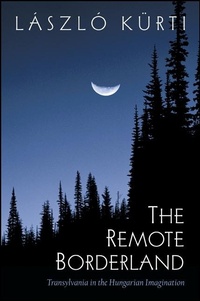
The Remote Borderland
Description

Explores how Transylvania figures in the Hungarian imagination and how this border region functions in the creation of national identity.
The Remote Borderland explores the significance of the contested region of Transylvania to the creation of Hungarian national identity. Author László Kürti illustrates the process by which European intellectuals, politicians, and artists locate their nation's territory, embody it with meaning, and reassert its importance at various historical junctures. The book's discussion of the contested and negotiated nature of nationality in its East Central European setting reveals cultural assumptions profoundly mortgaged to twentieth-century notions of home, nation, state, and people. The Remote Borderland shows that it is not only important to recognize that nations are imagined, but to note how and where they are imagined in order to truly understand the transformation of European societies during the twentieth century.
More details
Other editions
Additional editions

Person
László Kürti is professor of Political Science at the University of Miskolc, Hungary. He is the coeditor, with Juliet Langman, of Beyond Borders: Remaking Cultural Identities in the New East and Central Europe.
Content
Preface
1 Introduction: Regions, Identities, and Remote Borderlands
2 Contesting the Past: The Historical Dimension of the Transylvanian Conflict
3 Fieldwork on Nationalism: Transylvania in the Ethnographic Imagination
4 Literary Contests: Populism, Transylvania, and National Identity
5 Transylvania between the Two Socialist States: Border and Diaspora Identities in the 1970s and 1980s
6 Youth and Political Action: The Dance-House Movement and Transylvania
7 Transylvania Reimagined: Democracy, Regionalism, and Post-Communist Identity
8 Conclusion: New Nations, Identities, and Regionalism in the New Europe
Notes
Index
