

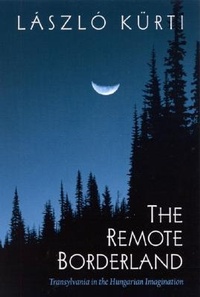
The Remote Borderland
Transylvania in the Hungarian Imagination
Published on 19. July 2001
Book
Hardback
259 pages
978-0-7914-5023-9 (ISBN)
Description
The Remote Borderland explores the significance of the contested region of Transylvania to the creation of Hungarian national identity. Author Laszlo Kuerti illustrates the process by which European intellectuals, politicians, and artists locate their nation's territory, embody it with meaning, and reassert its importance at various historical junctures. The book's discussion of the contested and negotiated nature of nationality in its East Central European setting reveals cultural assumptions profoundly mortgaged to twentieth-century notions of home, nation, state, and people. The Remote Borderland shows that it is not only important to recognize that nations are imagined, but to note how and where they are imagined in order to truly understand the transformation of European societies during the twentieth century.
Reviews / Votes
"The most impressive aspect of this book is the very extensive field work that Kuerti carried out in Hungary and Transylvania in the 1980s and 1990s. He relates not only what he learned about life in both places, before and after the collapse of communism, but also tells the story of how he experienced these changing political circumstances and how it affected his work. This is gripping stuff. Moreover, his reporting includes not only the standard stuff of ethnography, what was going on in people's lives while he was there, but also what was happening politically and in popular culture that influenced how people understood their circumstances. Tales of political actions, news reporting, an 'underground' youth culture, and the musings of literary figures are all grist for Kuerti's mill." - John W. Cole, University of Massachusetts, Amherst"The Remote Borderland lays out very intelligently a theoretical and historical problematization of Transylvanian identity from the standpoint of Hungarian and Romanian elites. It contextualizes the historical development of Transylvania as both a remote and border region within the relevant scholarship on pre and postcommunist East Europe. By so doing Kuerti seeks to provoke a series of questions about the ambiguous links between nation, state, and territory-questions that have potentially broad comparative significance for anthropologists, sociologists, historians, and political scientists." - Douglas R. Holmes, author of Cultural Disenchantments: Worker Peasantries in Northern Italy
More details
Series
Language
English
Place of publication
Albany, NY
United States
Product notice
sewn/stitched
Cloth over boards
Illustrations
Total Illustrations: 0
Dimensions
Height: 236 mm
Width: 159 mm
Thickness: 20 mm
Weight
481 gr
ISBN-13
978-0-7914-5023-9 (9780791450239)
Copyright in bibliographic data and cover images is held by Nielsen Book Services Limited or by the publishers or by their respective licensors: all rights reserved.
Schweitzer Classification
Other editions
Additional editions

E-Book
07/2001
State University of New York Press
€36.49
Available for download
Person
Laszlo Kuerti is professor of Political Science at the University of Miskolc, Hungary. He is the coeditor, with Juliet Langman, of Beyond Borders: Remaking Cultural Identities in the New East and Central Europe.
Content
Preface
1 Introduction: Regions, Identities, and Remote Borderlands
2 Contesting the Past: The Historical Dimension of the Transylvanian Conflict
3 Fieldwork on Nationalism: Transylvania in the Ethnographic Imagination
4 Literary Contests: Populism, Transylvania, and National Identity
5 Transylvania between the Two Socialist States: Border and Diaspora Identities in the 1970s and 1980s
6 Youth and Political Action: The Dance-House Movement and Transylvania
7 Transylvania Reimagined: Democracy, Regionalism, and Post?Communist Identity
8 Conclusion: New Nations, Identities, and Regionalism in the New Europe
Notes
Index
1 Introduction: Regions, Identities, and Remote Borderlands
2 Contesting the Past: The Historical Dimension of the Transylvanian Conflict
3 Fieldwork on Nationalism: Transylvania in the Ethnographic Imagination
4 Literary Contests: Populism, Transylvania, and National Identity
5 Transylvania between the Two Socialist States: Border and Diaspora Identities in the 1970s and 1980s
6 Youth and Political Action: The Dance-House Movement and Transylvania
7 Transylvania Reimagined: Democracy, Regionalism, and Post?Communist Identity
8 Conclusion: New Nations, Identities, and Regionalism in the New Europe
Notes
Index