

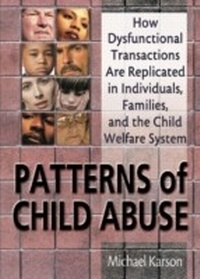
Patterns of Child Abuse
How Dysfunctional Transactions Are Replicated in Individuals, Families, and the Child Welfare System
1st Edition
Published on 13. September 2013
268 pages
978-1-135-18726-2 (ISBN)
Description

Interpret the hidden meaning of family roles to help children at risk!Because dysfunctional patterns are closed systems that serve a secret purpose, they are almost impossible to change from the outside. Patterns of Child Abuse helps you recognize the purpose behind the patterns and offers successful strategies for entering the pattern in order to help family members without joining it and becoming part of the dysfunction. Patterns of Child Abuse identifies the most common, most problematic patterns and explores their hidden meanings. Case studies and theoretical discussions demonstrate the ways family patterns are replicated in a child's psyche and the ways the grown-up child replicates the familiar family pattern, forcing the world to bend to the story within. Synthesizing systems theory, behaviorism, and psychoanalysis, Patterns of Child Abuse offers powerful insights as well as practical strategies for dealing with such complex issues as:
how to comfort an abused child who cannot bear to be touched
why abused children idealize their battering or neglectful parent
how borderline personality organization affects individuals and their families
handling the sexually powerful teenage girl, the disruptive boy, and the mother of the sexual abuse victim
how family patterns operate in therapeutic context
why therapists and social workers may encounter conflicts in child welfare cases
when and how paradoxical interventions can work
Well-written and insightful, Patterns of Child Abuse conveys a sound theoretical model and a sophisticated approach to the psychology of individuals and families for the child welfare professional.
how to comfort an abused child who cannot bear to be touched
why abused children idealize their battering or neglectful parent
how borderline personality organization affects individuals and their families
handling the sexually powerful teenage girl, the disruptive boy, and the mother of the sexual abuse victim
how family patterns operate in therapeutic context
why therapists and social workers may encounter conflicts in child welfare cases
when and how paradoxical interventions can work
Well-written and insightful, Patterns of Child Abuse conveys a sound theoretical model and a sophisticated approach to the psychology of individuals and families for the child welfare professional.
More details
Language
English
Place of publication
London
United Kingdom
Publishing group
Taylor & Francis Ltd
Target group
Professional and scholarly
Product notice
Reflowable
File size
0,66 MB
ISBN-13
978-1-135-18726-2 (9781135187262)
Copyright in bibliographic data and cover images is held by Nielsen Book Services Limited or by the publishers or by their respective licensors: all rights reserved.
Schweitzer Classification
Other editions
Additional editions
Michael Karson | Elizabeth Sparks
Patterns of Child Abuse
How Dysfunctional Transactions Are Replicated in Individuals, Families, and the Child Welfare System
Book
06/2001
1st Edition
Routledge
€200.56
Shipment within 10-20 days
Michael Karson | Elizabeth Sparks
Patterns of Child Abuse
How Dysfunctional Transactions Are Replicated in Individuals, Families, and the Child Welfare System
Book
05/2001
1st Edition
Routledge
€60.84
Shipment within 10-20 days
Persons
Karson, Michael; Sparks, Elizabeth
Content
Contents
*
* About the Author
* Contributor
* Preface
* Acknowledgments
* Introduction
* The Social Construction of Child Abuse
* Overview of Child Abuse Research
* The Effects of Abuse on Children
* Characteristics of Abusive Families
* Social and Environmental Factors Associated with Child Abuse
* The Child Welfare System
* Part I: Conceptual Background
* Chapter 1. The Importance of Patterns
* Family Patterns Reproduced in the Child
* Individual Patterns Reproduced in the Family
* The Case of Sexual Abuse
* Patterns Changed for Within
* Generic Solutions Fail
* Chapter 2. Patterns in the Mind
* Constant Imagination
* Purposes of Imagination
* How Imagination Is Revealed
* How Imagination Is Suppressed
* The Effects of Punishment
* Early Memories As Road Maps
* Figures in a Landscape
* Complexes
* Autonomy of Figures
* Chapter 3. A Systemic View of the Psyche
* Circular Thinking
* Projective Identification
* Identity and the Quest to Be Oneself
* When, Not Whether
* Assessment Hygiene
* Dialogue Between Psychic Figures
* Possession by a Single Figure
* Overgovernance versus Undergovernance
* Misconstruing the Child As a Precursor to Maltreatment
* Part II: General Patterns in Abuse and Neglect
* Chapter 4. Children's Idealization of Bad Parents
* Denial of Disappointment
* The Need for a Parent Who Takes Responsibility
* Blaming Others to Exonerate the Parent
* Splitting
* Parental Accountability
* Self-Blame of Exonerate the Parent
* Chapter 5. "At Least I'm Not As Bad As My Mother (or Father)"
* Focus on the Parent at the Expense of the Child
* Chapter 6. The Avoidance of Personal Closeness
* Fears and Joys of Intimacy
* Excessive Kindness in Service Providers
* Advantages of Cross-Cultural Foster Placements
* Disadvantages of Ideal Foster Placements
* Chapter 7. Seriously Disturbed Patterns
* The Use and Misuse of the Borderline Label
* Fragmentation
* Identity Diffusion
* Boundary Problems
* Rage and Abandonment Fears
* The Maternal Hold
* Impulsivity
* Implications for Service Planning
* Part III: Some Specific Maltreatment Patterns
* Chapter 8. The Sexual Abuse Victim's Mother
* The Perpetrator, the Victim, and the Mother
* The Futility of Blame
* Repeat Involvement with Sex Offenders
* Damage Assessment
* A Good Apology
* Chapter 9. The Sexually Powerful Adolescent Girl
* The Narcissistic Father and the Depressed Mother
* Socializing Girls to Be Depressed
* The Choice Between Sex Appeal and Skills
* The Limitations of Residential Treatment
* Chapter 10. The Disruptive Boy
* The Ineffective Disciplinarian
* Indoctrination into the Abusive Role
* The Legacy of Punishment
* Interpersonal Basis of Self-Control
* Chapter 11. The Absent Parent Returned
* The Child Put On Hold
* Responsibility for the Absence
* Making Amends
* The Child's Point of View
* Part IV: Intervention Patterns
* Chapter 12. Dysfunctional Treatment Relationships
* The Need to Enter Patterns to Change Them
* The Risk of Replication
* Assuming Distasteful Roles
* Chapter 13. Role Ambiguity Among Service Providers
* Structural Clarity
* Clinicians and Attorneys
* Clinicians and Social Workers
* Clinicians and Custodians
* Chapter 14. The Social Worker and the Family
* How the Family Accommodates the Social Worker
* Structural Ambiguity Between Social Worker and Parent
* The Social Worker's Rationale
* Cultural Relativism and the Child Welfare System
* Levels of Parental Fitness and the Social Worker's Approach to the Family
* Voluntary Cases
* Protective Cases
* Custodial Cases
* Chapter 15. The State Social Worker in the Role of Parenting Conscience
* The Ignoring Parent
* The Resigned Parent
* The Rebellious Parent
*
*
* About the Author
* Contributor
* Preface
* Acknowledgments
* Introduction
* The Social Construction of Child Abuse
* Overview of Child Abuse Research
* The Effects of Abuse on Children
* Characteristics of Abusive Families
* Social and Environmental Factors Associated with Child Abuse
* The Child Welfare System
* Part I: Conceptual Background
* Chapter 1. The Importance of Patterns
* Family Patterns Reproduced in the Child
* Individual Patterns Reproduced in the Family
* The Case of Sexual Abuse
* Patterns Changed for Within
* Generic Solutions Fail
* Chapter 2. Patterns in the Mind
* Constant Imagination
* Purposes of Imagination
* How Imagination Is Revealed
* How Imagination Is Suppressed
* The Effects of Punishment
* Early Memories As Road Maps
* Figures in a Landscape
* Complexes
* Autonomy of Figures
* Chapter 3. A Systemic View of the Psyche
* Circular Thinking
* Projective Identification
* Identity and the Quest to Be Oneself
* When, Not Whether
* Assessment Hygiene
* Dialogue Between Psychic Figures
* Possession by a Single Figure
* Overgovernance versus Undergovernance
* Misconstruing the Child As a Precursor to Maltreatment
* Part II: General Patterns in Abuse and Neglect
* Chapter 4. Children's Idealization of Bad Parents
* Denial of Disappointment
* The Need for a Parent Who Takes Responsibility
* Blaming Others to Exonerate the Parent
* Splitting
* Parental Accountability
* Self-Blame of Exonerate the Parent
* Chapter 5. "At Least I'm Not As Bad As My Mother (or Father)"
* Focus on the Parent at the Expense of the Child
* Chapter 6. The Avoidance of Personal Closeness
* Fears and Joys of Intimacy
* Excessive Kindness in Service Providers
* Advantages of Cross-Cultural Foster Placements
* Disadvantages of Ideal Foster Placements
* Chapter 7. Seriously Disturbed Patterns
* The Use and Misuse of the Borderline Label
* Fragmentation
* Identity Diffusion
* Boundary Problems
* Rage and Abandonment Fears
* The Maternal Hold
* Impulsivity
* Implications for Service Planning
* Part III: Some Specific Maltreatment Patterns
* Chapter 8. The Sexual Abuse Victim's Mother
* The Perpetrator, the Victim, and the Mother
* The Futility of Blame
* Repeat Involvement with Sex Offenders
* Damage Assessment
* A Good Apology
* Chapter 9. The Sexually Powerful Adolescent Girl
* The Narcissistic Father and the Depressed Mother
* Socializing Girls to Be Depressed
* The Choice Between Sex Appeal and Skills
* The Limitations of Residential Treatment
* Chapter 10. The Disruptive Boy
* The Ineffective Disciplinarian
* Indoctrination into the Abusive Role
* The Legacy of Punishment
* Interpersonal Basis of Self-Control
* Chapter 11. The Absent Parent Returned
* The Child Put On Hold
* Responsibility for the Absence
* Making Amends
* The Child's Point of View
* Part IV: Intervention Patterns
* Chapter 12. Dysfunctional Treatment Relationships
* The Need to Enter Patterns to Change Them
* The Risk of Replication
* Assuming Distasteful Roles
* Chapter 13. Role Ambiguity Among Service Providers
* Structural Clarity
* Clinicians and Attorneys
* Clinicians and Social Workers
* Clinicians and Custodians
* Chapter 14. The Social Worker and the Family
* How the Family Accommodates the Social Worker
* Structural Ambiguity Between Social Worker and Parent
* The Social Worker's Rationale
* Cultural Relativism and the Child Welfare System
* Levels of Parental Fitness and the Social Worker's Approach to the Family
* Voluntary Cases
* Protective Cases
* Custodial Cases
* Chapter 15. The State Social Worker in the Role of Parenting Conscience
* The Ignoring Parent
* The Resigned Parent
* The Rebellious Parent
*
