

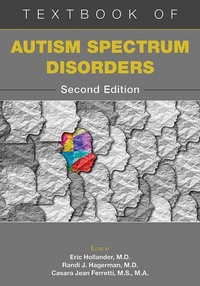
Textbook of Autism Spectrum Disorders
Description

More details
Other editions
Additional editions
Persons
Content
ForewordPART I: Assessment, Evaluation, and Target SymptomsPART IA: Assessment and EvaluationChapter 1. EpidemiologyChapter 2. Psychiatric Assessment and TreatmentChapter 3. Pediatric and Neurological AssessmentsChapter 4. Gender Dysphoria, Gender Incongruence, and Sexual IdentityChapter 5. Racial and Ethnic Disparities in Assessment and EvaluationChapter 6. Digital Biomarkers in Diagnostics and MonitoringPART IB: Target and Comorbid SymptomsChapter 7. Social CommunicationChapter 8. Diet and NutritionPART II: CausesPART IIA: OverviewChapter 9. Genetics and GenomicsChapter 10. EpigenomicsChapter 11. Prenatal, Perinatal, and Parental Risk FactorsChapter 12. Animal ModelsChapter 13. Electrophysiological StudiesChapter 14. Environmental Toxicity and Immune DysregulationPART IIB: Syndromic CausesChapter 15. Overview of Syndromic Causes of Autism and Commonalities in Neurobiological PathwaysChapter 16. Fragile X Syndrome and Associated DisordersChapter 17. Tuberous Sclerosis ComplexChapter 18. 16p11.2 and Other Recurrent Copy Number Variants Associated With ASD SusceptibilityChapter 19. Rett SyndromeChapter 20. Prader-Willi SyndromePART IIC: Imaging and AnatomyChapter 21. Neuroanatomical FindingsChapter 22. The Amygdala in ASDChapter 23. Neurobiology of ASD Informed by Structural Imaging ResearchChapter 24. Positron Emission TomographyChapter 25. Functional Magnetic Resonance ImagingPART III: Treatments and InterventionsPART IIIA: Standard Pharmacological TreatmentsChapter 26. Serotonergic MedicationChapter 27. AntipsychoticsChapter 28. Treating Hyperactivity in Children With Pervasive Developmental DisordersPART IIIB: Experimental TherapeuticsChapter 29. Complementary and Integrative ApproachesChapter 30. OxytocinChapter 31. VasopressinChapter 32. N-AcetylcysteineChapter 33. Arbaclofen: From Animal Models to Clinical TrialsChapter 34. Cannabis, Cannabinoids, and Immunomodulatory AgentsPART IIIC: Behavioral and Educational InterventionsChapter 35. Behavioral TreatmentsChapter 36. Early Start Denver ModelChapter 37. The Developmental, Individual Difference, Relationship-Based Intervention Model: A Comprehensive Parent-Mediated ApproachChapter 38. School-Based InterventionsChapter 39. Language and Communication: Challenges and TreatmentsPART IIID: Future Treatment DevelopmentsChapter 40. Transcranial Magnetic StimulationChapter 41. Stem Cell and Gene Therapy Chapter 42. Gene Therapy and Molecular InterventionsPART IV: Consortiums, Employment, and AdvocacyChapter 44. Consortiums: Developing Precision Medicine Approaches to ASD Conditions Autism Biomarkers Consortium for Clinical Trials Interactive Autism NetworkChapter 45. Autism Strengths and NeurodiversityChapter 46. Role of Patient Advocacy Groups in Treatment DevelopmentIndex
