

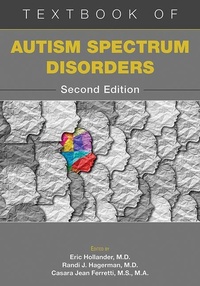
Textbook of Autism Spectrum Disorders
2nd Edition
Published on 30. March 2022
Book
Hardback
742 pages
978-1-61537-304-8 (ISBN)
Description
More than 40 years after the official recognition of infantile autism in DSM-III, advances continue to be made in our understanding of the possible causes, assessment and evaluation, and treatment of autism spectrum disorder (ASD). With contributions by dozens of experts in the field, this second edition of the Textbook of Autism Spectrum Disorders has been updated to reflect the latest research in ASD.
Unrivaled in its thoroughness, this volume discusses issues of assessment and evaluation; examines the etiology of ASD and its recognized associations with other medical conditions; analyzes standard and experimental treatments; and delves into social policy issues pertinent to individuals with ASD and those who treat them.
With summary points in each chapter and copious lists of recommended readings, this is an indispensable resource for psychiatrists, psychologists, neurologists, social workers, speech therapists, educators, and all others in the continuum of care.
Unrivaled in its thoroughness, this volume discusses issues of assessment and evaluation; examines the etiology of ASD and its recognized associations with other medical conditions; analyzes standard and experimental treatments; and delves into social policy issues pertinent to individuals with ASD and those who treat them.
With summary points in each chapter and copious lists of recommended readings, this is an indispensable resource for psychiatrists, psychologists, neurologists, social workers, speech therapists, educators, and all others in the continuum of care.
Reviews / Votes
The text goes beyond a just-the-facts listing of researchfindings to consider public health and ethical considerations of assessment,
treatment, and even conceptualization of ASD. The depth of coverage provided
to comorbidities and syndromic causes and the emerging role of the research
being led by individuals with ASD was excellent. The authors address each
major chapter with statements supported by ample current research, presented
in a detail-rich but digestible overview of design and findings. This
textbook is unlike any other I have seen, and makes fascinating reading for
the ASD professional, regardless of years of experience.
In summary,
the strengths of this textbook include its breadth and depth of coverage,
and the massive number of research studies presented to support the body of
the chapters.
This text is very comprehensive, yet written in a
reader-friendly format that would support most professionals or
preprofessional students. I would recommend it for all
practitioners-in-training or practices that support individuals with
ASD. -- Teresa Daly. PhD * Journal of Psychiatric Practice *
More details
Edition
Second Edition
Language
English
Place of publication
VA
United States
Target group
Professional and scholarly
US School Grade: College Graduate Student and over
Edition type
New edition
Illustrations
46 figures, 44 tables, 10 color plates
Dimensions
Height: 260 mm
Width: 183 mm
Thickness: 41 mm
Weight
1958 gr
ISBN-13
978-1-61537-304-8 (9781615373048)
Copyright in bibliographic data and cover images is held by Nielsen Book Services Limited or by the publishers or by their respective licensors: all rights reserved.
Schweitzer Classification
Other editions
Additional editions
Eric Hollander | Randi J. Hagerman | Casara Ferretti
Textbook of Autism Spectrum Disorders
E-Book
03/2022
2nd Edition
American Psychiatric Association Publishing
€83.49
Available for download
Persons
Eric Hollander, M.D., is the Director of the Autism
and Obsessive Compulsive Spectrum Program at the Psychiatric Research
Institute of Montefiore Einstein and Professor of Psychiatry and Behavioral
Sciences at Albert Einstein College of Medicine, in Bronx, New
York.
Randi Hagerman, M.D., is the Endowed Chair in Fragile
X Research for the Medical Investigation of Neurodevelopmental Disorders
(MIND) Institute and Distinguished Professor of Pediatrics in the Department
of Pediatrics at the University of California, Davis Medical Center in
Sacramento, California.
Casara Ferretti, M.S., M.A., is a
Predoctoral Research Associate in the Autism and Obsessive Compulsive
Spectrum Program at the Psychiatric Research Institute of Montefiore
Einstein and Professor of Psychiatry and Behavioral Sciences at Albert
Einstein College of Medicine, in Bronx, New York. She is a PhD candidate in
the Clinical Psychology PhD program with Health Emphasis at Ferkauf Graduate
School of Psychology, Yeshiva University.
and Obsessive Compulsive Spectrum Program at the Psychiatric Research
Institute of Montefiore Einstein and Professor of Psychiatry and Behavioral
Sciences at Albert Einstein College of Medicine, in Bronx, New
York.
Randi Hagerman, M.D., is the Endowed Chair in Fragile
X Research for the Medical Investigation of Neurodevelopmental Disorders
(MIND) Institute and Distinguished Professor of Pediatrics in the Department
of Pediatrics at the University of California, Davis Medical Center in
Sacramento, California.
Casara Ferretti, M.S., M.A., is a
Predoctoral Research Associate in the Autism and Obsessive Compulsive
Spectrum Program at the Psychiatric Research Institute of Montefiore
Einstein and Professor of Psychiatry and Behavioral Sciences at Albert
Einstein College of Medicine, in Bronx, New York. She is a PhD candidate in
the Clinical Psychology PhD program with Health Emphasis at Ferkauf Graduate
School of Psychology, Yeshiva University.
Content
Part IA
Chapter 1. Epidemiology of Autism Spectrum Disorders
Chapter 2. TBD
Chapter 3. Pediatric and Neurological Assessments
Chapter 4. Gender Dysphoria, Gender Incongruence, and Sexual Identity
Chapter 5. Racial and Ethnic Disparities in Assessment and Evaluation of Autism Spectrum Disorder
Chapter 6. Digital Biomarkers in Diagnostics and Monitoring of Autism Spectrum Disorders
Part IB
Chapter 7. Social Communication
Chapter 8. Restricted and Repetitive Behaviors
Chapter 9. Diet and Nutrition
Part IIA
Chapter 10. Genetics and Genomics of Autism
Chapter 11. Epigenomics
Chapter 12. Prenatal, Perinatal, and Parental Risk Factors
Chapter 13. Animal Models of Autism Spectrum Disorders
Chapter 14. Electrophysiological Studies Across ASDs
Chapter 15. Environmental Toxicity and Immune Dysregulation
Part IIB
Chapter 16. Overview of Syndromic Causes of Autism and Commonalities in Neurobiological Pathways
Chapter 17. Fragile X Syndrome and Associated Disorders
Chapter 18. Tuberous Sclerosis Complex
Chapter 19. 16p11.2 and Other Recurrent Copy Number Variants Associated With Autism Susceptibility
Chapter 20. Rett Syndrome
Chapter 21. Prader-Willi Syndrome
Part IIC
Chapter 22. Neuroanatomical Findings in Autism Spectrum Disorders
Chapter 23. The Amygdala in Autism Spectrum Disorders
Chapter 24. Neurobiology of ASD Informed by Structural Imaging Research
Chapter 25. Positron Emission Tomography
Chapter 26. Functional Magnetic Resonance Imaging
Part IIIA
Chapter 27. Serotonergic Medication in Autism Spectrum Disorder (ASD)
Chapter 28. Antipsychotics
Chapter 29. Treating Hyperactivity in Children With Pervasive Developmental Disorders
Part IIIB
Chapter 30. Complementary and Integrative Approaches
Chapter 31. Experimental Therapeutics: Oxytocin
Chapter 32. Vasopressin
Chapter 33. N-Acetylcysteine
Chapter 34. Arbaclofen: From Animal Models to Clinical Trials in Autism
Chapter 35. Cannabis, Cannabinoids, and Immunomodulatory Agents
Part IIIC
Chapter 36. Behavioral Treatments for Autism Spectrum Disorder
Chapter 37. Early Start Denver Model
Chapter 38. The Developmental, Individual Difference, Relationship-Based Intervention Model: A Comprehensive Parent-Mediated Approach
Chapter 39. Autism Interventions in Schools Mediated by Teachers, Paraprofessionals, and Peers
Chapter 40. Language and Communication Challenges and Treatments in Autism Spectrum Disorder
Part IIID
Chapter 41. Transcranial Magnetic Stimulation
Chapter 42. Stem Cell and Gene Therapy for Autism Spectrum Disorders
Chapter 43. Gene Therapy and Molecular Interventions
Part IV
Chapter 44. Consortiums
Chapter 45. Employment and Life Outcomes
Chapter 46. Autism Strengths and Neurodiversity
Chapter 47. Role of Patient Advocacy Groups in Treatment Development
Chapter 1. Epidemiology of Autism Spectrum Disorders
Chapter 2. TBD
Chapter 3. Pediatric and Neurological Assessments
Chapter 4. Gender Dysphoria, Gender Incongruence, and Sexual Identity
Chapter 5. Racial and Ethnic Disparities in Assessment and Evaluation of Autism Spectrum Disorder
Chapter 6. Digital Biomarkers in Diagnostics and Monitoring of Autism Spectrum Disorders
Part IB
Chapter 7. Social Communication
Chapter 8. Restricted and Repetitive Behaviors
Chapter 9. Diet and Nutrition
Part IIA
Chapter 10. Genetics and Genomics of Autism
Chapter 11. Epigenomics
Chapter 12. Prenatal, Perinatal, and Parental Risk Factors
Chapter 13. Animal Models of Autism Spectrum Disorders
Chapter 14. Electrophysiological Studies Across ASDs
Chapter 15. Environmental Toxicity and Immune Dysregulation
Part IIB
Chapter 16. Overview of Syndromic Causes of Autism and Commonalities in Neurobiological Pathways
Chapter 17. Fragile X Syndrome and Associated Disorders
Chapter 18. Tuberous Sclerosis Complex
Chapter 19. 16p11.2 and Other Recurrent Copy Number Variants Associated With Autism Susceptibility
Chapter 20. Rett Syndrome
Chapter 21. Prader-Willi Syndrome
Part IIC
Chapter 22. Neuroanatomical Findings in Autism Spectrum Disorders
Chapter 23. The Amygdala in Autism Spectrum Disorders
Chapter 24. Neurobiology of ASD Informed by Structural Imaging Research
Chapter 25. Positron Emission Tomography
Chapter 26. Functional Magnetic Resonance Imaging
Part IIIA
Chapter 27. Serotonergic Medication in Autism Spectrum Disorder (ASD)
Chapter 28. Antipsychotics
Chapter 29. Treating Hyperactivity in Children With Pervasive Developmental Disorders
Part IIIB
Chapter 30. Complementary and Integrative Approaches
Chapter 31. Experimental Therapeutics: Oxytocin
Chapter 32. Vasopressin
Chapter 33. N-Acetylcysteine
Chapter 34. Arbaclofen: From Animal Models to Clinical Trials in Autism
Chapter 35. Cannabis, Cannabinoids, and Immunomodulatory Agents
Part IIIC
Chapter 36. Behavioral Treatments for Autism Spectrum Disorder
Chapter 37. Early Start Denver Model
Chapter 38. The Developmental, Individual Difference, Relationship-Based Intervention Model: A Comprehensive Parent-Mediated Approach
Chapter 39. Autism Interventions in Schools Mediated by Teachers, Paraprofessionals, and Peers
Chapter 40. Language and Communication Challenges and Treatments in Autism Spectrum Disorder
Part IIID
Chapter 41. Transcranial Magnetic Stimulation
Chapter 42. Stem Cell and Gene Therapy for Autism Spectrum Disorders
Chapter 43. Gene Therapy and Molecular Interventions
Part IV
Chapter 44. Consortiums
Chapter 45. Employment and Life Outcomes
Chapter 46. Autism Strengths and Neurodiversity
Chapter 47. Role of Patient Advocacy Groups in Treatment Development