

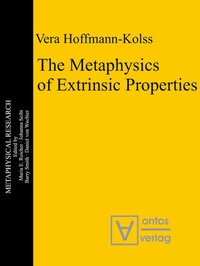
The Metaphysics of Extrinsic Properties
Metaphysics of Extrinsic Properties
1st Edition
Published on 2. May 2013
222 pages
978-3-11-032614-7 (ISBN)
Description

This book aims to develop a philosophical theory of extrinsic properties - of properties whose instantiation by an object does not only depend on what the object itself is like, but also on features of its environment. Various accounts of the intrinsic/extrinsic distinction are analysed in detail, and it is argued that the most promising approach to defining this distinction is to consider extrinsic properties as a particular type of relational property. Moreover, it is shown that two key notions in the metaphysics of properties, the supervenience relation and the dispositional/categorical distinction, whose scope is usually restricted to intrinsic properties, can fruitfully be applied to extrinsic properties as well.
More details
Other editions
Additional editions
Vera Hoffmann-Kolss
The Metaphysics of Extrinsic Properties
Book
05/2010
1st Edition
De Gruyter
€164.95
Shipment within 7-9 days
Vera Hoffmann-Kolss
The Metaphysics of Extrinsic Properties
Book
01/2010
1st Edition
De Gruyter
€169.95
Article exhausted; check different version
Content
1 - PREFACE [Seite 11]
2 - PART I: THE INTRINSIC/EXTRINSIC DISTINCTION [Seite 15]
2.1 - 1 Introduction: An Intuitive Definition [Seite 15]
2.2 - 2 Ontological Background [Seite 19]
2.2.1 - 2.1 Properties and Relations [Seite 19]
2.2.2 - 2.2 Individuals [Seite 27]
2.3 - 3 Defining Intrinsic and Extrinsic Properties [Seite 35]
2.3.1 - 3.1 Early Accounts of the Distinction [Seite 35]
2.3.2 - 3.2 Modal Accounts [Seite 40]
2.3.2.1 - 3.2.1 Lewis's Initial Account [Seite 40]
2.3.2.2 - 3.2.2 Langton and Lewis's Account [Seite 43]
2.3.2.3 - 3.2.3 Problems Encountered by Langton and Lewis's Account [Seite 48]
2.3.2.3.1 - 3.2.3.1 The Problem of Border-Sensitive Properties [Seite 48]
2.3.2.3.2 - 3.2.3.2 The Problem of Disjunctive Properties [Seite 50]
2.3.2.4 - 3.2.4 Vallentyne's Account [Seite 57]
2.3.2.5 - 3.2.5 Yablo's Account [Seite 63]
2.3.3 - 3.3 Combinatorial Accounts [Seite 66]
2.3.3.1 - 3.3.1 Weatherson's Account [Seite 66]
2.3.3.2 - 3.3.2 Denby's Account18 [Seite 74]
2.3.4 - 3.4 Relational Accounts [Seite 84]
2.3.4.1 - 3.4.1 The Basic Idea [Seite 84]
2.3.4.2 - 3.4.2 Francescotti's Account [Seite 92]
2.3.4.3 - 3.4.3 A Modified Relational Account [Seite 97]
2.4 - 4 Haecceitistic Properties [Seite 105]
2.5 - 5 General Features of the Intrinsic/Extrinsic Distinction [Seite 113]
2.5.1 - 5.1 A Local and a Global Version [Seite 113]
2.5.2 - 5.2 Mere Cambridge Properties [Seite 117]
2.6 - 6 Defining Intrinsic and Extrinsic Relations [Seite 129]
3 - PART II: EXTRINSIC PROPERTIES IN THE FRAMEWORK OF PHYSICALISM [Seite 139]
3.1 - 1 Introduction: Extrinsic Properties and the Multi-Layered Picture of the World [Seite 139]
3.2 - 2 Supervenience of Extrinsic Properties [Seite 145]
3.2.1 - 2.1 The Standard Notions of Supervenience [Seite 145]
3.2.1.1 - 2.1.1 The Notions of Weak, Strong and Global Supervenience [Seite 145]
3.2.1.2 - 2.1.2 Problems Encountered by the Standard Notions [Seite 151]
3.2.1.2.1 - 2.1.2.1 The Problem of Cross-World Variation [Seite 151]
3.2.1.2.2 - 2.1.2.2 The Problem of Intra-World Variation [Seite 153]
3.2.1.2.3 - 2.1.2.3 The Problem of Extrinsic Higher-Level Properties [Seite 154]
3.2.2 - 2.2 Non-Standard Notions of Supervenience [Seite 162]
3.2.2.1 - 2.2.1 A Combined Notion [Seite 162]
3.2.2.2 - 2.2.2 Weak, Intermediate and Strong Global Supervenience [Seite 165]
3.2.3 - 2.3 Notions of Supervenience Based on Criteria of Relevance [Seite 175]
3.2.3.1 - 2.3.1 Regional Supervenience [Seite 175]
3.2.3.2 - 2.3.2 Property-Dependent Supervenience [Seite 178]
3.3 - 3 Extrinsic Dispositions [Seite 191]
3.3.1 - 3.1 The Debate on Dispositions [Seite 191]
3.3.2 - 3.2 Arguments for the Intrinsicness of Dispositions [Seite 197]
3.3.2.1 - 3.2.1 Armstrong's Argument [Seite 197]
3.3.2.2 - 3.2.2 Lewis's Argument [Seite 200]
3.3.2.3 - 3.2.3 Molnar's Argument [Seite 202]
3.3.3 - 3.3 Examples of Extrinsic Dispositions [Seite 205]
3.3.4 - 3.4 Implications [Seite 208]
4 - FINAL REMARKS [Seite 211]
5 - BIBLIOGRAPHY [Seite 213]
6 - INDEX [Seite 223]
7 - Blank Page [Seite 6]
8 - Blank Page [Seite 8]
2 - PART I: THE INTRINSIC/EXTRINSIC DISTINCTION [Seite 15]
2.1 - 1 Introduction: An Intuitive Definition [Seite 15]
2.2 - 2 Ontological Background [Seite 19]
2.2.1 - 2.1 Properties and Relations [Seite 19]
2.2.2 - 2.2 Individuals [Seite 27]
2.3 - 3 Defining Intrinsic and Extrinsic Properties [Seite 35]
2.3.1 - 3.1 Early Accounts of the Distinction [Seite 35]
2.3.2 - 3.2 Modal Accounts [Seite 40]
2.3.2.1 - 3.2.1 Lewis's Initial Account [Seite 40]
2.3.2.2 - 3.2.2 Langton and Lewis's Account [Seite 43]
2.3.2.3 - 3.2.3 Problems Encountered by Langton and Lewis's Account [Seite 48]
2.3.2.3.1 - 3.2.3.1 The Problem of Border-Sensitive Properties [Seite 48]
2.3.2.3.2 - 3.2.3.2 The Problem of Disjunctive Properties [Seite 50]
2.3.2.4 - 3.2.4 Vallentyne's Account [Seite 57]
2.3.2.5 - 3.2.5 Yablo's Account [Seite 63]
2.3.3 - 3.3 Combinatorial Accounts [Seite 66]
2.3.3.1 - 3.3.1 Weatherson's Account [Seite 66]
2.3.3.2 - 3.3.2 Denby's Account18 [Seite 74]
2.3.4 - 3.4 Relational Accounts [Seite 84]
2.3.4.1 - 3.4.1 The Basic Idea [Seite 84]
2.3.4.2 - 3.4.2 Francescotti's Account [Seite 92]
2.3.4.3 - 3.4.3 A Modified Relational Account [Seite 97]
2.4 - 4 Haecceitistic Properties [Seite 105]
2.5 - 5 General Features of the Intrinsic/Extrinsic Distinction [Seite 113]
2.5.1 - 5.1 A Local and a Global Version [Seite 113]
2.5.2 - 5.2 Mere Cambridge Properties [Seite 117]
2.6 - 6 Defining Intrinsic and Extrinsic Relations [Seite 129]
3 - PART II: EXTRINSIC PROPERTIES IN THE FRAMEWORK OF PHYSICALISM [Seite 139]
3.1 - 1 Introduction: Extrinsic Properties and the Multi-Layered Picture of the World [Seite 139]
3.2 - 2 Supervenience of Extrinsic Properties [Seite 145]
3.2.1 - 2.1 The Standard Notions of Supervenience [Seite 145]
3.2.1.1 - 2.1.1 The Notions of Weak, Strong and Global Supervenience [Seite 145]
3.2.1.2 - 2.1.2 Problems Encountered by the Standard Notions [Seite 151]
3.2.1.2.1 - 2.1.2.1 The Problem of Cross-World Variation [Seite 151]
3.2.1.2.2 - 2.1.2.2 The Problem of Intra-World Variation [Seite 153]
3.2.1.2.3 - 2.1.2.3 The Problem of Extrinsic Higher-Level Properties [Seite 154]
3.2.2 - 2.2 Non-Standard Notions of Supervenience [Seite 162]
3.2.2.1 - 2.2.1 A Combined Notion [Seite 162]
3.2.2.2 - 2.2.2 Weak, Intermediate and Strong Global Supervenience [Seite 165]
3.2.3 - 2.3 Notions of Supervenience Based on Criteria of Relevance [Seite 175]
3.2.3.1 - 2.3.1 Regional Supervenience [Seite 175]
3.2.3.2 - 2.3.2 Property-Dependent Supervenience [Seite 178]
3.3 - 3 Extrinsic Dispositions [Seite 191]
3.3.1 - 3.1 The Debate on Dispositions [Seite 191]
3.3.2 - 3.2 Arguments for the Intrinsicness of Dispositions [Seite 197]
3.3.2.1 - 3.2.1 Armstrong's Argument [Seite 197]
3.3.2.2 - 3.2.2 Lewis's Argument [Seite 200]
3.3.2.3 - 3.2.3 Molnar's Argument [Seite 202]
3.3.3 - 3.3 Examples of Extrinsic Dispositions [Seite 205]
3.3.4 - 3.4 Implications [Seite 208]
4 - FINAL REMARKS [Seite 211]
5 - BIBLIOGRAPHY [Seite 213]
6 - INDEX [Seite 223]
7 - Blank Page [Seite 6]
8 - Blank Page [Seite 8]
