

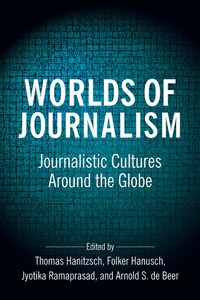
Worlds of Journalism
Journalistic Cultures Around the Globe
1st Edition
Published on 17. June 2019
448 pages
978-0-231-54663-8 (ISBN)
Description

How do journalists around the world view their roles and responsibilities in society? Based on a landmark study that has collected data from more than 27,500 journalists in 67 countries, Worlds of Journalism offers a groundbreaking analysis of the different ways journalists perceive their duties, their relationship to society and government, and the nature and meaning of their work.
Challenging assumptions of a universal definition or concept of journalism, the book maps a world populated by a rich diversity of journalistic cultures. Organized around a series of key questions on topics such as editorial autonomy, journalistic ethics, trust in social institutions, and changes in the profession, it details how the practice of journalism differs across the world in a range of political, social, and economic contexts. The book covers how journalism as an institution is created and re-created by journalists and how they experience their profession in very different ways, even as they retain a commitment to some basic, widely shared professional norms and practices. It concludes with a global classification of journalistic cultures that reflects the breadth of worldviews and orientations found in disparate countries and regions. Worlds of Journalism offers an ambitious, comparative global understanding of the state of journalism in a time when it is confronting a series of economic and political threats.
Challenging assumptions of a universal definition or concept of journalism, the book maps a world populated by a rich diversity of journalistic cultures. Organized around a series of key questions on topics such as editorial autonomy, journalistic ethics, trust in social institutions, and changes in the profession, it details how the practice of journalism differs across the world in a range of political, social, and economic contexts. The book covers how journalism as an institution is created and re-created by journalists and how they experience their profession in very different ways, even as they retain a commitment to some basic, widely shared professional norms and practices. It concludes with a global classification of journalistic cultures that reflects the breadth of worldviews and orientations found in disparate countries and regions. Worlds of Journalism offers an ambitious, comparative global understanding of the state of journalism in a time when it is confronting a series of economic and political threats.
All prices
More details
Other editions
Additional editions
Thomas Hanitzsch | Folker Hanusch | Jyotika Ramaprasad
Worlds of Journalism
Journalistic Cultures Around the Globe
Book
06/2019
Columbia University Press
€43.40
Shipment within 10-20 days
Thomas Hanitzsch | Folker Hanusch | Jyotika Ramaprasad
Worlds of Journalism
Journalistic Cultures Around the Globe
Book
06/2019
Columbia University Press
€109.12
Shipment within 10-20 days
Persons
Thomas Hanitzsch is chair and professor of communication in the Department of Communication and Media at LMU Munich. His publications include The Handbook of Journalism Studies (second edition, 2019).
Folker Hanusch is professor of journalism in the Department of Communication at the University of Vienna, where he heads the Journalism Studies Center, and adjunct professor at Queensland University of Technology. He is editor in chief of Journalism Studies.
Jyotika Ramaprasad is professor in the School of Communication at the University of Miami. Her books include Contemporary BRICS Journalism: Non-Western Media in Transition (2017).
Arnold S. de Beer is professor of journalism at Stellenbosch University. His publications include Global Journalism: Topical Issues and Media Systems (2009).
Folker Hanusch is professor of journalism in the Department of Communication at the University of Vienna, where he heads the Journalism Studies Center, and adjunct professor at Queensland University of Technology. He is editor in chief of Journalism Studies.
Jyotika Ramaprasad is professor in the School of Communication at the University of Miami. Her books include Contemporary BRICS Journalism: Non-Western Media in Transition (2017).
Arnold S. de Beer is professor of journalism at Stellenbosch University. His publications include Global Journalism: Topical Issues and Media Systems (2009).
Content
Acknowledgments
1. Exploring the Worlds of Journalism: An Introduction
Thomas Hanitzsch, Folker Hanusch, Jyotika Ramaprasad, and Arnold S. de Beer
2. Journalistic Culture in a Global Context: A Conceptual Roadmap
Thomas Hanitzsch, Laura Ahva, Martin Oller Alonso, Jesus Arroyave, Liesbeth Hermans, Jan Fredrik Hovden, Sallie Hughes, Beate Josephi, Jyotika Ramaprasad, Ivor Shapiro, and Tim Vos
3. Surveying Journalists Around the World: A Methodological Framework
Corinna Lauerer and Thomas Hanitzsch
4. Profiles of Journalists: Demographic and Employment Patterns
Beate Josephi, Folker Hanusch, Martin Oller Alonso, Ivor Shapiro, Kenneth Andresen, Arnold de Beer, Abit Hoxha, Sonia Virgínia Moreira, Kevin Rafter, Terje Skjerdal, Sergio Splendore, and Edson C. Tandoc, Jr.
5. Perceived Influences: Journalists' Awareness of Pressures on Their Work
Thomas Hanitzsch, Jyotika Ramaprasad, Jesus Arroyave, Rosa Berganza, Liesbeth Hermans, Jan Fredrik Hovden, Filip Lab, Corinna Lauerer, Alice Tejkalová, and Tim P. Vos
6. Editorial Autonomy: Journalists' Perceptions of Their Freedom
Basyouni Hamada, Sallie Hughes, Thomas Hanitzsch, James Hollings, Corinna Lauerer, Jesus Arroyave, Verica Rupar, and Sergio Splendore
7. Role Orientations: Journalists' Views on Their Place in Society
Thomas Hanitzsch, Tim Vos, Olivier Standaert, Folker Hanusch, Jan Fredrik Hovden, Liesbeth Hermans, and Jyotika Ramaprasad
8. Ethical Considerations: Journalists' Perceptions of Professional Practice
Jyotika Ramaprasad, Thomas Hanitzsch, Epp Lauk, Halliki Harro-Loit, Jan Fredrik Hovden, Jari Väliverronen, and Stephanie Craft
9. Trust: Journalists' Confidence in Public Institutions
Arjen van Dalen, Rosa Berganza, Thomas Hanitzsch, Adriana Amado, Beatriz Herrero, Beate Josephi, Sonja Seizova, Morten Skovsgaard, and Nina Steindl
10. Transformations: Journalists' Reflections on Changes in News Work
Folker Hanusch, Edson C. Tandoc, Jr., Dimitra Dimitrakopoulou, Nurhaya Muchtar, Kevin Rafter, Mireya Márquez Ramírez, Verica Rupar, and Vittoria Sacco
11. Modeling Journalistic Cultures: A Global Approach
Folker Hanusch and Thomas Hanitzsch
Appendix 1: Additional Tables
Appendix 2: Questionnaire
Appendix 3: Institutions Funding the Study
References
Editors and Contributors
Index
1. Exploring the Worlds of Journalism: An Introduction
Thomas Hanitzsch, Folker Hanusch, Jyotika Ramaprasad, and Arnold S. de Beer
2. Journalistic Culture in a Global Context: A Conceptual Roadmap
Thomas Hanitzsch, Laura Ahva, Martin Oller Alonso, Jesus Arroyave, Liesbeth Hermans, Jan Fredrik Hovden, Sallie Hughes, Beate Josephi, Jyotika Ramaprasad, Ivor Shapiro, and Tim Vos
3. Surveying Journalists Around the World: A Methodological Framework
Corinna Lauerer and Thomas Hanitzsch
4. Profiles of Journalists: Demographic and Employment Patterns
Beate Josephi, Folker Hanusch, Martin Oller Alonso, Ivor Shapiro, Kenneth Andresen, Arnold de Beer, Abit Hoxha, Sonia Virgínia Moreira, Kevin Rafter, Terje Skjerdal, Sergio Splendore, and Edson C. Tandoc, Jr.
5. Perceived Influences: Journalists' Awareness of Pressures on Their Work
Thomas Hanitzsch, Jyotika Ramaprasad, Jesus Arroyave, Rosa Berganza, Liesbeth Hermans, Jan Fredrik Hovden, Filip Lab, Corinna Lauerer, Alice Tejkalová, and Tim P. Vos
6. Editorial Autonomy: Journalists' Perceptions of Their Freedom
Basyouni Hamada, Sallie Hughes, Thomas Hanitzsch, James Hollings, Corinna Lauerer, Jesus Arroyave, Verica Rupar, and Sergio Splendore
7. Role Orientations: Journalists' Views on Their Place in Society
Thomas Hanitzsch, Tim Vos, Olivier Standaert, Folker Hanusch, Jan Fredrik Hovden, Liesbeth Hermans, and Jyotika Ramaprasad
8. Ethical Considerations: Journalists' Perceptions of Professional Practice
Jyotika Ramaprasad, Thomas Hanitzsch, Epp Lauk, Halliki Harro-Loit, Jan Fredrik Hovden, Jari Väliverronen, and Stephanie Craft
9. Trust: Journalists' Confidence in Public Institutions
Arjen van Dalen, Rosa Berganza, Thomas Hanitzsch, Adriana Amado, Beatriz Herrero, Beate Josephi, Sonja Seizova, Morten Skovsgaard, and Nina Steindl
10. Transformations: Journalists' Reflections on Changes in News Work
Folker Hanusch, Edson C. Tandoc, Jr., Dimitra Dimitrakopoulou, Nurhaya Muchtar, Kevin Rafter, Mireya Márquez Ramírez, Verica Rupar, and Vittoria Sacco
11. Modeling Journalistic Cultures: A Global Approach
Folker Hanusch and Thomas Hanitzsch
Appendix 1: Additional Tables
Appendix 2: Questionnaire
Appendix 3: Institutions Funding the Study
References
Editors and Contributors
Index

