

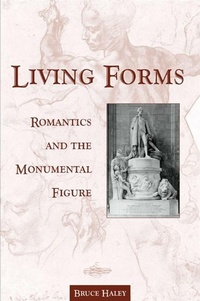
Living Forms
Romantics and the Monumental Figure
Published on 1. February 2012
317 pages
978-0-7914-8767-9 (ISBN)
Description

Examines Romantic poets' and essayists' fascination with the human form.
Based on years of archival research in various British and American libraries, Living Forms examines the early nineteenth century's fascination with representations of the human form, particularly those from the past, which, having no adequate verbal explanatory text, are vulnerable to having their meanings erased by time. The author explores a variety of such representations and responses to them, including Coleridge's Shakespeare lectures, Hazlitt's essays on portraits, Keats's poems on mythic and sculpted figures, meditations by Byron's Childe Harold on the monuments of Italy, Felicia Hemans's verses on monuments to and by women, and Shelley's poems and letters on figures from Italy, Egypt, and other antique lands. Haley argues that in what has been called the "museum age," Romantics sought aesthetically to frame these figures as "living forms," mental images capable of realization in alternate modes or forms.
Bruce Haley is Professor of English at the University of Utah and author of The Healthy Body and Victorian Culture.
Based on years of archival research in various British and American libraries, Living Forms examines the early nineteenth century's fascination with representations of the human form, particularly those from the past, which, having no adequate verbal explanatory text, are vulnerable to having their meanings erased by time. The author explores a variety of such representations and responses to them, including Coleridge's Shakespeare lectures, Hazlitt's essays on portraits, Keats's poems on mythic and sculpted figures, meditations by Byron's Childe Harold on the monuments of Italy, Felicia Hemans's verses on monuments to and by women, and Shelley's poems and letters on figures from Italy, Egypt, and other antique lands. Haley argues that in what has been called the "museum age," Romantics sought aesthetically to frame these figures as "living forms," mental images capable of realization in alternate modes or forms.
Bruce Haley is Professor of English at the University of Utah and author of The Healthy Body and Victorian Culture.
More details
Other editions
Additional editions
Book
10/2002
State University of New York Press
€96.00
Shipment within 10-20 days
Book
10/2002
State University of New York Press
€36.00
Article not available at the moment
Person
Bruce Haley is Professor of English at the University of Utah and author of The Healthy Body and Victorian Culture.
Content
List of Illustrations
Acknowledgments
Introduction: Thoughts on Nelson's Monument in St. Paul's
1. Imaginary Museum
2. History's Seen and Unseen Forms: Peacock and Shelley
3. Coleridge's Shakespeare Gallery
4. Hazlitt's Portraits: The Informing Principle
5. Symbolic Forms: The Sleeping Children
6. Wordsworth's Prelude: Objects that Endure
7. Fortune's Rhetoric: Allegories for the Dead
8. The Mourner Turned to Stone: Byron and Hemans
9. "Those Speechless Shapes": Shelley's Rome
10. Keats's Temples and Shrines
Conclusion
Notes
Works Cited
Index
