

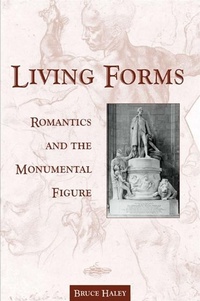
Living Forms
Romantics and the Monumental Figure
Will be published approx. on 24. October 2002
Book
Paperback/Softback
317 pages
978-0-7914-5562-3 (ISBN)
Description
Examines Romantic poets' and essayists' fascination with the human form.
Based on years of archival research in various British and American libraries, Living Forms examines the early nineteenth century's fascination with representations of the human form, particularly those from the past, which, having no adequate verbal explanatory text, are vulnerable to having their meanings erased by time. The author explores a variety of such representations and responses to them, including Coleridge's Shakespeare lectures, Hazlitt's essays on portraits, Keats's poems on mythic and sculpted figures, meditations by Byron's Childe Harold on the monuments of Italy, Felicia Hemans's verses on monuments to and by women, and Shelley's poems and letters on figures from Italy, Egypt, and other antique lands. Haley argues that in what has been called the "museum age," Romantics sought aesthetically to frame these figures as "living forms," mental images capable of realization in alternate modes or forms.
Based on years of archival research in various British and American libraries, Living Forms examines the early nineteenth century's fascination with representations of the human form, particularly those from the past, which, having no adequate verbal explanatory text, are vulnerable to having their meanings erased by time. The author explores a variety of such representations and responses to them, including Coleridge's Shakespeare lectures, Hazlitt's essays on portraits, Keats's poems on mythic and sculpted figures, meditations by Byron's Childe Harold on the monuments of Italy, Felicia Hemans's verses on monuments to and by women, and Shelley's poems and letters on figures from Italy, Egypt, and other antique lands. Haley argues that in what has been called the "museum age," Romantics sought aesthetically to frame these figures as "living forms," mental images capable of realization in alternate modes or forms.
Reviews / Votes
"...a ... richly suggestive ... meditation on Romantic aesthetics." - CHOICE"This is a very fine study. Haley is a shrewd reader of Romantic texts, and he has identified a subject that illuminates the Romantic movement in England and the philosophical underpinnings of that movement in an impressive way." - Kathleen Lundeen, author of Knight of the Living Dead: William Blake and the Problem of Ontology
"The book provides a refreshingly non-canonical perspective on some very canonical writers-it shows that we have more to understand about Romantic-period aesthetics. It has many applications in the teaching of Romanticism in the fields of literature and art history." - Daniel Robinson, coeditor of A Century of Sonnets: The Romantic-Era Revival
More details
Series
Language
English
Place of publication
Albany, NY
United States
Target group
Professional and scholarly
US School Grade: College Graduate Student and over
Product notice
Paperback (trade)
Dimensions
Height: 216 mm
Width: 170 mm
Thickness: 18 mm
Weight
426 gr
ISBN-13
978-0-7914-5562-3 (9780791455623)
Copyright in bibliographic data and cover images is held by Nielsen Book Services Limited or by the publishers or by their respective licensors: all rights reserved.
Schweitzer Classification
Other editions
Additional editions
E-Book
02/2012
State University of New York Press
€38.49
Available for download
Person
Bruce Haley is Professor of English at the University of Utah and author of The Healthy Body and Victorian Culture.
Content
List of Illustrations
Acknowledgments
Introduction: Thoughts on Nelson's Monument in St. Paul's
1. Imaginary Museum
2. History's Seen and Unseen Forms: Peacock and Shelley
3. Coleridge's Shakespeare Gallery
4. Hazlitt's Portraits: The Informing Principle
5. Symbolic Forms: The Sleeping Children
6. Wordsworth's Prelude: Objects that Endure
7. Fortune's Rhetoric: Allegories for the Dead
8. The Mourner Turned to Stone: Byron and Hemans
9. "Those Speechless Shapes": Shelley's Rome
10. Keats's Temples and Shrines
Conclusion
Notes
Works Cited
Index
Acknowledgments
Introduction: Thoughts on Nelson's Monument in St. Paul's
1. Imaginary Museum
2. History's Seen and Unseen Forms: Peacock and Shelley
3. Coleridge's Shakespeare Gallery
4. Hazlitt's Portraits: The Informing Principle
5. Symbolic Forms: The Sleeping Children
6. Wordsworth's Prelude: Objects that Endure
7. Fortune's Rhetoric: Allegories for the Dead
8. The Mourner Turned to Stone: Byron and Hemans
9. "Those Speechless Shapes": Shelley's Rome
10. Keats's Temples and Shrines
Conclusion
Notes
Works Cited
Index