

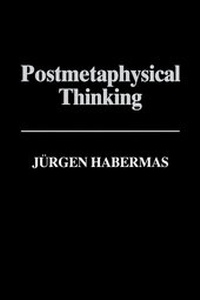
Postmetaphysical Thinking
Description

pursues the line of analysis begun in The Philosophical
Discourse of Modernity. He begins by outlining the sources and
central themes of twentieth-century philosophy, and the range of
current debates. He then examines a number of key contributions to
these debates, from the pragmatic philosophies of Mead, Perice and
Rorty to the post-structuralism of Foucault.
Like most contemporary thinkers, Habermas is critical of the
Western metaphysical tradition and its exaggerated conception of
reason. But he cautions against the temptation to relinquish this
conception altogether. In opposition to the radical critics of
Western philosophy, Habermas argues that postmetaphysical thinking
can remain critical only if it preserves the idea of reason while
stripping it of its metaphysical trappings. Habermas contributes to
this task by developing further his distinctive approach to
problems of meaning, rationality and subjectivity.
This book will be of particular interest to students of
philosophy, sociology and social and political theory, and it will
be essential reading for anyone interested in the continuing
development of Habermas's project.
More details
Other editions
Additional editions
Person
Jürgen Habermas is a German philosopher and sociologist in the tradition of critical theory and pragmatism. He is perhaps best known for his theories on communicative rationality and the public sphere. In 2014, Prospect readers chose Habermas as one of their favourites among the "world's leading thinkers".
Content
Part I: A Return to Metaphysics?.
1. The Horizon of Modernity Is Shifting.
2. Metaphysics after Kant.
3. Themes in Postmetaphysical Thinking.
Part II: The Turn to Pragmatics:.
4. Toward a Critique of the Theory of Meaning.
5. Pearce and Communication.
Part III: Between Metaphysics and the Critique of Reason:.
6. The Unity of Reason in the Diversity of Its Voices.
7. Individuation through Socialization: On George Herbert Mead's Theory of Subjectivity.
8. Philosophy and Science as Literature?.
Index.
