

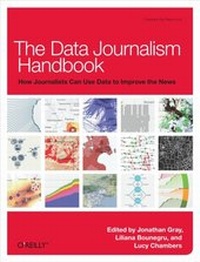
Data Journalism Handbook
How Journalists Can Use Data to Improve the News
1st Edition
Published on 12. July 2012
242 pages
978-1-4493-3004-0 (ISBN)
Description

When you combine the sheer scale and range of digital information now available with a journalists "e;nose for news"e; and her ability to tell a compelling story, a new world of possibility opens up. With The Data Journalism Handbook, youll explore the potential, limits, and applied uses of this new and fascinating field.This valuable handbook has attracted scores of contributors since the European Journalism Centre and the Open Knowledge Foundation launched the project at MozFest 2011. Through a collection of tips and techniques from leading journalists, professors, software developers, and data analysts, youll learn how data can be either the source of data journalism or a tool with which the story is toldor both.Examine the use of data journalism at the BBC, the Chicago Tribune, the Guardian, and other news organizationsExplore in-depth case studies on elections, riots, school performance, and corruptionLearn how to find data from the Web, through freedom of information laws, and by "e;crowd sourcing"e;Extract information from raw data with tips for working with numbers and statistics and using data visualizationDeliver data through infographics, news apps, open data platforms, and download links
More details
Other editions
Additional editions
Jonathan Gray | Lucy Chambers | Liliana Bounegru
The Data Journalism Handbook
How Journalists Can Use Data to Improve the News
Book
08/2012
1st Edition
O'Reilly
€24.00
Shipment within 10-20 days
Content
- Intro
- Table of Contents
- Preface
- For the Great Unnamed
- Contributors
- What This Book Is (And What It Isn't)
- Conventions Used in This Book
- Safari® Books Online
- How to Contact Us
- Chapter 1. Introduction
- What Is Data Journalism?
- Why Journalists Should Use Data
- Why Is Data Journalism Important?
- Filtering the Flow of Data
- New Approaches to Storytelling
- Like Photo Journalism with a Laptop
- Data Journalism Is the Future
- Number-Crunching Meets Word-Smithing
- Updating Your Skills Set
- A Remedy for Information Asymmetry
- An Answer to Data-Driven PR
- Providing Independent Interpretations of Official Information
- Dealing with the Data Deluge
- Our Lives Are Data
- A Way to Save Time
- An Essential Part of the Journalists' Toolkit
- Adapting to Changes in Our Information Environment
- A Way to See Things You Might Not Otherwise See
- A Way To Tell Richer Stories
- Some Favorite Examples
- Do No Harm in the Las Vegas Sun
- Government Employee Salary Database
- Full-Text Visualization of the Iraqi War Logs, Associated Press
- Murder Mysteries
- Message Machine
- Chartball
- Data Journalism in Perspective
- Computer-Assisted Reporting and Precision Journalism
- Data Journalism and Computer-Assisted Reporting
- Data Journalism Is About Mass Data Literacy
- Chapter 2. In The Newsroom
- The ABC's Data Journalism Play
- Our Team
- Where Did We Get the Data From?
- What Did We Learn?
- The Big Picture: Some Ideas
- Data Journalism at the BBC
- Make It Personal
- Simple Tools
- Mining The Data
- Understanding An Issue
- Team Overview
- How the News Apps Team at the Chicago Tribune Works
- Behind the Scenes at the Guardian Datablog
- Data Journalism at the Zeit Online
- How to Hire a Hacker
- Harnessing External Expertise Through Hackathons
- Following the Money: Data Journalism and Cross-Border Collaboration
- Our Stories Come As Code
- Kaas & Mulvad: Semi-Finished Content for Stakeholder Groups
- Processes: Innovative IT Plus Analysis
- Value Created: Personal and Firm Brands and Revenue
- Key Insights of This Example
- Business Models for Data Journalism
- Chapter 3. Case Studies
- The Opportunity Gap
- A Nine Month Investigation into European Structural Funds
- 1. Identify who keeps the data and how it is kept
- 2. Download and prepare the data
- 3. Create a database
- 4. Double-checking and analysis
- The Eurozone Meltdown
- Covering the Public Purse with OpenSpending.org
- Finnish Parliamentary Elections and Campaign Funding
- 1. Find data and developers
- 2. Brainstorm for ideas
- 3. Implement the idea on paper and on the Web
- 4. Publish the data
- Electoral Hack in Realtime (Hacks/Hackers Buenos Aires)
- What Data Did We Use?
- How Was It Developed?
- Pros
- Cons
- Implications
- Data in the News: WikiLeaks
- Mapa76 Hackathon
- The Guardian Datablog's Coverage of the UK Riots
- Phase One: The Riots As They Happened
- Phase Two: Reading the Riots
- Illinois School Report Cards
- Hospital Billing
- Care Home Crisis
- The Tell-All Telephone
- Which Car Model? MOT Failure Rates
- Bus Subsidies in Argentina
- Who Worked on the Project?
- What Tools Did We Use?
- Citizen Data Reporters
- The Big Board for Election Results
- Crowdsourcing the Price of Water
- Chapter 4. Getting Data
- A Five Minute Field Guide
- Streamlining Your Search
- Browse Data Sites and Services
- Ask a Forum
- Ask a Mailing List
- Join Hacks/Hackers
- Ask an Expert
- Learn About Government IT
- Search Again
- Write an FOI Request
- Your Right to Data
- Wobbing Works. Use It!
- Case Study 1: Farm Subsidy
- Case Study 2: Side Effects
- Case Study 3: Smuggling Death
- Getting Data from the Web
- What Is Machine-Readable Data?
- Scraping Websites: What For?
- What You Can and Cannot Scrape
- Tools That Help You Scrape
- How Does a Web Scraper Work?
- The Anatomy of a Web Page
- An Example: Scraping Nuclear Incidents with Python
- The Web as a Data Source
- Web Tools
- Web Pages, Images, and Videos
- Emails
- Trends
- Crowdsourcing Data at the Guardian Datablog
- How the Datablog Used Crowdsourcing to Cover Olympic Ticketing
- Using and Sharing Data: the Black Letter, the Fine Print, and Reality
- Chapter 5. Understanding Data
- Become Data Literate in Three Simple Steps
- 1. How was the data collected?
- Amazing GDP growth
- Crime is always on the rise
- What you can do
- 2. What's in there to learn?
- Risk of Multiple Sclerosis doubles when working at night
- On average, 1 in every 15 Europeans totally illiterate
- What you can do
- 3. How reliable is the information?
- The sample size problem
- Drinking tea lowers the risk of stroke
- What you can do
- Tips for Working with Numbers in the News
- Basic Steps in Working with Data
- Know the Questions You Want to Answer
- Cleaning Messy Data
- Data May Have Undocumented Features
- The £32 Loaf of Bread
- Start With the Data, Finish With a Story
- Data Stories
- Data Journalists Discuss Their Tools of Choice
- Using Data Visualization to Find Insights in Data
- Using Visualization to Discover Insights
- Learn how to visualize data
- Analyze and interpret what you see
- Document your insights and steps
- Transform data
- Which Tools to Use
- An Example: Making Sense of US Election Contribution Data
- What To Learn From This
- Get the Source Code
- Chapter 6. Delivering Data
- Presenting Data to the Public
- To Visualize or Not to Visualize?
- Using Motion Graphics
- Telling the World
- Publishing the Data
- Opening Up Your Data
- Starting an Open Data Platform
- Making Data Human
- Open Data, Open Source, Open News
- Add A Download Link
- Know Your Scope
- How to Build a News App
- Who Is My Audience and What Are Their Needs?
- How Much Time Should I Spend on This?
- How Can I Take Things to the Next Level?
- Wrapping Up
- News Apps at ProPublica
- Visualization as the Workhorse of Data Journalism
- Tip 1: Use small multiples to quickly orient yourself in a large dataset
- Tip 2: Look at your data upside down and sideways
- Tip 3: Don't assume
- Tip 4: Avoid obsessing over precision
- Tip 5: Create chronologies of cases and events
- Tip 6: Meet with your graphics department early and often
- Tips For Publication
- Using Visualizations to Tell Stories
- Seeing the Familiar in a New Way
- Showing Change Over Time
- Comparing Values
- Showing Connections and Flows
- Designing With Data
- Showing Hierarchy
- Browsing Large Databases
- Envisioning Alternate Outcomes
- When Not To Use Data Visualization
- Different Charts Tell Different Tales
- Data Visualization DIY: Our Top Tools
- Google Fusion Tables
- Tableau Public
- Google Spreadsheet Charts
- Datamarket
- Many Eyes
- Color Brewer
- And Some More
- How We Serve Data at Verdens Gang
- Numbers
- Networks
- Maps
- Text Mining
- Concluding Notes
- Public Data Goes Social
- Engaging People Around Your Data
