

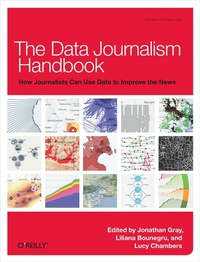
The Data Journalism Handbook
How Journalists Can Use Data to Improve the News
1st Edition
Published on 28. August 2012
Book
238 pages
978-1-4493-3006-4 (ISBN)
Description
When you combine the sheer scale and range of digital information now available with a journalist's "nose for news" and her ability to tell a compelling story, a new world of possibility opens up. With The Data Journalism Handbook, you'll explore the potential, limits, and applied uses of this new and fascinating field.
This valuable handbook has attracted scores of contributors since the European Journalism Centre and the Open Knowledge Foundation launched the project at MozFest 2011. Through a collection of tips and techniques from leading journalists, professors, software developers, and data analysts, you'll learn how data can be either the source of data journalism or a tool with which the story is told-or both.
* Examine the use of data journalism at the BBC, the Chicago Tribune, the Guardian, and other news organizations
* Explore in-depth case studies on elections, riots, school performance, and corruption
* Learn how to find data from the Web, through freedom of information laws, and by "crowd sourcing"
* Extract information from raw data with tips for working with numbers and statistics and using data visualization
* Deliver data through infographics, news apps, open data platforms, and download links
More details
Other editions
Additional editions
E-Book
07/2012
1st Edition
O'Reilly
€13.99
Available for download
E-Book
07/2012
1st Edition
O'Reilly
€11.49
Available for download
Persons
The European Journalism Centre provides training to enhance the quality of journalistic coverage of European current affairs and to provide strategic support for the European media. The Open Knowledge Foundation seeks a world in which open knowledge is ubiquitous and routine - both online and offline - and promotes open knowledge because of its potential to deliver far-reaching societal benefits.
Content
- Preface
- Chapter 1: Introduction
- Chapter 2: In The Newsroom
- Chapter 3: Case Studies
- Chapter 4: Getting Data
- Chapter 5: Understanding Data
- Chapter 6: Delivering Data
- Colophon