

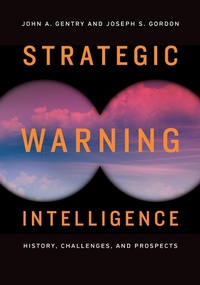
Strategic Warning Intelligence
Description

More details
Other editions
Additional editions
Persons
John A. Gentry is an adjunct professor in the Security Studies Program at the Edmund A. Walsh School of Foreign Service, Georgetown University and at Columbia University's School of International and Public Affairs.
Joseph S. Gordon is the Colin Powell Chair for Intelligence Analysis at National Intelligence University, president emeritus of the International Association for Intelligence Education, and was formerly an analyst at the Defense Intelligence Agency.
Content
Contents
Preface
Abbreviations
Introduction
1. Concepts of Strategic Warning Intelligence
2. Four Classic Warning Cases
3. Types of Government Warning Institutions
4. The Evolution of U.S., British, Dutch, and NATO Warning Institutions
5. Warning Methodological Issues
6. The ?Indications and Warning? Analytic Method
7. Other Warning Analytic Techniques
8. Cognitive, Psychological, and Character Issues
9. Producers of Warning Intelligence beyond Formal Intelligence Communities
10. Dealing with Senior Intelligence Consumers
11. Institutional Issues
12. The Future of Strategic Warning Intelligence
Bibliography
Index
About the Authors
