

Geopolitical Constructs
The Mulberry Harbours, World War Two, and the Making of a Militarized Transatlantic
1st Edition
Published on 19. September 2016
1 pages
979-8-216-20719-1 (ISBN)
Description

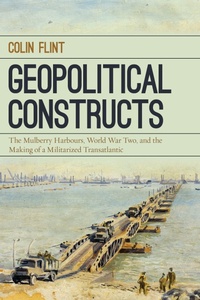
This innovative book tells a unique story about D-Day, one that does not concentrate on the soldiers who hit the beaches or the admirals and generals who commanded them. Instead, Colin Flint brings engineers, businessmen, and bureaucrats to center stage. Through them, he offers a different way of thinking about war, one that sees war as an ongoing set of processes in which seemingly isolated acts are part of broader historical developments. Developing the concept ofgeopolitical constructs to understand wars, the author connects specific events to long-term and global geopolitical arrangements.
Focusing on the construction of the Mulberry Harbours-massive artificial structures dragged across the English Channel in the immediate wake of the invading force-Flint illustrates how the process of making war links a vast array of people, institutions, and places, as well as past events and future outcomes. He argues that the people who designed and built the Harbours became geopolitical subjects by producing pieces of engineering that helped shape the course of World War Two and the Cold War that followed, which created a militarized trans-Atlantic that remains today. Using previously unpublished archival material to give voice to those who made the Mulberry Harbours and wartime strategy, this original study broadens the historical and geographical scope of how we understand war, showing how the everyday actions of individuals made, and were made by, geopolitical settings.
Focusing on the construction of the Mulberry Harbours-massive artificial structures dragged across the English Channel in the immediate wake of the invading force-Flint illustrates how the process of making war links a vast array of people, institutions, and places, as well as past events and future outcomes. He argues that the people who designed and built the Harbours became geopolitical subjects by producing pieces of engineering that helped shape the course of World War Two and the Cold War that followed, which created a militarized trans-Atlantic that remains today. Using previously unpublished archival material to give voice to those who made the Mulberry Harbours and wartime strategy, this original study broadens the historical and geographical scope of how we understand war, showing how the everyday actions of individuals made, and were made by, geopolitical settings.
More details
Edition
1. Auflage
Language
English
Place of publication
United States
Publishing group
Bloomsbury Publishing Plc
Target group
Professional and scholarly
Illustrations
3 b/w photos; 3 maps; 1 table; 2 charts
ISBN-13
979-8-216-20719-1 (9798216207191)
Copyright in bibliographic data and cover images is held by Nielsen Book Services Limited or by the publishers or by their respective licensors: all rights reserved.
Schweitzer Classification
Other editions
Additional editions
Colin Flint
Geopolitical Constructs
The Mulberry Harbours, World War Two, and the Making of a Militarized Transatlantic
Book
09/2016
Rowman & Littlefield Publishers
€127.40
Shipment within 10-20 days
Person
Colin Flint is a political geographer and professor in the Department of Political Science, Utah State University.
Content
List of Figures
Acknowledgments
Chapter One: Introduction: The Mulberry Harbours and Ways to Think About War
Chapter Two: Geopolitical Constructs: Understanding Global Geopolitical
Change
Chapter Three: The Scope of the Mulberry Harbour Project: Demanded by
Strategy, Made by Committee
Chapter Four: Bureaucratic Construct: "Millions spent on a plan which had not
been approved"
Chapter Five: Good Geopolitical Subjects: "Did we, Sir, do well?"
Chapter Six: The Business of Making the Mulberry Harbours: "War may be
an intensification in the development of our lives"
Chapter Seven: Making Places: "You are probably aware that a scheme has been
prepared"
Chapter Eight: Making Regions: From "bridge" to "unsinkable aircraft carrier"
Chapter Nine: Conclusion: The Legacies of Geopolitical Constructs
Bibliography
About the Author
Acknowledgments
Chapter One: Introduction: The Mulberry Harbours and Ways to Think About War
Chapter Two: Geopolitical Constructs: Understanding Global Geopolitical
Change
Chapter Three: The Scope of the Mulberry Harbour Project: Demanded by
Strategy, Made by Committee
Chapter Four: Bureaucratic Construct: "Millions spent on a plan which had not
been approved"
Chapter Five: Good Geopolitical Subjects: "Did we, Sir, do well?"
Chapter Six: The Business of Making the Mulberry Harbours: "War may be
an intensification in the development of our lives"
Chapter Seven: Making Places: "You are probably aware that a scheme has been
prepared"
Chapter Eight: Making Regions: From "bridge" to "unsinkable aircraft carrier"
Chapter Nine: Conclusion: The Legacies of Geopolitical Constructs
Bibliography
About the Author
