

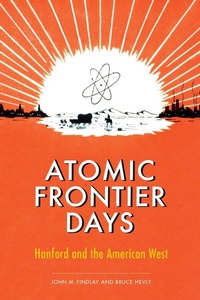
Atomic Frontier Days
Description

Outstanding Title by Choice Magazine
On the banks of the Pacific Northwest's greatest river lies the Hanford nuclear reservation, an industrial site that appears to be at odds with the surrounding vineyards and desert. The 586-square-mile compound on the Columbia River is known both for its origins as part of the Manhattan Project, which made the first atomic bombs, and for the monumental effort now under way to clean up forty-five years of waste from manufacturing plutonium for nuclear weapons. Hanford routinely makes the news, as scientists, litigants, administrators, and politicians argue over its past and its future.
It is easy to think about Hanford as an expression of federal power, a place apart from humanity and nature, but that view distorts its history. Atomic Frontier Days looks through a wider lens, telling a complex story of production, community building, politics, and environmental sensibilities. In brilliantly structured parallel stories, the authors bridge the divisions that accompany Hanford's headlines and offer perspective on today's controversies. Influenced as much by regional culture, economics, and politics as by war, diplomacy, and environmentalism, Hanford and the Tri-Cities of Richland, Pasco, and Kennewick illuminate the history of the modern American West.
More details
Other editions
Additional editions
Persons
John M. Findlay is professor of history at the University of Washington. His focus is social and urban history. Bruce Hevly is associate professor of history at the University of Washington. His focus is history of science and technology.
Content
One
Plutonium, Production, and Pollution
Hanford's Career as Federal Enclave
Two
The Atomic City of the West
Richland and the Tri-Cities
Three
The Politics of Hanford
Warfare and Welfare
Four
Hanford and the Columbia River Basin
Economy and Ecology
Epilogue
Appendix 1
Appendix 2
Appendix 3
Appendix 4
Note on Sources
Abbreviations Used in Notes
Notes
Bibliographic Essay
Index
