

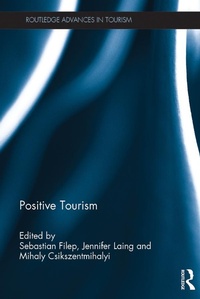
Positive Tourism
Published on 4. October 2016
232 pages
978-1-317-47891-1 (ISBN)
Description

Tourism affects millions of individuals, numerous societies and environments in multiple, nuanced and overlapping ways. While it can be viewed as a frivolous leisure pursuit or simply a large industry, with potentially destructive impacts, it might also be understood in terms of its effects on human fulfilment, the good life and greater well-being.
This book calls for positive tourism, principally grounded in theories from positive psychology (the study of what makes life worth living), and the development of a body of knowledge that explains what characterises optimal tourist experiences, what enables host communities to flourish and what encourages workers in tourism to thrive. Through original research studies reported in this international volume we aim to further develop this knowledge. The intersections between ongoing and traditionally inspired applications of psychology in tourism and this new thrust in psychological inquiry promise to refresh and challenge tourism research.
This book will appeal to researchers and academics in tourism, leisure, positive psychology, management and related fields as well as graduate students, professionals and policy makers.
This book calls for positive tourism, principally grounded in theories from positive psychology (the study of what makes life worth living), and the development of a body of knowledge that explains what characterises optimal tourist experiences, what enables host communities to flourish and what encourages workers in tourism to thrive. Through original research studies reported in this international volume we aim to further develop this knowledge. The intersections between ongoing and traditionally inspired applications of psychology in tourism and this new thrust in psychological inquiry promise to refresh and challenge tourism research.
This book will appeal to researchers and academics in tourism, leisure, positive psychology, management and related fields as well as graduate students, professionals and policy makers.
Reviews / Votes
"In conclusion, this well written edited book achieves to further knowledge on optimal tourist experiences but more importantly has started documenting research on worker well-being and host-community well-being through the lens of positive psychology... the value of this book, particularly for researchers, lies as much in what is presented making an original contribution to knowledge as in highlighting what is missing or where our attention in tourism research should be."Heike Schaenzel, School of Hospitality & Tourism, Auckland University of Technology
More details
Series
Language
English
Place of publication
London
United Kingdom
Publishing group
Taylor & Francis Ltd
Target group
College/higher education
Illustrations
11 Tables, black and white; 3 Line drawings, black and white; 3 Halftones, black and white; 6 Illustrations, black and white
File size
1,06 MB
ISBN-13
978-1-317-47891-1 (9781317478911)
Copyright in bibliographic data and cover images is held by Nielsen Book Services Limited or by the publishers or by their respective licensors: all rights reserved.
Schweitzer Classification
Other editions
Additional editions
Sebastian Filep | Jennifer Laing | Mihaly Csikszentmihalyi
Positive Tourism
Book
07/2019
1st Edition
Routledge
€71.30
Shipment within 15-20 days
Sebastian Filep | Jennifer Laing | Mihaly Csikszentmihalyi
Positive Tourism
Book
10/2016
1st Edition
Routledge
€206.30
Shipment within 10-20 days
Persons
Sebastian Filep is Senior Lecturer at the Tourism Department, University of Otago, New Zealand. He specialises in tourism and well-being research. He has published internationally in peer-reviewed academic journals and books on the topic of human well-being.
Jennifer Laing is Associate Professor in Management in the Department of Management and Marketing, La Trobe University, Australia. Her research interests include extraordinary tourist experiences, the role of events in society, travel narratives and wellness tourism. She has co-written five and edited two books on tourism and/or events.
Mihaly Csikszentmihalyi is Distinguished Professor of Psychology and Management and Founding Co-Director of the Quality of Life Research Centre, Claremont Graduate University, USA. He is noted for his work on happiness, but is best known as the architect of the notion of flow.
?
Jennifer Laing is Associate Professor in Management in the Department of Management and Marketing, La Trobe University, Australia. Her research interests include extraordinary tourist experiences, the role of events in society, travel narratives and wellness tourism. She has co-written five and edited two books on tourism and/or events.
Mihaly Csikszentmihalyi is Distinguished Professor of Psychology and Management and Founding Co-Director of the Quality of Life Research Centre, Claremont Graduate University, USA. He is noted for his work on happiness, but is best known as the architect of the notion of flow.
?
Content
Lists of figures
List of tables
List of contributors
Foreword
Acknowledgements
Part I: Positive Tourism
What is Positive Tourism? Why Do We Need It?
Sebastian Filep, Jennifer Laing and Mihaly Csikszentmihalyi
Part II: Positive Tourist Experiences
Meaningful Vacation Experiences
Jan Packer and Chelsea Gill
Tourism and Love: How Do Tourist Experiences Affect Romantic Relationships?
Jessica de Bloom, Sabine Geurts and Martin Lohmann
Tourists' Accounts of Learning and Positive Emotions Through Sensory Experiences
Xavier Matteucci
Dark Tourism and Dark Events: A Journey to Positive Resolution and Well-Being
Jennifer Laing and Warwick Frost
The Role of Humour in Contributing to Tourism Experiences
Anja Pabel
Employing Hedonia and Eudaimonia to Explore Differences Between Three Groups of Wellness Tourists on the Experiential, the Motivational and the Global Level
Cornelia Voigt
Why Do We Travel? A Positive Psychological Model for Travel Motivation
Mihaly Csikszentmihalyi and John Coffey
Part III: Positive Host Communities
Examining Kindness of Strangers in Tourism: Trail Magic on the Appalachian Trail
Troy Glover and Sebastian Filep
The Impact of Tourism on the Quality of Life of Local Industry Employees in Ubud, Bali
Peita Hillman, Brent D. Moyle, Betty Weiler and Deborah Che
Part IV: Positive Tourism Workers
Transformative Guiding and Long-Distance Walking
Robert Saunders, Betty Weiler and Jennifer Laing
Co-creation and Experience Brokering in Guided Adventure Tours
Susan Houge Mackenzie and John Kerr
Part V: Conclusions and Future Directions
Synthesising Positive Tourism
Sebastian Filep, Jennifer Laing and Mihaly Csikszentmihalyi
Index
List of tables
List of contributors
Foreword
Acknowledgements
Part I: Positive Tourism
What is Positive Tourism? Why Do We Need It?
Sebastian Filep, Jennifer Laing and Mihaly Csikszentmihalyi
Part II: Positive Tourist Experiences
Meaningful Vacation Experiences
Jan Packer and Chelsea Gill
Tourism and Love: How Do Tourist Experiences Affect Romantic Relationships?
Jessica de Bloom, Sabine Geurts and Martin Lohmann
Tourists' Accounts of Learning and Positive Emotions Through Sensory Experiences
Xavier Matteucci
Dark Tourism and Dark Events: A Journey to Positive Resolution and Well-Being
Jennifer Laing and Warwick Frost
The Role of Humour in Contributing to Tourism Experiences
Anja Pabel
Employing Hedonia and Eudaimonia to Explore Differences Between Three Groups of Wellness Tourists on the Experiential, the Motivational and the Global Level
Cornelia Voigt
Why Do We Travel? A Positive Psychological Model for Travel Motivation
Mihaly Csikszentmihalyi and John Coffey
Part III: Positive Host Communities
Examining Kindness of Strangers in Tourism: Trail Magic on the Appalachian Trail
Troy Glover and Sebastian Filep
The Impact of Tourism on the Quality of Life of Local Industry Employees in Ubud, Bali
Peita Hillman, Brent D. Moyle, Betty Weiler and Deborah Che
Part IV: Positive Tourism Workers
Transformative Guiding and Long-Distance Walking
Robert Saunders, Betty Weiler and Jennifer Laing
Co-creation and Experience Brokering in Guided Adventure Tours
Susan Houge Mackenzie and John Kerr
Part V: Conclusions and Future Directions
Synthesising Positive Tourism
Sebastian Filep, Jennifer Laing and Mihaly Csikszentmihalyi
Index
