

The Origins of Non-Racialism
Description
Alles über E-Books | Antworten auf Fragen rund um E-Books, Kopierschutz und Dateiformate finden Sie in unserem Info- & Hilfebereich.
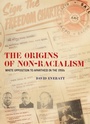
How did South Africa embrace "non-racialism"?
After centuries of white domination and decades of increasingly savage repression, freedom came to South Africa far later than elsewhere in the continent - and yet was marked by a commitment to non-racialism. Nelson Mandela's Cabinet and government were made up of women and men of all races, and many spoke of the birth of a new 'Rainbow Nation'. How did this come about? How did an African nationalist liberation movement resisting apartheid - a universally denounced violent expression of white supremacy - open its doors to other races, and whites in particular? And what did non-racialism mean? This is the real 'miracle' of South Africa: that at the height of white supremacy and repression, black and white democrats - in their different organisations, coming from vastly different backgrounds and traditions - agreed on one thing: that the future for South Africa would be non-racial.
More details
Other editions
Additional editions

Person
System requirements
File format: ePUB
Copy protection: Watermark-DRM (Digital Rights Management)
System requirements:
- Computer (Windows; MacOS X; Linux): Use a reading software that can process the file format ePUB: e.g., Adobe Digital Editions or FBReader – both free (see eBook Help).
- Tablet/Smartphone (Android; iOS): Before downloading, install the free app Adobe Digital Editions (see eBook Help).
- E-reader: Bookeen, Kobo, Pocketbook, Sony, Tolino and many more (not Kindle).
The file format ePUB works well for novels and non-fiction books – i.e., „flowing” text without complex layout. On an e-reader or smartphone, line and page breaks automatically adjust to fit the small displays.
This eBook uses Watermark-DRM, a „soft” copy protection. This means that there are no technical restrictions to prevent illegal distribution. However, there is a personalised watermark embedded in the eBook that can be used to identify the purchaser of the eBook in the event of misuse and to provide evidence for legal purposes.
For more information, see our eBook Help page.