

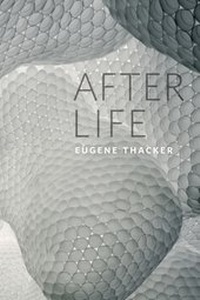
After Life
Description

In After Life, Eugene Thacker clears the ground for a new philosophy of life by recovering the twists and turns in its philosophical history. Beginning with Aristotle's originary formulation of a philosophy of life, Thacker examines the influence of Aristotle's ideas in medieval and early modern thought, leading him to the work of Immanuel Kant, who notes the inherently contradictory nature of "life in itself." Along the way, Thacker shows how early modern philosophy's engagement with the problem of life affects thinkers such as Gilles Deleuze, Georges Bataille, and Alain Badiou, as well as contemporary developments in the "speculative turn" in philosophy.
At a time when life is categorized, measured, and exploited in a variety of ways, After Life invites us to delve deeper into the contours and contradictions of the age-old question, "what is life?"
More details
Other editions
Additional editions
Content
- Intro
- Contents
- Preface
- 1. Life and the Living (On Aristotelian Biohorror)
- 1.1 Supernatural Horror as the Paradigm for Life
- 1.2 Aristotle's De Anima and the Problem of Life
- 1.3 The Ontology of Life
- 1.4 The Entelechy of the Weird
- 2. Superlative Life
- 2.1 Life With or Without Limits
- 2.2 Life as Time in Plotinus
- 2.3 On the Superlative
- 2.4 Superlative Life I: Pseudo-Dionysius
- 2.4.1 Negative vs. Affirmative Theology
- 2.4.2 Superlative Negation
- 2.4.3 Negation and Preexistent Life
- 2.4.4 Excess, Evil, and Nonbeing
- 2.5 Superlative Life II: Eriugena
- 2.5.1 Negation in the Periphyseon
- 2.5.2 The quaestio de nihilo: On Nothing
- 2.5.3 The quaestio de nihilo: Superlative Nothing
- 2.5.4 Dark Intelligible Abyss
- 2.6 Apophasis
- 2.6.1 The Apophatic Logic
- 2.6.2 Negation in Frege and Ayer
- 2.6.3 Negation vs. Subtraction in Badiou
- 2.6.4 Negation and Contradiction in Priest
- 2.7 The Dialetheic Vitalism of Negative Theology
- 2.8 Ellipses: Suhrawardi and the Luminous Void
- 3. Univocal Creatures
- 3.1 On Spiritual Creatures
- 3.2 Life as Form in Aristotle
- 3.3 The Concept of the Creature
- 3.4 Univocity I: Duns Scotus vs. Aquinas
- 3.4.1 Univocity in Aquinas' Summa Theologica
- 3.4.2 Univocity in Duns Scotus' Opus Oxoniense
- 3.4.3 The Common Nature of the Creature
- 3.5 Univocity II: Duns Scotus vs. Henry of Ghent
- 3.5.1 Univocity in Henry of Ghent
- 3.5.2 Negative vs. Privative Indetermination
- 3.5.3 Absolute Indetermination
- 3.6 Univocity III: Deleuze's Scholasticism-Three Variations
- 3.6.1 Variation I: Spinoza et le Problème de l'Expression
- 3.6.2 Variation II: Différence et Répétition
- 3.6.3 Variation III: Cours de Vincennes
- 3.7 Univocal Creatures
- 3.8 Ellipses: Dogen and Uncreated Univocity
- 4. Dark Pantheism
- 4.1 Everything and Nothing
- 4.2 Life as Spirit in Aquinas
- 4.3 The Concept of the Divine Nature
- 4.4 Immanence I: Eriugena's Periphyseon
- 4.4.1 Natura and the Unthought
- 4.4.2 Universal Life
- 4.4.3 Four Statements on Pantheism
- 4.5 Immanence II: Duns Scotus' Reportatio IA
- 4.5.1 Univocal Immanence
- 4.5.2 Actual Infinity
- 4.5.3 The Pathology of the Triple Primacy
- 4.6 Immanence III: Nicholas of Cusa's De Docta Ignorantia
- 4.6.1 The Coincidence of Opposites
- 4.6.2 The Folds of Life
- 4.6.3 Absolute vs. Contracted Pantheism
- 4.6.4 Speculative Pantheism (Deleuze's Interlocutors)
- 4.7 Pantheism and Pure Immanence
- 4.7.1 The Insubordination of Immanence in Deleuze
- 4.7.2 Scholia I: The Isomorphism of Univocity and Immanence
- 4.7.3 Scholia II: The Vitalist Logic of Common Notions
- 4.7.4 Scholia III: The Life of Substance
- 4.8 Dark Pantheism
- 4.9 Ellipses: Wang Yangming and Idealist Naturalism
- 5. Logic and Life (On Kantian Teratology)
- 5.1 The Wandering Line from Aristotle to Kant
- 5.2 Critique of Life
- 5.3 Spectral Life and Speculative Realism
- 5.4 Ontotheology in Kant, Atheology in Bataille
- 5.5 The Night Land
- Notes
- Index
