

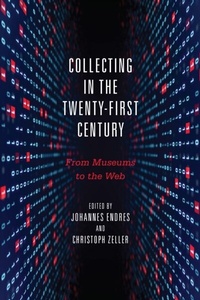
Collecting in the Twenty-First Century
From Museums to the Web
1st Edition
Published on 13. May 2022
242 pages
978-1-80010-338-2 (ISBN)
Description

An interdisciplinary volume of essays identifying the impact of technology on the age-old cultural practice of collecting as well as the opportunities and pitfalls of collecting in the digital era.
More details
Other editions
Additional editions
Book
05/2022
Camden House Inc
€111.00
Shipment within 15-20 days
Persons
Endres Johannes:
JOHANNES ENDRES is Professor of Comparative Literature and Art History at the University of California, Riverside.Zeller Christoph:
CHRISTOPH ZELLER is Professor of German and European Studies at Vanderbilt University.Goebel Rolf J.:
ROLF J. GOEBEL is Distinguished Professor of German, Emeritus, at the University of Alabama in Huntsville.
JOHANNES ENDRES is Professor of Comparative Literature and Art History at the University of California, Riverside.Zeller Christoph:
CHRISTOPH ZELLER is Professor of German and European Studies at Vanderbilt University.Goebel Rolf J.:
ROLF J. GOEBEL is Distinguished Professor of German, Emeritus, at the University of Alabama in Huntsville.
Content
Introduction: Collecting in the Digital Age - Christoph Zeller
1: Collecting: Defining the Subject - Johannes Endres
PART I. Spaces of Collecting
2: Collector as Curator: Collecting in the Post-Internet Age - Boris Groys
3: Should Libraries Still Be Charged with Collecting in a Digital Environment? - Michael Knoche
4: Museums and Collecting as/and Media in the Digital Age - Peter M. McIsaac
PART II. Recollection
5: Quality Storage: Collecting as a Technique of Reading - Nikolaus Wegmann
6: Phenomenology of Memory in an Age of Big Data - Clifford B. Anderson
7: Collecting the Cultural Memory of Palmyra - Erin L. Thompson
8: Conservation in the Digital Age - Jessica Walthew
PART III. Virtuality
9: Music and the Limits of Collectibility - Rolf J. Goebel
10: Cat Art and Climate Change: Collecting in the Data Anthropocene - Edward Dawson
PART IV. Economics
11: Doomed to Collect: Dataveillance as Inner Logic of the Internet - Roberto Simanowski
12: Data Collection in the Age of Surveillance Capitalism - Douglas C. Schmidt
Notes on the Contributors
Index
1: Collecting: Defining the Subject - Johannes Endres
PART I. Spaces of Collecting
2: Collector as Curator: Collecting in the Post-Internet Age - Boris Groys
3: Should Libraries Still Be Charged with Collecting in a Digital Environment? - Michael Knoche
4: Museums and Collecting as/and Media in the Digital Age - Peter M. McIsaac
PART II. Recollection
5: Quality Storage: Collecting as a Technique of Reading - Nikolaus Wegmann
6: Phenomenology of Memory in an Age of Big Data - Clifford B. Anderson
7: Collecting the Cultural Memory of Palmyra - Erin L. Thompson
8: Conservation in the Digital Age - Jessica Walthew
PART III. Virtuality
9: Music and the Limits of Collectibility - Rolf J. Goebel
10: Cat Art and Climate Change: Collecting in the Data Anthropocene - Edward Dawson
PART IV. Economics
11: Doomed to Collect: Dataveillance as Inner Logic of the Internet - Roberto Simanowski
12: Data Collection in the Age of Surveillance Capitalism - Douglas C. Schmidt
Notes on the Contributors
Index
