

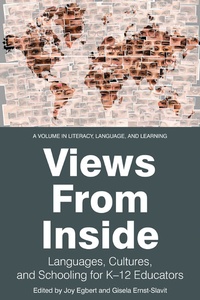
Views from Inside
Languages, Cultures, and Schooling for K?12 Educators
1st Edition
Published on 12. January 2017
513 pages
978-1-64113-021-9 (ISBN)
Description

The goal of this text is to help teachers in diverse classrooms understand the importance of students' culture, languages, and schooling experiences to curriculum, assessment, and student achievement. Readers will learn about aspects of specific cultures and languages that are important to their understanding of their students, and they will discover that cultures that are often considered similar may not be so (and why they aren't). Finally, the text focuses on how teachers can integrate languages and cultures into classrooms and how to account for students' backgrounds and funds of knowledge when devising tasks.
The text starts with an introduction to language and culture that presents a research?based explanation of why these concepts are important for teachers to understand (Chapter 1). Then, the middle 28 chapters each address one country/culture. Each chapter starts with a school scenario in the US. Part 2 of each chapter includes evidence?based demographic and background data on the country, including historical events that may have an impact on our students and their families. Part 3 includes a look at education, schooling, and culture, including famous people, contributions to the world, personal characteristics, important religious information, focal customs, and other aspects that are important to cultural insiders. Part 4 is about language and literacy traditions and how they relate to the culture, a number of words that teachers can learn (e.g., yes, no, thank you, please, hello), how the language is different from and similar to English, and what those differences and similarities might mean for English language learners from that culture. Part 5 comprises advice, resources, and ideas for teachers (for example, if it is an oral culture, the teacher might consider working with students on oral storytelling before transitioning to written stories, or incorporate both using technology). Each chapter also contains recommended readings and resources and short exercises that extend the chapter information. The final chapter presents parting notes for teachers and additional suggestions for addressing diversity.
The text starts with an introduction to language and culture that presents a research?based explanation of why these concepts are important for teachers to understand (Chapter 1). Then, the middle 28 chapters each address one country/culture. Each chapter starts with a school scenario in the US. Part 2 of each chapter includes evidence?based demographic and background data on the country, including historical events that may have an impact on our students and their families. Part 3 includes a look at education, schooling, and culture, including famous people, contributions to the world, personal characteristics, important religious information, focal customs, and other aspects that are important to cultural insiders. Part 4 is about language and literacy traditions and how they relate to the culture, a number of words that teachers can learn (e.g., yes, no, thank you, please, hello), how the language is different from and similar to English, and what those differences and similarities might mean for English language learners from that culture. Part 5 comprises advice, resources, and ideas for teachers (for example, if it is an oral culture, the teacher might consider working with students on oral storytelling before transitioning to written stories, or incorporate both using technology). Each chapter also contains recommended readings and resources and short exercises that extend the chapter information. The final chapter presents parting notes for teachers and additional suggestions for addressing diversity.
All prices
More details
Other editions
Additional editions
Joy Egbert | Gisela Ernst-Slavit
Views from Inside
Languages, Cultures, and Schooling for K-12 Educators
Book
10/2017
Information Age Publishing
€86.10
Shipment within 3-4 weeks
Content
1 - Front Cover [Seite 1]
2 - Views From Inside [Seite 2]
3 - Languages, Cultures, and Schooling for K-12 Educators [Seite 2]
3.1 - A Volume in Literacy, Language, and Learning [Seite 2]
3.2 - Series Editor: [Seite 2]
3.3 - Wen Ma, Le Moyne College [Seite 2]
4 - CONTENTS [Seite 8]
4.1 - SECTION 1: INTRODUCTION TO CULTURE AND LANGUAGE [Seite 8]
4.1.1 - 1. Understanding Culture and Language in Education [Seite 8]
4.2 - SECTION 2: ARAB AND PERSIAN REGION [Seite 8]
4.2.1 - 2. The Gulf Region [Seite 8]
4.2.2 - 3. Middle East [Seite 8]
4.2.3 - 4. Islamic Republic of Iran/Persia [Seite 8]
4.3 - SECTION 3: NORTH/CENTRAL AMERICAN REGION [Seite 8]
4.3.1 - 5. Mexico [Seite 8]
4.3.2 - 6. Puerto Rico [Seite 8]
4.3.3 - 7. Nicaragua [Seite 8]
4.4 - SECTION 4: SOUTH AMERICAN REGION [Seite 9]
4.4.1 - 8. Argentina [Seite 9]
4.4.2 - 9. Brazil [Seite 9]
4.4.3 - 10. Peru: A Nation of Contrasts, Diversity, and Complexity [Seite 9]
4.5 - SECTION 5: SOUTHEAST ASIAN REGION [Seite 9]
4.5.1 - 11. Vietnam [Seite 9]
4.5.2 - 12. India [Seite 9]
4.5.3 - 13. Bangladesh [Seite 9]
4.5.4 - 14. Pakistan [Seite 9]
4.5.5 - 15. Philippines: Being Filipino [Seite 9]
4.6 - SECTION 6: ASIAN REGION [Seite 9]
4.6.1 - 16. China [Seite 9]
4.6.2 - 17. Taiwan for Teachers [Seite 9]
4.6.3 - 18. Japan [Seite 9]
4.6.4 - 19. Korea [Seite 9]
4.7 - SECTION 7: AFRICAN REGION [Seite 9]
4.7.1 - 20. North Africa [Seite 9]
4.7.2 - 21. Nigeria [Seite 9]
4.7.3 - 22. The Democratic Republic of the Congo: A Case for Hope [Seite 10]
4.7.4 - 23. English Language, Literacy, and Culture: The Case of Angola [Seite 10]
4.8 - SECTION 8: EUROPEAN REGION [Seite 10]
4.8.1 - 24. A Glimpse Into Russia History, Culture, and Language [Seite 10]
4.8.2 - 25. Ukraine [Seite 10]
4.8.3 - 26. Poland [Seite 10]
4.9 - SECTION 9: UNITED STATES [Seite 10]
4.9.1 - 27. Culture, Language, and Schooling in the United States [Seite 10]
4.10 - Literacy, Language, and Learning [Seite 3]
4.11 - Views From Inside [Seite 6]
4.12 - Languages, Cultures, and Schooling for K-12 Educators [Seite 6]
4.12.1 - Edited by [Seite 6]
4.12.2 - Joy Egbert and Gisela Ernst-Slavit Washington State University [Seite 6]
4.12.2.1 - Information Age Publishing, Inc. [Seite 6]
4.12.2.2 - Charlotte, North Carolina www.infoagepub.com [Seite 6]
4.12.2.3 - Dedications [Seite 12]
4.12.2.4 - Acknowledgments [Seite 12]
4.12.2.5 - Preface [Seite 14]
4.12.2.5.1 - Joy Egbert [Seite 14]
4.12.2.5.2 - Washington State University [Seite 14]
4.12.3 - Table P.1. Some IPA Symbols and Sounds [Seite 16]
4.13 - SECTION 1 [Seite 18]
4.13.1 - INTRODUCTION TO CULTURE AND LANGUAGE [Seite 18]
4.14 - CHAPTER 1 [Seite 20]
4.14.1 - Understanding Culture and Language in Education [Seite 20]
4.14.1.1 - Gisela Ernst-Slavit [Seite 20]
4.14.1.2 - Washington State University Vancouver [Seite 20]
4.14.1.3 - What Is Culture? [Seite 20]
4.14.1.4 - How Do Classrooms Reflect Culture? [Seite 22]
4.14.1.5 - Language as a Mirror of Culture [Seite 25]
4.14.1.6 - Linguistic Diversity in the U.S. [Seite 26]
4.14.2 - Table 1.2. Most Commonly Spoken Home Languages Other Than English in the United States [Seite 26]
4.14.2.1 - Why Culture and Language Are Important for Teachers to Know About [Seite 28]
4.14.2.1.1 - Cultural Competence [Seite 29]
4.14.2.1.2 - Equal or Equitable? [Seite 29]
4.14.2.2 - Promising Approaches and Pedagogical Practices That Affirm Cultural Diversity [Seite 30]
4.14.2.2.1 - Multicultural Education [Seite 31]
4.14.2.2.2 - Culturally Responsive Teaching [Seite 32]
4.14.2.2.3 - The Funds of Knowledge Approach [Seite 33]
4.14.2.3 - Useful Terminology [Seite 34]
4.14.2.3.1 - Acculturation [Seite 34]
4.14.2.3.1.1 - Cultural Assimilation [Seite 34]
4.14.2.3.2 - Cultural Determinism [Seite 34]
4.14.2.3.3 - Cultural Pluralism [Seite 35]
4.14.2.3.4 - Cultural Relativism [Seite 35]
4.14.2.3.5 - Culture Shock [Seite 35]
4.14.2.3.6 - Cultural Universals [Seite 36]
4.14.2.3.7 - Ethnicity [Seite 36]
4.14.2.3.8 - Ethnocentrism [Seite 36]
4.14.2.3.9 - Hidden Curriculum [Seite 37]
4.14.2.3.10 - Hybridity [Seite 37]
4.14.2.3.10.1 - School Culture [Seite 38]
4.14.2.3.10.2 - Syncretism [Seite 38]
4.14.2.3.10.3 - Transculturality [Seite 38]
4.14.2.4 - Conclusions [Seite 38]
4.14.2.5 - Additional Resources [Seite 39]
4.14.2.6 - Tasks for Educators [Seite 40]
4.14.2.6.1 - 1. Work with your peers to add to the list of important terminology presented in this chapter. You may want to start a personal dictionary to help you remember specific terms-this could include pictures, text, graphics, or other supports. [Seite 40]
4.14.2.6.2 - 2. Have you ever experienced any of the topics or issues discussed in this chapter? Write or draw an anecdote that you would be willing to share with peers. [Seite 40]
4.14.2.6.3 - 3. Think about the culture of one of your communities-can you describe it? What about other communities that you belong to? Do the cultures of any of them conflict? In what ways? [Seite 40]
4.14.2.7 - References [Seite 40]
4.14.3 - Table 1.1. Characteristics of Culture [Seite 23]
4.14.4 - Table 1.1. (Continued) [Seite 24]
4.14.5 - SECTION 2 [Seite 42]
4.14.5.1 - ARAB AND PERSIAN REGION [Seite 42]
4.15 - CHAPTER 2 [Seite 44]
4.15.1 - The Gulf Region [Seite 44]
4.15.1.1 - Abir El Shaban [Seite 44]
4.15.1.2 - Washington State University [Seite 44]
4.15.1.3 - Rana Raddawi [Seite 44]
4.15.1.4 - American University of Sharjah, United Arab Emirates [Seite 44]
4.15.1.5 - Jacqueline Tanner [Seite 44]
4.15.1.6 - University of Siegen in Germany [Seite 44]
4.15.1.7 - Background [Seite 45]
4.15.1.7.1 - The Kingdom of Saudi Arabia (KSA) [Seite 45]
4.15.1.7.2 - The United Arab Emirates [Seite 46]
4.15.1.7.3 - Kuwait [Seite 46]
4.15.1.7.4 - The Kingdom of Bahrain [Seite 46]
4.15.1.7.5 - Qatar [Seite 47]
4.15.1.7.6 - The Sultanate of Oman [Seite 47]
4.15.1.8 - Culture, Language, Islam, and the GCC [Seite 47]
4.15.1.8.1 - Islam [Seite 48]
4.15.1.8.2 - Social Relations [Seite 48]
4.15.1.8.3 - The Arab Gulf Traditional Customs [Seite 49]
4.15.1.8.3.1 - Figure 2. 1. Example of men's traditional Khaliji dress. [Seite 49]
4.15.1.8.3.2 - Figure 2. 2. Example of men's traditional Khaliji dress. [Seite 50]
4.15.1.8.4 - Traditional Food [Seite 50]
4.15.1.8.5 - Music [Seite 51]
4.15.1.9 - Arabic Language [Seite 51]
4.15.1.10 - Education and Schooling in the Gulf Region [Seite 53]
4.15.1.10.1 - Expectations of Educators in the GCC [Seite 54]
4.15.1.11 - Ideas for Educators [Seite 56]
4.15.1.11.1 - Other Points for Educators to Consider [Seite 57]
4.15.1.12 - Conclusions [Seite 58]
4.15.1.13 - Additional Resources [Seite 59]
4.15.1.14 - Tasks for Educators [Seite 59]
4.15.1.14.1 - 1. We, the foreigners, are afraid to participate in class because we feel we are less advantaged than American students." Do you agree or disagree with this student's opinion? What would you do to encourage your students to feel safer and have a ... [Seite 59]
4.15.1.14.2 - 2. To what extent might the cultural differences between Americans and GCC students affect the learning environment for Arab learners? [Seite 59]
4.15.1.14.3 - 3. Consider whether you have experienced any of the cultural issues presented at the start of this chapter that affected Mohammed and Hanof. Share some ideas for how to address these issues with your peers. [Seite 59]
4.15.1.14.4 - 4. What are the elements that you like most about the GCC culture? Do you have a similar tie or cultural regulator in your culture? [Seite 59]
4.15.1.14.5 - 5. Using a Venn diagram, list the differences and the similarities between your culture and the GCC. [Seite 59]
4.15.1.14.6 - 6. Work with a partner and try to recall as many Arabic words and phrases as possible. [Seite 59]
4.15.1.15 - References [Seite 59]
4.16 - CHAPTER 3 [Seite 62]
4.16.1 - The Middle East [Seite 62]
4.16.1.1 - Raed Alsawaier [Seite 62]
4.16.1.2 - Washington State University [Seite 62]
4.16.1.3 - Background [Seite 62]
4.16.1.4 - Demographics and Geography [Seite 63]
4.16.1.5 - Middle Eastern Cultures and History [Seite 64]
4.16.1.5.1 - Religion [Seite 64]
4.16.1.5.2 - Egypt [Seite 64]
4.16.1.5.3 - Lebanon [Seite 64]
4.16.1.5.4 - Jordan [Seite 64]
4.16.1.5.5 - Syria [Seite 65]
4.16.1.5.5.1 - Literacy and Reading [Seite 65]
4.16.1.5.5.2 - The Schooling System [Seite 66]
4.16.1.5.5.3 - Morals and Folkways [Seite 66]
4.16.1.6 - Language [Seite 67]
4.16.2 - Table 3.1. Arabic Vowels With English Pronunciations [Seite 68]
4.16.3 - Table 3.2. English Vowels Not Used in Arabic [Seite 68]
4.16.4 - Table 3.3. English Consonants Not Used in Arabic Language [Seite 68]
4.16.4.1 - Ideas for Educators [Seite 69]
4.16.4.1.1 - Pedagogy [Seite 69]
4.16.4.1.2 - Relevant Learning Content [Seite 69]
4.16.4.1.3 - Establishing Connections [Seite 70]
4.16.4.1.4 - Culturally Sensitive Topics [Seite 70]
4.16.4.2 - Conclusions [Seite 71]
4.16.4.3 - Additional Resources [Seite 72]
4.16.4.4 - Tasks for Teachers [Seite 72]
4.16.4.4.1 - 1. What does the literature say about first language support for second language learning? How would you respond if you see some of your students consulting an Arabic-English dictionary to help them do an activity or understand instruction? [Seite 72]
4.16.4.4.2 - 2. Teachers often send books home with students to read with the help of the parents [Seite 72]
4.16.4.4.3 - 3. Give your students of Middle Eastern descent some stories from Arab culture translated into English. If you do not have any in your classroom, you can always refer them to websites where Arab stories translated into English are available. Ask your... [Seite 72]
4.16.4.5 - References [Seite 73]
4.16.5 - Table 3.4. Common Arabic Phrases [Seite 71]
4.17 - CHAPTER 4 [Seite 76]
4.17.1 - Islamic Republic of Iran/Persia [Seite 76]
4.17.1.1 - Seyed Abdollah Shahrokni [Seite 76]
4.17.1.2 - Washington State University [Seite 76]
4.17.1.3 - Background [Seite 76]
4.17.1.3.1 - Geography [Seite 77]
4.17.1.3.2 - Ethnicity [Seite 77]
4.17.1.3.3 - Religion [Seite 77]
4.17.1.3.4 - Flag [Seite 78]
4.17.1.3.5 - History [Seite 78]
4.17.1.4 - Culture [Seite 79]
4.17.1.4.1 - National Traditions [Seite 79]
4.17.1.4.2 - Yalda Night [Seite 80]
4.17.1.4.3 - Nowruz [Seite 80]
4.17.1.4.4 - Muharram [Seite 81]
4.17.1.4.4.1 - Literature [Seite 81]
4.17.1.4.4.2 - Science and Technology [Seite 82]
4.17.1.4.4.3 - Arts [Seite 82]
4.17.1.5 - Education [Seite 83]
4.17.1.5.1 - Elementary Education [Seite 83]
4.17.1.5.2 - Secondary Education [Seite 83]
4.17.1.6 - Language [Seite 84]
4.17.1.6.1 - Persian Alphabet [Seite 84]
4.17.1.7 - A Feel for Iran [Seite 85]
4.17.1.7.1 - Hospitality [Seite 85]
4.17.1.7.2 - Ta'arof (Politeness) [Seite 85]
4.17.1.7.3 - Family [Seite 86]
4.17.1.7.4 - Respect for Parents and Elders [Seite 86]
4.17.1.7.4.1 - Islamic Regulations [Seite 86]
4.17.1.7.4.2 - Socialization [Seite 86]
4.17.1.7.4.3 - Learning Skills to Achieve Individual Success [Seite 87]
4.17.1.7.4.4 - Living in the United States [Seite 87]
4.17.1.8 - Ideas for Educators [Seite 88]
4.17.1.9 - Conclusions [Seite 88]
4.17.1.10 - Acknowledgments [Seite 88]
4.17.1.11 - Additional Resources [Seite 89]
4.17.1.12 - References [Seite 89]
4.17.2 - Section 3 [Seite 92]
4.17.2.1 - NORTH/CENTRAL AMERICAN REGION [Seite 92]
4.18 - CHAPTER 5 [Seite 94]
4.18.1 - México [Seite 94]
4.18.1.1 - María Isabel Morales [Seite 94]
4.18.1.2 - The Evergreen State College [Seite 94]
4.18.1.3 - Brenda L. Barrio [Seite 94]
4.18.1.4 - Washington State University [Seite 94]
4.18.1.5 - Background [Seite 95]
4.18.1.6 - Identity and TERMINOLOGY [Seite 96]
4.18.1.6.1 - Brief History of Mexico [Seite 98]
4.18.1.6.1.1 - Figure 5. 1. Paquime archaeological zone, Casas Grandes, Chihuahua. [Seite 98]
4.18.1.6.2 - Mexican American History [Seite 99]
4.18.1.7 - Culture [Seite 101]
4.18.1.7.1 - People [Seite 101]
4.18.1.7.2 - Indigenous Peoples [Seite 102]
4.18.1.7.3 - Race and Ethnicity as Discussion Topic [Seite 102]
4.18.1.7.4 - Family Structure [Seite 102]
4.18.1.7.5 - Identity [Seite 103]
4.18.1.7.5.1 - States and Regions [Seite 103]
4.18.1.7.5.2 - Educational Systems and Practices [Seite 103]
4.18.1.7.5.3 - Traditions and Customs [Seite 104]
4.18.1.7.5.3.1 - Figure 5. 2. Rich local spices. [Seite 105]
4.18.1.7.6 - Values [Seite 105]
4.18.1.7.7 - Unacceptable Behaviors in Mexico [Seite 106]
4.18.1.7.8 - Impact of Religion on Culture [Seite 106]
4.18.1.7.8.1 - Important Days and Holidays [Seite 107]
4.18.1.8 - Languages and Literacies [Seite 108]
4.18.1.8.1 - Characteristics of the Spanish Language [Seite 108]
4.18.2 - Table 5.1. Spanish (Mexico) Alphabet With English Letter Names [Seite 109]
4.18.2.1 - Ideas for Educators [Seite 109]
4.18.2.1.1 - Home/school Relations [Seite 109]
4.18.3 - Table 5.2. Common Phrases in Spanish (Mexico) [Seite 110]
4.18.3.1 - Conclusions [Seite 111]
4.18.3.2 - Additional Resources [Seite 112]
4.18.3.3 - Tasks for Educators [Seite 112]
4.18.3.3.1 - 1. Reflect on these questions: [Seite 112]
4.18.3.3.2 - 2. Explore your students' backgrounds and family histories by inviting a family member as a storyteller for your class. [Seite 112]
4.18.3.3.3 - 3. Build one or more literacy nights to share with parents the different strategies on how to improve literacy skills for their students in both English and Spanish, using books that relate to them and their culture. [Seite 112]
4.18.3.3.4 - 4. Attend an activity, event, or festival in your student's community to learn more about their culture, traditions, and customs. [Seite 113]
4.18.3.4 - References [Seite 113]
4.19 - CHAPTER 6 [Seite 116]
4.19.1 - Puerto Rico [Seite 116]
4.19.1.1 - Gladys R. Capella Noya and Elsie Candelaria Sosa [Seite 116]
4.19.1.2 - University of Puerto Rico [Seite 116]
4.19.1.3 - Background [Seite 117]
4.19.1.4 - Culture [Seite 121]
4.19.1.4.1 - People and Interests [Seite 121]
4.19.1.4.2 - Gender Roles [Seite 123]
4.19.1.4.3 - Diversity and Racism [Seite 123]
4.19.1.4.4 - Religion [Seite 124]
4.19.1.4.5 - Pedagogy [Seite 125]
4.19.1.4.5.1 - Figure 6. 1. Yeraisy Cruz Peña and Sherlyn Coco Matos working in an art project in a school in Puerto Rico. [Seite 125]
4.19.1.4.6 - Politics [Seite 126]
4.19.1.5 - Languages and Literacies [Seite 126]
4.19.1.6 - Ideas for Educators [Seite 129]
4.19.1.7 - Conclusions [Seite 129]
4.19.1.8 - Additional Resources [Seite 130]
4.19.1.9 - Tasks for Educators [Seite 130]
4.19.1.9.1 - 1. After reading this chapter, what did you learn about Puerto Rican history and culture that might have surprised you? How will that inform your practice? What new questions do you have and how can you explore them? [Seite 130]
4.19.1.9.2 - 2. How can you honor within your classroom the Puerto Rican family values of interdependency and intergenerational continuity? [Seite 130]
4.19.1.9.3 - 3. Read one of these recommended texts and create a task or activity for your peers or students: [Seite 130]
4.19.1.10 - References [Seite 131]
4.20 - CHAPTER 7 [Seite 134]
4.20.1 - Nicaragua [Seite 134]
4.20.1.1 - Desirée Pallais [Seite 134]
4.20.1.2 - University of Texas-Austin [Seite 134]
4.20.1.3 - Ilana Umansky [Seite 134]
4.20.1.4 - University of Oregon [Seite 134]
4.20.1.5 - Background [Seite 135]
4.20.1.5.1 - Demographics [Seite 135]
4.20.1.5.2 - History [Seite 136]
4.20.1.5.3 - Geography [Seite 137]
4.20.1.5.4 - Emigration to the U.S. [Seite 137]
4.20.1.5.5 - Education [Seite 138]
4.20.1.6 - Culture [Seite 139]
4.20.1.6.1 - A Land of Poets and Writers [Seite 139]
4.20.1.6.2 - Reading [Seite 140]
4.20.1.6.3 - Music and Dance [Seite 140]
4.20.1.6.4 - Family Life [Seite 141]
4.20.1.6.5 - Cultural Traits [Seite 141]
4.20.1.6.6 - Religion [Seite 142]
4.20.1.6.7 - Holidays [Seite 142]
4.20.1.6.8 - Food [Seite 143]
4.20.1.7 - Languages and Literacies [Seite 143]
4.20.1.7.1 - Characteristics of Nicaraguan Spanish [Seite 143]
4.20.2 - Table 7.1. Influence of Nahuatl in Common Nicaraguan Words From Mántica (2007) [Seite 144]
4.20.3 - Table 7.2. Common Nicaraguan Idioms From Mántica (2007) [Seite 145]
4.20.3.1 - English Creole and Miskito [Seite 145]
4.20.3.2 - Ideas for Educators [Seite 146]
4.20.3.2.1 - 1. Provide Instruction in School Norms [Seite 146]
4.20.3.2.2 - 2. Develop Student Participation [Seite 147]
4.20.3.2.3 - 3. Explore Home Literacies [Seite 147]
4.20.3.2.4 - 4. Involve Families [Seite 147]
4.20.3.2.5 - 5. Explore Potential Family Assets That May Support School Expectations [Seite 147]
4.20.3.2.6 - 6. Compensate for the Possible Scarcity of Books at Home [Seite 148]
4.20.3.2.7 - 7. Identify Possible Weak or Interrupted Schooling [Seite 148]
4.20.3.3 - Conclusions [Seite 148]
4.20.3.4 - Additional Resources [Seite 149]
4.20.3.5 - Tasks for Educators [Seite 149]
4.20.3.5.1 - 1. Consider your answers to these questions: [Seite 149]
4.20.3.5.2 - 2. Make a list of assumptions you had before reading this chapter that have been challenged with your reading. Explain what specific information contributed to change your thinking. [Seite 149]
4.20.3.5.3 - 3. What aspects of Nicaraguan Spanish and of Miskito seem relevant for learning to read and write? How might the linguistic features of these languages impact learning in English? [Seite 149]
4.20.3.5.4 - 4. What features of Nicaraguan culture did you find interesting and why? [Seite 149]
4.20.3.5.5 - 5. What aspects of Nicaraguan life and history might explain some classroom behaviors for children who immigrate to the U.S.? [Seite 150]
4.20.3.5.6 - 6. Based on the information in this chapter, identify three aspects of the life of a Nicaraguan child who lives in Managua. Then, do the same for a child born in the north Caribbean coast. In each case, compare those characteristics with (a) U.S.-bor... [Seite 150]
4.20.3.5.7 - 7. What are some changes to your instruction that you are thinking of implementing as a result of reading this chapter? [Seite 150]
4.20.3.6 - References [Seite 150]
4.20.4 - SECTION 4 [Seite 152]
4.20.4.1 - SOUTH AMERICAN REGION [Seite 152]
4.21 - CHAPTER 8 [Seite 154]
4.21.1 - Argentina [Seite 154]
4.21.1.1 - Sandra Mercuri [Seite 154]
4.21.1.2 - Educational Consultant [Seite 154]
4.21.1.3 - Sandra I. Musanti [Seite 154]
4.21.1.4 - University of Texas-Rio Grande Valley [Seite 154]
4.21.1.5 - Background [Seite 155]
4.21.1.5.1 - Ethnicity and Immigration [Seite 156]
4.21.1.6 - Culture [Seite 157]
4.21.1.6.1 - Traditions and Religion [Seite 158]
4.21.1.7 - The Role of Public Education [Seite 159]
4.21.1.7.1 - School Culture [Seite 160]
4.21.1.8 - Languages and Literacies [Seite 161]
4.21.2 - Table 8.1. Sample Dialect Differences in Spanish [Seite 163]
4.21.2.1 - Ideas for Educators [Seite 163]
4.21.2.1.1 - Figure 8. 1. Vintage yerba mate gourd and bombilla (slotted straw). [Seite 166]
4.21.2.2 - Conclusions [Seite 165]
4.21.2.3 - Additional Resources [Seite 166]
4.21.2.4 - Tasks for Educators [Seite 167]
4.21.2.4.1 - 1. What are some similarities and differences between what you read in this chapter and what you knew about Spanish-speaking students from other Latin American countries? Create a table with the information you gathered through the comparison. [Seite 167]
4.21.2.4.2 - 2. Have you ever experienced or observed a situation at school similar to Estefanía's experiences discussed in the chapter? Describe the scenario and how you responded to the situation. [Seite 167]
4.21.2.4.3 - 3. Based on the information in the chapter, make a list of what you would like to know more about students from Argentina. List different sources you could explore to find out more about these students. [Seite 167]
4.21.2.5 - References [Seite 167]
4.22 - CHAPTER 9 [Seite 170]
4.22.1 - Brazil and Brazilian Students in the U.S. [Seite 170]
4.22.1.1 - Eliane Rubinstein-Ávila and Adriana Picoral [Seite 170]
4.22.1.2 - University of Arizona [Seite 170]
4.22.1.3 - Background [Seite 171]
4.22.1.3.1 - Geography and Diversity [Seite 171]
4.22.1.3.2 - Complex and Tumultuous History [Seite 172]
4.22.1.3.3 - Race and Race Relations [Seite 172]
4.22.1.3.4 - People [Seite 172]
4.22.1.3.5 - Family Relationships [Seite 173]
4.22.1.3.6 - Foods [Seite 173]
4.22.1.3.7 - Language [Seite 174]
4.22.1.3.8 - Body Language, Dress, and Appearance [Seite 175]
4.22.1.3.9 - Religions [Seite 176]
4.22.1.3.10 - Immigration of Brazilians to the U.S. [Seite 176]
4.22.1.3.11 - Important Dates and Holidays [Seite 176]
4.22.1.3.12 - Carnival [Seite 177]
4.22.1.3.13 - Easter [Seite 177]
4.22.1.3.14 - Dia de Sao Joao-Festas Junina [June Festivals] [Seite 177]
4.22.1.3.15 - Christmas [Seite 177]
4.22.1.3.16 - New Year's Eve [Seite 178]
4.22.1.3.17 - Our Lady of Aparecida/Children's Day [Seite 178]
4.22.1.3.18 - Other Holidays [Seite 178]
4.22.1.3.19 - Nonofficial Holidays [Seite 178]
4.22.1.4 - Ideas for Educators [Seite 178]
4.22.1.5 - Conclusions [Seite 179]
4.22.1.6 - Additional Resources [Seite 180]
4.22.1.7 - Tasks for Educators [Seite 180]
4.22.1.7.1 - Finding the Origins and Roots of Our Practices [Seite 180]
4.22.1.7.1.1 - 1. Describe an event or practice that your family engages in often. What happens during that event? Who does what? When does it typically take place, and where? [Seite 181]
4.22.1.7.1.2 - 2. Conduct research (on the Internet, interviewing family members, and so on) [Seite 181]
4.22.1.7.1.3 - 3. Did your family carry on that practice before they lived in the U.S.? [Seite 181]
4.22.1.7.1.4 - 4. Look for explanations. Why do you think you felt this way? Why do you think families tend to continue to perform the practices they bring with them from their home countries? [Seite 181]
4.22.1.7.1.5 - 5. If you moved to another state or even another country, what practices do you think you would want to continue to engage in, and why? [Seite 181]
4.22.1.7.1.6 - 6. What have you learned from this activity? Why do people engage in events/practices that are familiar to them? And why is it important to understand the roots of our practices? [Seite 181]
4.22.1.8 - References [Seite 181]
4.23 - CHAPTER 10 [Seite 184]
4.23.1 - Peru [Seite 184]
4.23.1.1 - Gisela Ernst-Slavit [Seite 184]
4.23.1.2 - Washington State University Vancouver [Seite 184]
4.23.1.3 - Background [Seite 185]
4.23.1.3.1 - Geography [Seite 185]
4.23.1.3.2 - History [Seite 185]
4.23.1.4 - Education and Culture [Seite 187]
4.23.1.4.1 - Education and Socialization [Seite 187]
4.23.1.4.1.1 - Figure 10. 1. Julia carrying her 19-month son in Cupiche, 30 miles away from Lima. [Seite 187]
4.23.1.4.2 - Religion [Seite 189]
4.23.1.4.3 - Naming Practices [Seite 189]
4.23.1.4.4 - Food Traditions [Seite 190]
4.23.1.5 - Languages, Literacy, and Numeracy [Seite 190]
4.23.2 - Table 10.1. [Seite 192]
4.23.2.1 - Language Transfer Issues [Seite 192]
4.23.2.2 - Numeracy [Seite 192]
4.23.3 - Table 10.2. Common Errors Made by Spanish-Speaking Students Learning English [Seite 193]
4.23.3.1 - Ideas for Educators [Seite 193]
4.23.4 - Table 10.3. Differences Between Mathematics in Peru and in the United States [Seite 194]
4.23.4.1 - Conclusions [Seite 196]
4.23.4.2 - Additional Resources [Seite 196]
4.23.4.2.1 - Children's Books on Peru [Seite 197]
4.23.4.3 - Tasks for Educators [Seite 197]
4.23.4.3.1 - 1. Watch the YouTube video Do You Know How Much Your Children Are Learning? (World Bank, 2010). It shows different schools and classrooms in both rural and urban settings. It was produced by the Education Ministry and the World Bank to support nation... [Seite 197]
4.23.4.3.2 - 2. Compare the schooling contexts of rural/public and urban/private schools in Peru by watching these two videos. The first video shows a group of tourists arriving at a remote rural 1-6 grade school located in Tito, a town on the road from Cuzco t... [Seite 198]
4.23.4.3.3 - 3. If you have a Peruvian student in your classroom, plan a home visit! For guidance about how to plan and conduct a home visit, see the article "Making Your First ELL Home Visit: A Guide for Classroom Teachers" by Ernst-Slavit and Mason (2012) i... [Seite 198]
4.23.4.3.4 - 4. A great strategy to gather information about your students is to ask parents to write letters about their children. These letters can be written in English or the home language (hopefully, you can find interpreters who can help you read them). In ... [Seite 198]
4.23.4.4 - References [Seite 198]
4.23.5 - section 5 [Seite 200]
4.23.5.1 - SOUTHEAST REGION [Seite 200]
4.24 - CHAPTER 11 [Seite 202]
4.24.1 - Vietnam [Seite 202]
4.24.1.1 - Eric Ambroso [Seite 202]
4.24.1.2 - Arizona State University [Seite 202]
4.24.1.3 - Nguy?n Th? Thu ?i?p [Seite 202]
4.24.1.4 - Da Nang University [Seite 202]
4.24.1.5 - Background [Seite 203]
4.24.1.5.1 - Chinese Influence [Seite 203]
4.24.2 - Table 11.1. Examples of Vietnamese and Mandarin Chinese Similarities [Seite 204]
4.24.2.1 - Buddhism in Vietnam [Seite 205]
4.24.2.1.1 - Regional Differences [Seite 205]
4.24.2.2 - Education [Seite 206]
4.24.2.3 - Culture [Seite 207]
4.24.2.3.1 - Behaviors [Seite 207]
4.24.2.3.2 - Values [Seite 208]
4.24.2.3.3 - Important Holidays [Seite 209]
4.24.2.3.4 - T?t [Seite 209]
4.24.2.3.5 - T?t Trung Thu (Mid-Autumn Festival) [Seite 209]
4.24.2.3.5.1 - Vietnamese Scholars [Seite 210]
4.24.2.3.6 - Ho Chi Minh (1890-1969) [Seite 210]
4.24.2.3.7 - Nguyen Du (1766-1820) [Seite 210]
4.24.2.4 - Languages and Literacies [Seite 210]
4.24.3 - Table 11.2. Vietnamese Tones [Seite 211]
4.24.3.1 - Ideas for Educators [Seite 212]
4.24.4 - Table 11.3. Common Words in Vietnamese [Seite 213]
4.24.4.1 - Conclusions [Seite 214]
4.24.4.2 - Additional Resources [Seite 215]
4.24.4.3 - Tasks for Educators [Seite 215]
4.24.4.3.1 - 1. Find a clip on the Web of a native Vietnamese speaker speaking in English. What do you notice about the speaker's pronunciation and intonation? What are some ways you might address these issues? [Seite 215]
4.24.4.3.2 - 2. How might you introduce Vietnamese culture into a U.S. public school? What might be most useful or most engaging to American students? [Seite 215]
4.24.4.3.3 - 3. Create an activity based on the suggestions above to help students pronounce the final consonant sounds in words. Share your activity with your peers or colleagues. [Seite 215]
4.24.4.4 - References [Seite 215]
4.25 - CHAPTER 12 [Seite 218]
4.25.1 - India [Seite 218]
4.25.1.1 - Rani Muthukrishnan and Sreejith Thankappan [Seite 218]
4.25.1.2 - Washington State University [Seite 218]
4.25.1.3 - Background [Seite 219]
4.25.1.3.1 - Geography [Seite 219]
4.25.1.3.2 - History [Seite 220]
4.25.1.4 - Culture [Seite 221]
4.25.1.4.1 - Religion [Seite 221]
4.25.1.4.2 - People [Seite 221]
4.25.1.4.3 - Ethnicity and Tribes [Seite 222]
4.25.1.4.4 - Caste System [Seite 222]
4.25.1.4.5 - Traditional Clothes [Seite 223]
4.25.1.4.6 - Unacceptable Behaviors to Indian People [Seite 223]
4.25.1.4.7 - Values [Seite 224]
4.25.1.4.8 - Important Holidays [Seite 224]
4.25.1.5 - Schooling [Seite 225]
4.25.1.6 - Language and Literacy [Seite 226]
4.25.1.6.1 - Challenges for Indian English Language Learners [Seite 226]
4.25.1.6.2 - Common Greeting Words in Hindi [Seite 227]
4.25.1.7 - Ideas for Educators [Seite 227]
4.25.1.7.1 - Working With Families [Seite 228]
4.25.2 - Table 12.1. Greeting Words in Hindi [Seite 228]
4.25.2.1 - Conclusions [Seite 229]
4.25.2.2 - Additional Resources [Seite 230]
4.25.2.3 - Tasks for Educators [Seite 230]
4.25.2.3.1 - 1. Read children's books that involve Indian characters. How are the characters portrayed? How does the portrayal fit with the information given in this chapter? [Seite 230]
4.25.2.3.2 - 2. Sometimes what is not said is as important as what is. Read the chapters on Pakistan and Bangladesh, and then come back to this chapter. What might be missing in these chapters that would help teachers better understand the relationships among stu... [Seite 230]
4.25.2.3.3 - 3. What do children in India like to do in their free time? How can you find out? [Seite 230]
4.25.2.4 - References [Seite 230]
4.26 - CHAPTER 13 [Seite 234]
4.26.1 - Bangladesh [Seite 234]
4.26.1.1 - Shampa Biswas [Seite 234]
4.26.1.2 - Washington State University [Seite 234]
4.26.1.3 - Sayeeda Rahman [Seite 234]
4.26.1.4 - American International University Bangladesh [Seite 234]
4.26.1.5 - Raihan Sharif [Seite 234]
4.26.1.6 - Washington State University [Seite 234]
4.26.1.7 - Background [Seite 235]
4.26.1.8 - Culture [Seite 237]
4.26.1.9 - Languages and Literacies [Seite 238]
4.26.1.10 - Ideas for Educators [Seite 240]
4.26.1.11 - Conclusions [Seite 242]
4.26.1.12 - Additional Resources [Seite 242]
4.26.1.13 - Tasks for Educators [Seite 242]
4.26.1.13.1 - 1. Compare and contrast the culture of Bangladesh to that of other Muslim countries. What does each culture emphasize, and why might that be? [Seite 242]
4.26.1.13.2 - 2. Read up on Bangladesh's history. How might historical events color the attitudes of Bangladeshi/Bengali families toward people from neighboring countries? How could you address these attitudes in your classroom? [Seite 243]
4.26.1.13.3 - 3. Create a task for your students that helps them understand how stereotypes might get started and persist. Ask them to list stereotypes that they find about Bangladeshis and to find information that dispels these misconceptions. [Seite 243]
4.26.1.14 - References [Seite 243]
4.27 - CHAPTER 14 [Seite 246]
4.27.1 - Pakistan [Seite 246]
4.27.1.1 - Tariq Akmal [Seite 246]
4.27.1.2 - Washington State University [Seite 246]
4.27.1.3 - Romella Husain [Seite 246]
4.27.1.4 - Poolesville High School, Maryland [Seite 246]
4.27.1.5 - Background [Seite 247]
4.27.1.5.1 - History [Seite 247]
4.27.1.6 - Culture [Seite 249]
4.27.1.6.1 - People [Seite 249]
4.27.1.6.2 - Religion [Seite 249]
4.27.1.6.3 - Greetings [Seite 250]
4.27.1.6.4 - Family and Family Names [Seite 251]
4.27.1.6.5 - Orientation to Time [Seite 252]
4.27.1.6.6 - Relationships and Communication [Seite 253]
4.27.1.6.7 - Dress [Seite 254]
4.27.1.7 - Literacy and Education [Seite 255]
4.27.1.8 - Languages [Seite 255]
4.27.1.8.1 - Characteristics of the Urdu Language [Seite 256]
4.27.2 - Table 14.1. The Basic Urdu Alphabet With English Sounds (Written Right to Left Here) [Seite 257]
4.27.2.1 - Ideas for Educators [Seite 258]
4.27.3 - Table 14.2. Common Phrases in Urdu That Educators Can Learn and Use [Seite 259]
4.27.3.1 - Misconceptions and Stereotypes [Seite 259]
4.27.3.2 - Gender [Seite 259]
4.27.3.3 - Personal Space and Physical Contact [Seite 260]
4.27.3.4 - Eye Contact [Seite 261]
4.27.3.5 - Curricular Adaptations [Seite 262]
4.27.3.6 - Conclusions [Seite 263]
4.27.3.7 - Additional Resources [Seite 263]
4.27.3.8 - Tasks for Educators [Seite 264]
4.27.3.8.1 - 1. Reflect on these questions: [Seite 264]
4.27.3.8.2 - 2. Consider your own perceptions of Pakistan prior to reading this short chapter. How has this chapter changed your thinking and perhaps how you might work with Pakistani students? [Seite 264]
4.27.3.8.3 - 3. Ask your Pakistani student(s) to teach you a few words that might be useful for you to use with them (like a secret code for the two of you). Also ask the student to teach you how to write your name in Urdu (if they know how). This will help you s... [Seite 264]
4.27.3.8.4 - 4. As part of the first week or two of school, consider how you might have students (with their families) share their funds of knowledge. Students might, for example, share who makes decisions in their household, how their family and friends spend ti... [Seite 264]
4.27.3.9 - References [Seite 264]
4.28 - CHAPTER 15 [Seite 266]
4.28.1 - Philippines [Seite 266]
4.28.1.1 - Jeom Ja Yeo [Seite 266]
4.28.1.2 - University of Washington [Seite 266]
4.28.1.3 - Background [Seite 267]
4.28.1.4 - Culture [Seite 269]
4.28.1.5 - Languages and Literacies [Seite 272]
4.28.2 - Table 15.1. Semantic Changes in Philippine English [Seite 274]
4.28.2.1 - Ideas for Educators [Seite 276]
4.28.2.2 - Conclusions [Seite 277]
4.28.2.3 - Additional Resources [Seite 277]
4.28.2.4 - Tasks for Educators [Seite 278]
4.28.2.4.1 - 1. Compare the immigrant experience of Filipinos with those of other groups from the region. What are the differences and similarities? How might you create lessons that address the needs of all of these students? [Seite 278]
4.28.2.4.2 - 2. Create a lesson that plays to the multilingual strengths of Filipino students. What would the lesson include? [Seite 278]
4.28.2.4.3 - 3. Based on the information in this chapter, make a list of strategies that you could use to help Filipino students share their stories. [Seite 278]
4.28.2.5 - References [Seite 278]
4.28.3 - SECTION 6 [Seite 282]
4.28.3.1 - ASIAN REGION [Seite 282]
4.29 - CHAPTER 16 [Seite 284]
4.29.1 - China [Seite 284]
4.29.1.1 - Congcong Wang [Seite 284]
4.29.1.2 - University of Northern Iowa [Seite 284]
4.29.1.3 - Tingting Wang [Seite 284]
4.29.1.4 - Princeton University [Seite 284]
4.29.1.5 - Background [Seite 285]
4.29.1.5.1 - History [Seite 285]
4.29.1.5.2 - Schooling in China [Seite 290]
4.29.1.6 - Culture [Seite 292]
4.29.1.6.1 - People [Seite 293]
4.29.1.6.2 - Chinese Traditional Values [Seite 294]
4.29.1.6.3 - Chinese Foods [Seite 295]
4.29.1.6.4 - Unacceptable Behaviors in China [Seite 295]
4.29.1.6.5 - Important Days and Holidays [Seite 297]
4.29.1.6.6 - Religion [Seite 298]
4.29.1.6.7 - Chinese Inventions [Seite 298]
4.29.1.7 - Languages and Literacies [Seite 299]
4.29.1.7.1 - Written Chinese [Seite 299]
4.29.1.7.2 - Spoken Chinese [Seite 300]
4.29.1.7.3 - Uninflected Language [Seite 300]
4.29.1.7.4 - Cultural Connotations in Chinese [Seite 301]
4.29.1.8 - Ideas for Teachers [Seite 301]
4.29.1.9 - Conclusions [Seite 303]
4.29.1.10 - Additional Resources [Seite 303]
4.29.1.11 - Tasks for Educators [Seite 304]
4.29.1.11.1 - 1. Answer the following questions: [Seite 304]
4.29.1.11.2 - 2. Based on the information in the chapter, about what do you need more information concerning Chinese students from different areas in China? List three places you might find this information. [Seite 304]
4.29.1.11.3 - 3. What are your perceptions of Chinese language and culture before and after reading this chapter? [Seite 304]
4.29.1.11.4 - 4. What similarities between China and your country have you found in terms of diversity? How might you design an activity to engage not only Chinese-speaking students but also all of your students? [Seite 304]
4.29.1.12 - References [Seite 304]
4.30 - CHAPTER 17 [Seite 306]
4.30.1 - Taiwan for Teachers [Seite 306]
4.30.1.1 - David Herman and Aichia Chang [Seite 306]
4.30.1.2 - Washington State University [Seite 306]
4.30.1.3 - Background [Seite 308]
4.30.1.4 - Schooling [Seite 309]
4.30.1.5 - Culture [Seite 311]
4.30.1.5.1 - Values [Seite 311]
4.30.1.5.2 - Food [Seite 312]
4.30.1.6 - Languages and Literacies [Seite 312]
4.30.1.6.1 - Chinese Language System [Seite 314]
4.30.2 - Table 17.1. Common Phrases in Mandarin [Seite 315]
4.30.3 - Table 17.2. Text Teaching Process in Taiwan [Seite 316]
4.30.3.1 - Ideas for Educators [Seite 316]
4.30.3.1.1 - National Identity [Seite 316]
4.30.3.1.2 - High Expectations and Competition [Seite 317]
4.30.3.1.3 - Educational Expectations [Seite 317]
4.30.3.1.4 - Names [Seite 318]
4.30.3.1.5 - Negative Transfer [Seite 318]
4.30.3.2 - Conclusions [Seite 319]
4.30.3.3 - Additional Resources [Seite 319]
4.30.3.4 - Tasks for Educators [Seite 320]
4.30.3.4.1 - 1. Learn the four tones of spoken Mandarin with this video produced by NTDTV: https://www.youtube.com/watch?v=kYjFB-MF1KU. How did you do? Can you find these tones in spoken English? Think about ways you can use these similarities and differences to ... [Seite 320]
4.30.3.4.2 - 2. Create a short slideshow to share with your students. Include your hobbies, favorite foods, favorite forms of entertainment, and so on. Ask your students to create their own and share with the class. [Seite 320]
4.30.3.4.3 - 3. Read the following research brief (https://www.wida.us/ get.aspx?id=752 [Seite 320]
4.30.3.5 - References [Seite 320]
4.30.4 - Table 18.1. Useful Expressions in Japanese [Seite 335]
4.31 - CHAPTER 18 [Seite 322]
4.31.1 - Japan [Seite 322]
4.31.1.1 - Saeun Lee [Seite 322]
4.31.1.2 - Washington State University [Seite 322]
4.31.1.3 - Leslie Huff [Seite 322]
4.31.1.4 - Background [Seite 322]
4.31.1.4.1 - History [Seite 323]
4.31.1.4.2 - Modern Day [Seite 325]
4.31.1.5 - Culture [Seite 326]
4.31.1.5.1 - People [Seite 326]
4.31.1.5.2 - Religion [Seite 327]
4.31.1.5.3 - Values [Seite 328]
4.31.1.5.4 - Holidays [Seite 329]
4.31.1.5.5 - Traditional Clothes [Seite 329]
4.31.1.5.6 - Behaviors/Manners [Seite 330]
4.31.1.6 - Schooling [Seite 330]
4.31.1.7 - Languages and Literacies [Seite 332]
4.31.1.7.1 - Characteristics of Japanese [Seite 332]
4.31.1.8 - Ideas for Educators [Seite 334]
4.31.1.8.1 - Listening Participation [Seite 334]
4.31.1.8.2 - Student and Teacher Roles [Seite 334]
4.31.1.8.3 - Dialogue Journals [Seite 334]
4.31.1.8.4 - The Choice of Questions [Seite 336]
4.31.1.8.5 - Classmate Assistant [Seite 336]
4.31.1.8.6 - Integrate Culture in Class [Seite 336]
4.31.1.8.7 - Focus Instruction on Common Language Difficulties [Seite 337]
4.31.1.8.8 - Invite Parents for Tea [Seite 337]
4.31.1.9 - Conclusions [Seite 337]
4.31.1.10 - Additional Resources [Seite 338]
4.31.1.11 - Tasks for Educators [Seite 338]
4.31.1.11.1 - 1. Consider your answers to these questions: [Seite 338]
4.31.1.11.2 - 2. Consider what you knew about Japan before reading and what you have learned in this chapter. Then, discuss with others what you found was similar and different. Have your understanding and expectations about Japanese students or culture changed? [Seite 339]
4.31.1.11.3 - 3. Harmony has been a foundational value in Japanese culture for centuries. This value leads to behaviors that are sometimes in conflict with traditional U.S. school behaviors that are focused on individualism. Discuss how could you help Japanese ELL... [Seite 339]
4.31.1.11.4 - 4. Confidence is one of the keys for developing language and literacy proficiencies. How could you encourage Japanese ELLs to build their confidence? This may be especially tricky considering that many common Japanese behaviors could be interpreted a... [Seite 339]
4.31.1.11.5 - 5. Discuss whether values of harmony and cooperation could be addressed when establishing rules for the classroom. What might these rules look like? Would they be different from rules that you and your students currently develop? [Seite 339]
4.31.1.12 - References [Seite 339]
4.32 - CHAPTER 19 [Seite 342]
4.32.1 - Korea [Seite 342]
4.32.1.1 - Hyun-Gyung Lee and Saeun Lee [Seite 342]
4.32.1.2 - Washington State University [Seite 342]
4.32.1.3 - Background [Seite 342]
4.32.1.3.1 - Geography and History [Seite 343]
4.32.1.3.2 - Demographic Information [Seite 344]
4.32.1.4 - Culture [Seite 345]
4.32.1.4.1 - Philosophy, Religion, and Values [Seite 345]
4.32.1.4.2 - Confucian Philosophy and Values [Seite 345]
4.32.1.4.3 - Diverse Religions [Seite 347]
4.32.1.5 - Educational System and Practices [Seite 348]
4.32.1.5.1 - Educational System [Seite 349]
4.32.1.5.2 - Educational Practices [Seite 349]
4.32.1.6 - Ideas for Educators [Seite 351]
4.32.1.6.1 - Greetings [Seite 351]
4.32.1.6.2 - Name and Title [Seite 352]
4.32.1.6.3 - Traditional Dress [Seite 352]
4.32.1.6.4 - Dining [Seite 352]
4.32.1.6.5 - Celebrations [Seite 352]
4.32.1.7 - Languages and Literacies [Seite 353]
4.32.1.7.1 - Characteristics of the Korean Language [Seite 353]
4.32.2 - Table 19.1. The Korean Hangul Alphabet [Seite 354]
4.32.2.1 - Differences Between English and Korean [Seite 354]
4.32.2.2 - Challenges for Korean-Speaking Students When Learning English [Seite 355]
4.32.2.3 - Grammar [Seite 355]
4.32.2.4 - Pronunciation and Listening [Seite 355]
4.32.2.5 - Academic Writing [Seite 356]
4.32.2.6 - Vocabulary [Seite 356]
4.32.2.6.1 - Useful Phrases in Korean [Seite 356]
4.32.2.7 - Ideas for Educators [Seite 356]
4.32.3 - Table 19.2. Useful Expressions in Korean [Seite 357]
4.32.3.1 - Communication [Seite 357]
4.32.3.2 - Classroom Participation [Seite 357]
4.32.3.3 - Parent Involvement [Seite 358]
4.32.3.4 - Motivation [Seite 358]
4.32.3.5 - Oral Communication [Seite 359]
4.32.3.6 - Academic Writing [Seite 359]
4.32.3.7 - Reading [Seite 359]
4.32.3.8 - Conclusions [Seite 360]
4.32.3.9 - Additional Resources [Seite 360]
4.32.3.10 - Tasks for Educators [Seite 361]
4.32.3.10.1 - 1. What might you need to do to help ELLs from Korean-speaking backgrounds learn to use English in your classroom? [Seite 361]
4.32.3.10.2 - 2. Interview an ELL student from a Korean-speaking background. Ask the student about linguistic or cultural difficulties they have had in U.S. classrooms. [Seite 361]
4.32.3.10.3 - 3. How have your perceptions of Korean students and culture changed after reading this chapter? Discuss. [Seite 361]
4.32.3.10.4 - 4. Find a video or audio clip about the Korean education system. Share it with others and discuss what you learned. [Seite 361]
4.32.3.11 - References [Seite 361]
4.32.4 - SECTION 7 [Seite 364]
4.32.4.1 - African region [Seite 364]
4.33 - CHAPTER 20 [Seite 366]
4.33.1 - Working With Students From North Africa [Seite 366]
4.33.1.1 - Omran Akasha and Mohamed ElHess [Seite 366]
4.33.1.2 - Washington State University [Seite 366]
4.33.1.3 - Background [Seite 367]
4.33.1.3.1 - History [Seite 367]
4.33.1.4 - Schooling [Seite 368]
4.33.1.5 - Culture [Seite 370]
4.33.1.5.1 - People [Seite 370]
4.33.1.5.2 - Ethnicity and Tribes [Seite 372]
4.33.1.5.3 - Traditional Clothes [Seite 372]
4.33.1.5.4 - Acceptable and Unacceptable Behaviors [Seite 373]
4.33.1.5.5 - Values and Beliefs [Seite 374]
4.33.1.5.6 - Impact of Religion [Seite 375]
4.33.1.5.7 - Important Days and Holidays [Seite 375]
4.33.1.5.8 - Ramadan [Seite 376]
4.33.1.5.9 - Eid-ul-Fitr (Festival of Fast-breaking) [Seite 376]
4.33.1.5.10 - Eid ul Udha [Seite 377]
4.33.1.5.10.1 - Food [Seite 377]
4.33.1.6 - Language [Seite 378]
4.33.1.6.1 - Characteristic of the Arabic Language [Seite 378]
4.33.2 - Table 20.1. Arabic Alphabet With English Sounds (Starts With the Letter Alif and Ends With Yaa) [Seite 378]
4.33.3 - Table 20.2. Common Words in Arabic [Seite 379]
4.33.3.1 - Ideas for Educators [Seite 380]
4.33.3.1.1 - Stereotypes [Seite 380]
4.33.3.1.2 - Home/School Relations [Seite 380]
4.33.3.1.3 - Family Relationships [Seite 380]
4.33.3.1.4 - Arab/American Peer Relations [Seite 381]
4.33.3.1.5 - Working in Groups [Seite 381]
4.33.3.1.6 - Reading and Critical Thinking [Seite 381]
4.33.3.1.7 - Curricular Issues [Seite 382]
4.33.3.2 - Conclusions [Seite 382]
4.33.3.3 - Additional Resources [Seite 383]
4.33.3.4 - Tasks for Educators [Seite 383]
4.33.3.4.1 - 1. Use this chapter and other resources to answer these questions: [Seite 383]
4.33.3.4.2 - 2. Based on the information in the chapter, about what do you need more information concerning Muslim Arab students from North Africa? List three places you might find this information. [Seite 384]
4.33.3.4.3 - 3. What are some similarities and differences between what you read in this chapter and what you knew about Muslims/Arabs before you read? Why might that be? [Seite 384]
4.33.3.4.4 - 4. Reading is an essential part of education in the U.S. How might you interest Arabic-speaking students in reading more? [Seite 384]
4.33.3.5 - References [Seite 384]
4.34 - CHAPTER 21 [Seite 386]
4.34.1 - Nigeria [Seite 386]
4.34.1.1 - Nathaniel Hunsu [Seite 386]
4.34.1.2 - University of Georgia [Seite 386]
4.34.1.3 - Olusola Adesope [Seite 386]
4.34.1.4 - Washington State University [Seite 386]
4.34.1.5 - Background [Seite 387]
4.34.1.6 - Culture [Seite 388]
4.34.1.6.1 - Languages [Seite 388]
4.34.1.6.2 - Family Life [Seite 389]
4.34.1.6.3 - Family Structure and Customs [Seite 389]
4.34.1.6.4 - Marriage [Seite 390]
4.34.1.6.4.1 - Religion [Seite 390]
4.34.1.6.4.2 - Clothing [Seite 391]
4.34.1.6.4.3 - Food [Seite 391]
4.34.1.6.4.4 - Other Customs [Seite 392]
4.34.1.6.5 - Greetings and Etiquette [Seite 392]
4.34.1.6.6 - Haggling [Seite 392]
4.34.1.6.7 - Conflict Resolution [Seite 393]
4.34.1.7 - Education [Seite 393]
4.34.1.8 - Ideas for Educators [Seite 395]
4.34.1.9 - Conclusions [Seite 396]
4.34.1.10 - Additional Resources [Seite 396]
4.34.1.11 - Tasks for Educators [Seite 397]
4.34.1.11.1 - 1. What are some of the challenges that Nigerian students, fluent in English, might experience in U.S. schools? [Seite 397]
4.34.1.11.2 - 2. Interview a student or adult from Nigeria. Ask what types of challenges they have in communicating with others in the United States. [Seite 397]
4.34.1.11.3 - 3. View the TED Talk, The Danger of a Single Story (Adichie, 2009). What did you learn about your "single story" about Nigeria and Nigerian people? [Seite 397]
4.34.1.11.4 - 4. Why do you think the speaker in the video in question #3 states that there is never a single story about any place? [Seite 397]
4.34.1.12 - References [Seite 397]
4.35 - CHAPTER 22 [Seite 400]
4.35.1 - The Democratic Republic of the Congo [Seite 400]
4.35.1.1 - Kristen L. Pratt [Seite 400]
4.35.1.2 - Washington State University [Seite 400]
4.35.1.3 - Rose Lusangi Phambu [Seite 400]
4.35.1.4 - Luila Village Ministries [Seite 400]
4.35.1.5 - Background [Seite 401]
4.35.1.6 - Politics and Education-A History [Seite 402]
4.35.1.7 - Educational Contexts in the DRC [Seite 404]
4.35.1.7.1 - The Educator [Seite 406]
4.35.1.7.1.1 - Figure 22. 1. Teachers in a local village in the DRC receiving professional development training. [Seite 407]
4.35.1.7.2 - The Student [Seite 408]
4.35.1.7.2.1 - Figure 22. 2. Boys with talc on their heads celebrating and playing games. [Seite 410]
4.35.1.8 - Language and Culture in the DRC [Seite 411]
4.35.1.8.1 - Lingala [Seite 411]
4.35.1.8.1.1 - Figure 22. 3. Lingala alphabet and pronunciation. [Seite 412]
4.35.1.8.2 - Body Language [Seite 412]
4.35.1.8.3 - Food [Seite 413]
4.35.1.8.3.1 - Figure 22. 4. Cassava root wrapped and steamed and ready for eating. [Seite 414]
4.35.1.8.4 - Family Life [Seite 414]
4.35.1.9 - Ideas for Educators [Seite 415]
4.35.1.10 - Conclusions [Seite 416]
4.35.1.11 - Additional Resources [Seite 416]
4.35.1.12 - Tasks for Educators [Seite 417]
4.35.1.12.1 - 1. Compare the lives of students from the DRC with those in other African countries. How are they similar and different? How do they compare to children's lives in other countries around the world? [Seite 417]
4.35.1.12.2 - 2. View two or three of the 60 Lingala Lessons on YouTube, referenced above. Practice learning a few words and phrases. Now imagine the reverse, that is, a Lingala speaker trying to learn English. What did you learn from this brief exercise? [Seite 417]
4.35.1.12.3 - 3. If critical thinking is not part of the K-12 curriculum in the DRC (see section on "The Educator") how would you help your students from the DRC slowly develop this way of thinking? [Seite 417]
4.35.1.13 - Resources [Seite 417]
4.35.1.14 - References [Seite 418]
4.36 - CHAPTER 23 [Seite 420]
4.36.1 - English Language, Literacy, and Culture [Seite 420]
4.36.1.1 - Nicolau N. Manuel [Seite 420]
4.36.1.2 - Agostinho Neto University, Angola [Seite 420]
4.36.1.3 - Pamela J. Bettis [Seite 420]
4.36.1.4 - Washington State University [Seite 420]
4.36.1.5 - Background [Seite 421]
4.36.1.6 - Culture, Religion, and History [Seite 423]
4.36.1.6.1 - Marriage, Kinship, Sexuality, and Gender Dynamics [Seite 423]
4.36.1.6.2 - Learning and the Legacy of Colonialism [Seite 424]
4.36.1.6.3 - Angolan Holidays [Seite 425]
4.36.1.7 - Languages and Literacies [Seite 425]
4.36.2 - Table 23.1. The Portuguese Alphabet With Sounds [Seite 428]
4.36.2.1 - Conclusions [Seite 429]
4.36.2.2 - Additional Resources [Seite 429]
4.36.2.3 - Tasks for Educators [Seite 430]
4.36.2.3.1 - 1. The story of Dona Beatriz Kimpavita in this chapter reports an instance of colonial atrocities against the Angolan people. How might you use Dona Beatriz Kimpavita's story to promote intercultural communication in your classroom? [Seite 430]
4.36.2.3.2 - 2. Having discussed the major language and literacy problems facing Portuguese ELLs, what might you need to do to help them learn to use English in your classroom? [Seite 430]
4.36.2.3.3 - 3. How might you help Angolan students understand U.S. culture, particularly when it conflicts with their native culture? [Seite 430]
4.36.2.4 - References [Seite 430]
4.36.3 - SECTION 8 [Seite 432]
4.36.3.1 - EUROPEAN REGION [Seite 432]
4.37 - CHAPTER 24 [Seite 434]
4.37.1 - A Glimpse Into Russian History, Culture, and Language [Seite 434]
4.37.1.1 - Yuliya Ardasheva [Seite 434]
4.37.1.2 - Washington State University [Seite 434]
4.37.1.3 - Alexei Kochetov [Seite 434]
4.37.1.4 - University of Toronto [Seite 434]
4.37.1.5 - Background [Seite 435]
4.37.1.5.1 - History [Seite 435]
4.37.1.6 - Russian Contributions to the World [Seite 437]
4.37.1.7 - Russian Culture [Seite 438]
4.37.1.7.1 - Ethnic, Religious, and Linguistic Composition [Seite 438]
4.37.1.7.2 - Mainstream Values [Seite 439]
4.37.2 - Table 24.1. American and Russian Mainstream Values Contrasted [Seite 440]
4.37.2.1 - Patterns of Communication [Seite 439]
4.37.2.2 - Family Composition and "Nomenclature" [Seite 441]
4.37.2.2.1 - 1. First name: A person's given name (e.g., Olga) [Seite 441]
4.37.2.2.2 - 2. Middle name (patronymic): Father's first name + avna/ovna for a female (e.g., = Vladimir + ovna = Vladimirovna) and + vich/ovich for a male (Vladimir + ovich = Vladimirovich) [Seite 441]
4.37.2.2.3 - 3. Last name: Family name, traditionally that of the husband (e.g., Polikarpova). [Seite 441]
4.37.2.3 - Russian Cuisine Over the 12 Time Zones [Seite 441]
4.37.2.4 - Education [Seite 443]
4.37.2.5 - Russian Language [Seite 444]
4.37.2.5.1 - Differences From and Similarities to English [Seite 444]
4.37.2.5.2 - Sound System and Pronunciation [Seite 445]
4.37.2.5.3 - The Writing System [Seite 446]
4.37.2.5.4 - The Grammatical System [Seite 446]
4.37.2.5.4.1 - Language in Context [Seite 447]
4.37.2.6 - Conclusions [Seite 447]
4.37.2.7 - Tasks for Educators [Seite 448]
4.37.2.7.1 - 1. Discuss these questions with your colleagues/peers: [Seite 448]
4.37.2.7.2 - 2. Develop ways to use the resources listed below to engage your Russian students and their families. [Seite 448]
4.37.2.7.3 - 3. Read this book chapter with your Russian students and ask them to write a rebuttal, a review, or an alternative to the chapter. [Seite 448]
4.37.2.7.4 - 4. Do a research scavenger hunt on the topics that are missing in the chapter yet are of interest. [Seite 448]
4.37.2.7.5 - 5. Conduct a community study by visiting local Russian businesses and community gatherings. [Seite 448]
4.37.2.7.6 - 6. Interview Russian families about their histories, beliefs, and values. [Seite 448]
4.37.2.8 - Additional Resources [Seite 448]
4.37.2.9 - References [Seite 449]
4.38 - CHAPTER 25 [Seite 452]
4.38.1 - Ukraine [Seite 452]
4.38.1.1 - Nataliia Borysenko and Petro Borysenko [Seite 452]
4.38.1.2 - Kyiv Taras Shevchenko National University [Seite 452]
4.38.1.3 - Background [Seite 453]
4.38.1.3.1 - Geography [Seite 453]
4.38.1.3.1.1 - Figure 25. 1. Map of Ukraine and surroundings (Savchuk, 2016). [Seite 454]
4.38.1.3.2 - Demographics [Seite 453]
4.38.1.3.3 - History [Seite 454]
4.38.1.3.3.1 - Figure 25. 2. Holodomor Memorial, Kyiv, Ukraine. [Seite 456]
4.38.1.4 - Culture [Seite 456]
4.38.1.4.1 - Ukrainian Identity [Seite 456]
4.38.1.4.2 - Cultural Characteristics [Seite 458]
4.38.1.4.3 - Superstitions [Seite 460]
4.38.1.4.4 - Food [Seite 461]
4.38.1.4.4.1 - Figure 25. 3. Traditional Ukrainian pich. [Seite 462]
4.38.1.4.4.2 - Figure 25. 4. Traditional Ukrainian meals. [Seite 463]
4.38.1.5 - Famous Ukrainians [Seite 464]
4.38.1.5.1 - Figure 25. 5. Famous Ukrainian boxers (Klitschko brothers, 2016). [Seite 465]
4.38.1.6 - Language [Seite 466]
4.38.1.7 - Conclusions [Seite 468]
4.38.1.8 - Additional Resources [Seite 468]
4.38.1.9 - Tasks for Educators [Seite 468]
4.38.1.9.1 - 1. Consider your responses to these questions: [Seite 468]
4.38.1.9.2 - 2. Compare the information about Ukraine to the chapters on its neighboring countries. What are the similarities and differences in how the authors explain their cultures and languages? Why do you think this might be? [Seite 468]
4.38.1.9.3 - 3. How might you address conflicts between Ukrainian students (and their families) with different perspectives on Russia? [Seite 468]
4.38.1.10 - References [Seite 469]
4.39 - CHAPTER 26 [Seite 470]
4.39.1 - Poland [Seite 470]
4.39.1.1 - Justyna Hjeltness [Seite 470]
4.39.1.2 - Washington State University [Seite 470]
4.39.1.3 - Background [Seite 470]
4.39.1.3.1 - History [Seite 471]
4.39.1.3.2 - Religion [Seite 472]
4.39.1.3.3 - Emigration [Seite 472]
4.39.1.4 - Culture [Seite 472]
4.39.1.4.1 - National Pride [Seite 472]
4.39.1.4.2 - Societal Norms [Seite 473]
4.39.1.4.3 - Cuisine [Seite 474]
4.39.1.4.4 - Traditional Costumes [Seite 475]
4.39.1.4.5 - Holidays [Seite 475]
4.39.1.4.6 - Architecture [Seite 475]
4.39.1.4.7 - Idea of Gospodarz (Landowner) [Seite 476]
4.39.1.4.8 - Polish Proverbs [Seite 476]
4.39.1.5 - Education [Seite 476]
4.39.1.5.1 - Educational System [Seite 477]
4.39.1.6 - Languages and Literacies [Seite 477]
4.39.1.6.1 - Important Aspects of Polish Language [Seite 478]
4.39.1.6.2 - Directness [Seite 478]
4.39.1.6.3 - Grammar [Seite 478]
4.39.1.6.4 - Polish Alphabet and Pronunciation [Seite 479]
4.39.2 - Table 26.1. Polish Alphabet and Letter Pronunciation, Single Letters [Seite 479]
4.39.2.1 - Word Stress [Seite 479]
4.39.3 - Table 26.2. Double Letters [Seite 480]
4.39.4 - Table 26.3. Common Polish Expressions [Seite 480]
4.39.4.1 - Ideas for Educators [Seite 480]
4.39.4.1.1 - Polish Americans and Community Dynamics [Seite 480]
4.39.4.1.2 - School/Home Relations [Seite 481]
4.39.4.1.3 - Sports at School [Seite 481]
4.39.4.1.4 - Religion at School [Seite 481]
4.39.4.2 - Conclusions [Seite 482]
4.39.4.3 - Additional Resources [Seite 482]
4.39.4.4 - Tasks for Educators [Seite 483]
4.39.4.4.1 - 1. Reflect on these questions: [Seite 483]
4.39.4.4.2 - 2. What aspects of Polish culture mentioned in this chapter surprised you the most? Why? [Seite 483]
4.39.4.4.3 - 3. How might you help a Polish student become a more active participant in class? [Seite 483]
4.39.4.5 - References [Seite 483]
4.39.5 - SECTION 9 [Seite 486]
4.39.5.1 - UNITED STATES [Seite 486]
4.40 - CHAPTER 27 [Seite 488]
4.40.1 - Culture, Language, and Schooling in the U.S. [Seite 488]
4.40.1.1 - Joy Egbert [Seite 488]
4.40.1.2 - Washington State University [Seite 488]
4.40.1.3 - Background [Seite 488]
4.40.1.3.1 - Demographics [Seite 489]
4.40.1.3.2 - Religion [Seite 490]
4.40.1.3.3 - History and Law [Seite 490]
4.40.1.3.4 - Economy [Seite 492]
4.40.1.3.5 - Education of ELLs [Seite 492]
4.40.1.4 - Culture [Seite 493]
4.40.1.4.1 - Personal Characteristics [Seite 493]
4.40.2 - Table 27.1. The U.S. Consumer [Seite 494]
4.40.2.1 - Famous People [Seite 495]
4.40.2.2 - Food [Seite 496]
4.40.2.3 - Contributions to the World [Seite 496]
4.40.2.4 - Other Customs [Seite 497]
4.40.2.5 - English in the U.S. [Seite 497]
4.40.2.6 - Ideas for Educators [Seite 498]
4.40.2.7 - Conclusions [Seite 499]
4.40.2.8 - Additional Resources [Seite 500]
4.40.2.9 - Tasks for Educators [Seite 500]
4.40.2.9.1 - 1. Watch the American Tongues dialect videos available on YouTube. What surprised you? What applications does this information have for your diverse classroom? [Seite 500]
4.40.2.9.2 - 2. Create a short video or presentation about the way you and your community express "American culture." What are the artifacts and ideas that comprise it? [Seite 500]
4.40.2.9.3 - 3. Read the seminal article by H. Miner (1956), "Body Ritual Among the Nacirema" (American Anthropologist, 58, 503-507 and available on the web). Plan how you might use this same idea of cultural description in your classroom. [Seite 500]
4.40.2.9.4 - 4. How does your language use differ depending on the context you are in? How can you explain the differences? [Seite 500]
4.40.2.10 - References [Seite 501]
4.40.2.11 - About the Contributors [Seite 504]
5 - Back Cover [Seite 512]
2 - Views From Inside [Seite 2]
3 - Languages, Cultures, and Schooling for K-12 Educators [Seite 2]
3.1 - A Volume in Literacy, Language, and Learning [Seite 2]
3.2 - Series Editor: [Seite 2]
3.3 - Wen Ma, Le Moyne College [Seite 2]
4 - CONTENTS [Seite 8]
4.1 - SECTION 1: INTRODUCTION TO CULTURE AND LANGUAGE [Seite 8]
4.1.1 - 1. Understanding Culture and Language in Education [Seite 8]
4.2 - SECTION 2: ARAB AND PERSIAN REGION [Seite 8]
4.2.1 - 2. The Gulf Region [Seite 8]
4.2.2 - 3. Middle East [Seite 8]
4.2.3 - 4. Islamic Republic of Iran/Persia [Seite 8]
4.3 - SECTION 3: NORTH/CENTRAL AMERICAN REGION [Seite 8]
4.3.1 - 5. Mexico [Seite 8]
4.3.2 - 6. Puerto Rico [Seite 8]
4.3.3 - 7. Nicaragua [Seite 8]
4.4 - SECTION 4: SOUTH AMERICAN REGION [Seite 9]
4.4.1 - 8. Argentina [Seite 9]
4.4.2 - 9. Brazil [Seite 9]
4.4.3 - 10. Peru: A Nation of Contrasts, Diversity, and Complexity [Seite 9]
4.5 - SECTION 5: SOUTHEAST ASIAN REGION [Seite 9]
4.5.1 - 11. Vietnam [Seite 9]
4.5.2 - 12. India [Seite 9]
4.5.3 - 13. Bangladesh [Seite 9]
4.5.4 - 14. Pakistan [Seite 9]
4.5.5 - 15. Philippines: Being Filipino [Seite 9]
4.6 - SECTION 6: ASIAN REGION [Seite 9]
4.6.1 - 16. China [Seite 9]
4.6.2 - 17. Taiwan for Teachers [Seite 9]
4.6.3 - 18. Japan [Seite 9]
4.6.4 - 19. Korea [Seite 9]
4.7 - SECTION 7: AFRICAN REGION [Seite 9]
4.7.1 - 20. North Africa [Seite 9]
4.7.2 - 21. Nigeria [Seite 9]
4.7.3 - 22. The Democratic Republic of the Congo: A Case for Hope [Seite 10]
4.7.4 - 23. English Language, Literacy, and Culture: The Case of Angola [Seite 10]
4.8 - SECTION 8: EUROPEAN REGION [Seite 10]
4.8.1 - 24. A Glimpse Into Russia History, Culture, and Language [Seite 10]
4.8.2 - 25. Ukraine [Seite 10]
4.8.3 - 26. Poland [Seite 10]
4.9 - SECTION 9: UNITED STATES [Seite 10]
4.9.1 - 27. Culture, Language, and Schooling in the United States [Seite 10]
4.10 - Literacy, Language, and Learning [Seite 3]
4.11 - Views From Inside [Seite 6]
4.12 - Languages, Cultures, and Schooling for K-12 Educators [Seite 6]
4.12.1 - Edited by [Seite 6]
4.12.2 - Joy Egbert and Gisela Ernst-Slavit Washington State University [Seite 6]
4.12.2.1 - Information Age Publishing, Inc. [Seite 6]
4.12.2.2 - Charlotte, North Carolina www.infoagepub.com [Seite 6]
4.12.2.3 - Dedications [Seite 12]
4.12.2.4 - Acknowledgments [Seite 12]
4.12.2.5 - Preface [Seite 14]
4.12.2.5.1 - Joy Egbert [Seite 14]
4.12.2.5.2 - Washington State University [Seite 14]
4.12.3 - Table P.1. Some IPA Symbols and Sounds [Seite 16]
4.13 - SECTION 1 [Seite 18]
4.13.1 - INTRODUCTION TO CULTURE AND LANGUAGE [Seite 18]
4.14 - CHAPTER 1 [Seite 20]
4.14.1 - Understanding Culture and Language in Education [Seite 20]
4.14.1.1 - Gisela Ernst-Slavit [Seite 20]
4.14.1.2 - Washington State University Vancouver [Seite 20]
4.14.1.3 - What Is Culture? [Seite 20]
4.14.1.4 - How Do Classrooms Reflect Culture? [Seite 22]
4.14.1.5 - Language as a Mirror of Culture [Seite 25]
4.14.1.6 - Linguistic Diversity in the U.S. [Seite 26]
4.14.2 - Table 1.2. Most Commonly Spoken Home Languages Other Than English in the United States [Seite 26]
4.14.2.1 - Why Culture and Language Are Important for Teachers to Know About [Seite 28]
4.14.2.1.1 - Cultural Competence [Seite 29]
4.14.2.1.2 - Equal or Equitable? [Seite 29]
4.14.2.2 - Promising Approaches and Pedagogical Practices That Affirm Cultural Diversity [Seite 30]
4.14.2.2.1 - Multicultural Education [Seite 31]
4.14.2.2.2 - Culturally Responsive Teaching [Seite 32]
4.14.2.2.3 - The Funds of Knowledge Approach [Seite 33]
4.14.2.3 - Useful Terminology [Seite 34]
4.14.2.3.1 - Acculturation [Seite 34]
4.14.2.3.1.1 - Cultural Assimilation [Seite 34]
4.14.2.3.2 - Cultural Determinism [Seite 34]
4.14.2.3.3 - Cultural Pluralism [Seite 35]
4.14.2.3.4 - Cultural Relativism [Seite 35]
4.14.2.3.5 - Culture Shock [Seite 35]
4.14.2.3.6 - Cultural Universals [Seite 36]
4.14.2.3.7 - Ethnicity [Seite 36]
4.14.2.3.8 - Ethnocentrism [Seite 36]
4.14.2.3.9 - Hidden Curriculum [Seite 37]
4.14.2.3.10 - Hybridity [Seite 37]
4.14.2.3.10.1 - School Culture [Seite 38]
4.14.2.3.10.2 - Syncretism [Seite 38]
4.14.2.3.10.3 - Transculturality [Seite 38]
4.14.2.4 - Conclusions [Seite 38]
4.14.2.5 - Additional Resources [Seite 39]
4.14.2.6 - Tasks for Educators [Seite 40]
4.14.2.6.1 - 1. Work with your peers to add to the list of important terminology presented in this chapter. You may want to start a personal dictionary to help you remember specific terms-this could include pictures, text, graphics, or other supports. [Seite 40]
4.14.2.6.2 - 2. Have you ever experienced any of the topics or issues discussed in this chapter? Write or draw an anecdote that you would be willing to share with peers. [Seite 40]
4.14.2.6.3 - 3. Think about the culture of one of your communities-can you describe it? What about other communities that you belong to? Do the cultures of any of them conflict? In what ways? [Seite 40]
4.14.2.7 - References [Seite 40]
4.14.3 - Table 1.1. Characteristics of Culture [Seite 23]
4.14.4 - Table 1.1. (Continued) [Seite 24]
4.14.5 - SECTION 2 [Seite 42]
4.14.5.1 - ARAB AND PERSIAN REGION [Seite 42]
4.15 - CHAPTER 2 [Seite 44]
4.15.1 - The Gulf Region [Seite 44]
4.15.1.1 - Abir El Shaban [Seite 44]
4.15.1.2 - Washington State University [Seite 44]
4.15.1.3 - Rana Raddawi [Seite 44]
4.15.1.4 - American University of Sharjah, United Arab Emirates [Seite 44]
4.15.1.5 - Jacqueline Tanner [Seite 44]
4.15.1.6 - University of Siegen in Germany [Seite 44]
4.15.1.7 - Background [Seite 45]
4.15.1.7.1 - The Kingdom of Saudi Arabia (KSA) [Seite 45]
4.15.1.7.2 - The United Arab Emirates [Seite 46]
4.15.1.7.3 - Kuwait [Seite 46]
4.15.1.7.4 - The Kingdom of Bahrain [Seite 46]
4.15.1.7.5 - Qatar [Seite 47]
4.15.1.7.6 - The Sultanate of Oman [Seite 47]
4.15.1.8 - Culture, Language, Islam, and the GCC [Seite 47]
4.15.1.8.1 - Islam [Seite 48]
4.15.1.8.2 - Social Relations [Seite 48]
4.15.1.8.3 - The Arab Gulf Traditional Customs [Seite 49]
4.15.1.8.3.1 - Figure 2. 1. Example of men's traditional Khaliji dress. [Seite 49]
4.15.1.8.3.2 - Figure 2. 2. Example of men's traditional Khaliji dress. [Seite 50]
4.15.1.8.4 - Traditional Food [Seite 50]
4.15.1.8.5 - Music [Seite 51]
4.15.1.9 - Arabic Language [Seite 51]
4.15.1.10 - Education and Schooling in the Gulf Region [Seite 53]
4.15.1.10.1 - Expectations of Educators in the GCC [Seite 54]
4.15.1.11 - Ideas for Educators [Seite 56]
4.15.1.11.1 - Other Points for Educators to Consider [Seite 57]
4.15.1.12 - Conclusions [Seite 58]
4.15.1.13 - Additional Resources [Seite 59]
4.15.1.14 - Tasks for Educators [Seite 59]
4.15.1.14.1 - 1. We, the foreigners, are afraid to participate in class because we feel we are less advantaged than American students." Do you agree or disagree with this student's opinion? What would you do to encourage your students to feel safer and have a ... [Seite 59]
4.15.1.14.2 - 2. To what extent might the cultural differences between Americans and GCC students affect the learning environment for Arab learners? [Seite 59]
4.15.1.14.3 - 3. Consider whether you have experienced any of the cultural issues presented at the start of this chapter that affected Mohammed and Hanof. Share some ideas for how to address these issues with your peers. [Seite 59]
4.15.1.14.4 - 4. What are the elements that you like most about the GCC culture? Do you have a similar tie or cultural regulator in your culture? [Seite 59]
4.15.1.14.5 - 5. Using a Venn diagram, list the differences and the similarities between your culture and the GCC. [Seite 59]
4.15.1.14.6 - 6. Work with a partner and try to recall as many Arabic words and phrases as possible. [Seite 59]
4.15.1.15 - References [Seite 59]
4.16 - CHAPTER 3 [Seite 62]
4.16.1 - The Middle East [Seite 62]
4.16.1.1 - Raed Alsawaier [Seite 62]
4.16.1.2 - Washington State University [Seite 62]
4.16.1.3 - Background [Seite 62]
4.16.1.4 - Demographics and Geography [Seite 63]
4.16.1.5 - Middle Eastern Cultures and History [Seite 64]
4.16.1.5.1 - Religion [Seite 64]
4.16.1.5.2 - Egypt [Seite 64]
4.16.1.5.3 - Lebanon [Seite 64]
4.16.1.5.4 - Jordan [Seite 64]
4.16.1.5.5 - Syria [Seite 65]
4.16.1.5.5.1 - Literacy and Reading [Seite 65]
4.16.1.5.5.2 - The Schooling System [Seite 66]
4.16.1.5.5.3 - Morals and Folkways [Seite 66]
4.16.1.6 - Language [Seite 67]
4.16.2 - Table 3.1. Arabic Vowels With English Pronunciations [Seite 68]
4.16.3 - Table 3.2. English Vowels Not Used in Arabic [Seite 68]
4.16.4 - Table 3.3. English Consonants Not Used in Arabic Language [Seite 68]
4.16.4.1 - Ideas for Educators [Seite 69]
4.16.4.1.1 - Pedagogy [Seite 69]
4.16.4.1.2 - Relevant Learning Content [Seite 69]
4.16.4.1.3 - Establishing Connections [Seite 70]
4.16.4.1.4 - Culturally Sensitive Topics [Seite 70]
4.16.4.2 - Conclusions [Seite 71]
4.16.4.3 - Additional Resources [Seite 72]
4.16.4.4 - Tasks for Teachers [Seite 72]
4.16.4.4.1 - 1. What does the literature say about first language support for second language learning? How would you respond if you see some of your students consulting an Arabic-English dictionary to help them do an activity or understand instruction? [Seite 72]
4.16.4.4.2 - 2. Teachers often send books home with students to read with the help of the parents [Seite 72]
4.16.4.4.3 - 3. Give your students of Middle Eastern descent some stories from Arab culture translated into English. If you do not have any in your classroom, you can always refer them to websites where Arab stories translated into English are available. Ask your... [Seite 72]
4.16.4.5 - References [Seite 73]
4.16.5 - Table 3.4. Common Arabic Phrases [Seite 71]
4.17 - CHAPTER 4 [Seite 76]
4.17.1 - Islamic Republic of Iran/Persia [Seite 76]
4.17.1.1 - Seyed Abdollah Shahrokni [Seite 76]
4.17.1.2 - Washington State University [Seite 76]
4.17.1.3 - Background [Seite 76]
4.17.1.3.1 - Geography [Seite 77]
4.17.1.3.2 - Ethnicity [Seite 77]
4.17.1.3.3 - Religion [Seite 77]
4.17.1.3.4 - Flag [Seite 78]
4.17.1.3.5 - History [Seite 78]
4.17.1.4 - Culture [Seite 79]
4.17.1.4.1 - National Traditions [Seite 79]
4.17.1.4.2 - Yalda Night [Seite 80]
4.17.1.4.3 - Nowruz [Seite 80]
4.17.1.4.4 - Muharram [Seite 81]
4.17.1.4.4.1 - Literature [Seite 81]
4.17.1.4.4.2 - Science and Technology [Seite 82]
4.17.1.4.4.3 - Arts [Seite 82]
4.17.1.5 - Education [Seite 83]
4.17.1.5.1 - Elementary Education [Seite 83]
4.17.1.5.2 - Secondary Education [Seite 83]
4.17.1.6 - Language [Seite 84]
4.17.1.6.1 - Persian Alphabet [Seite 84]
4.17.1.7 - A Feel for Iran [Seite 85]
4.17.1.7.1 - Hospitality [Seite 85]
4.17.1.7.2 - Ta'arof (Politeness) [Seite 85]
4.17.1.7.3 - Family [Seite 86]
4.17.1.7.4 - Respect for Parents and Elders [Seite 86]
4.17.1.7.4.1 - Islamic Regulations [Seite 86]
4.17.1.7.4.2 - Socialization [Seite 86]
4.17.1.7.4.3 - Learning Skills to Achieve Individual Success [Seite 87]
4.17.1.7.4.4 - Living in the United States [Seite 87]
4.17.1.8 - Ideas for Educators [Seite 88]
4.17.1.9 - Conclusions [Seite 88]
4.17.1.10 - Acknowledgments [Seite 88]
4.17.1.11 - Additional Resources [Seite 89]
4.17.1.12 - References [Seite 89]
4.17.2 - Section 3 [Seite 92]
4.17.2.1 - NORTH/CENTRAL AMERICAN REGION [Seite 92]
4.18 - CHAPTER 5 [Seite 94]
4.18.1 - México [Seite 94]
4.18.1.1 - María Isabel Morales [Seite 94]
4.18.1.2 - The Evergreen State College [Seite 94]
4.18.1.3 - Brenda L. Barrio [Seite 94]
4.18.1.4 - Washington State University [Seite 94]
4.18.1.5 - Background [Seite 95]
4.18.1.6 - Identity and TERMINOLOGY [Seite 96]
4.18.1.6.1 - Brief History of Mexico [Seite 98]
4.18.1.6.1.1 - Figure 5. 1. Paquime archaeological zone, Casas Grandes, Chihuahua. [Seite 98]
4.18.1.6.2 - Mexican American History [Seite 99]
4.18.1.7 - Culture [Seite 101]
4.18.1.7.1 - People [Seite 101]
4.18.1.7.2 - Indigenous Peoples [Seite 102]
4.18.1.7.3 - Race and Ethnicity as Discussion Topic [Seite 102]
4.18.1.7.4 - Family Structure [Seite 102]
4.18.1.7.5 - Identity [Seite 103]
4.18.1.7.5.1 - States and Regions [Seite 103]
4.18.1.7.5.2 - Educational Systems and Practices [Seite 103]
4.18.1.7.5.3 - Traditions and Customs [Seite 104]
4.18.1.7.5.3.1 - Figure 5. 2. Rich local spices. [Seite 105]
4.18.1.7.6 - Values [Seite 105]
4.18.1.7.7 - Unacceptable Behaviors in Mexico [Seite 106]
4.18.1.7.8 - Impact of Religion on Culture [Seite 106]
4.18.1.7.8.1 - Important Days and Holidays [Seite 107]
4.18.1.8 - Languages and Literacies [Seite 108]
4.18.1.8.1 - Characteristics of the Spanish Language [Seite 108]
4.18.2 - Table 5.1. Spanish (Mexico) Alphabet With English Letter Names [Seite 109]
4.18.2.1 - Ideas for Educators [Seite 109]
4.18.2.1.1 - Home/school Relations [Seite 109]
4.18.3 - Table 5.2. Common Phrases in Spanish (Mexico) [Seite 110]
4.18.3.1 - Conclusions [Seite 111]
4.18.3.2 - Additional Resources [Seite 112]
4.18.3.3 - Tasks for Educators [Seite 112]
4.18.3.3.1 - 1. Reflect on these questions: [Seite 112]
4.18.3.3.2 - 2. Explore your students' backgrounds and family histories by inviting a family member as a storyteller for your class. [Seite 112]
4.18.3.3.3 - 3. Build one or more literacy nights to share with parents the different strategies on how to improve literacy skills for their students in both English and Spanish, using books that relate to them and their culture. [Seite 112]
4.18.3.3.4 - 4. Attend an activity, event, or festival in your student's community to learn more about their culture, traditions, and customs. [Seite 113]
4.18.3.4 - References [Seite 113]
4.19 - CHAPTER 6 [Seite 116]
4.19.1 - Puerto Rico [Seite 116]
4.19.1.1 - Gladys R. Capella Noya and Elsie Candelaria Sosa [Seite 116]
4.19.1.2 - University of Puerto Rico [Seite 116]
4.19.1.3 - Background [Seite 117]
4.19.1.4 - Culture [Seite 121]
4.19.1.4.1 - People and Interests [Seite 121]
4.19.1.4.2 - Gender Roles [Seite 123]
4.19.1.4.3 - Diversity and Racism [Seite 123]
4.19.1.4.4 - Religion [Seite 124]
4.19.1.4.5 - Pedagogy [Seite 125]
4.19.1.4.5.1 - Figure 6. 1. Yeraisy Cruz Peña and Sherlyn Coco Matos working in an art project in a school in Puerto Rico. [Seite 125]
4.19.1.4.6 - Politics [Seite 126]
4.19.1.5 - Languages and Literacies [Seite 126]
4.19.1.6 - Ideas for Educators [Seite 129]
4.19.1.7 - Conclusions [Seite 129]
4.19.1.8 - Additional Resources [Seite 130]
4.19.1.9 - Tasks for Educators [Seite 130]
4.19.1.9.1 - 1. After reading this chapter, what did you learn about Puerto Rican history and culture that might have surprised you? How will that inform your practice? What new questions do you have and how can you explore them? [Seite 130]
4.19.1.9.2 - 2. How can you honor within your classroom the Puerto Rican family values of interdependency and intergenerational continuity? [Seite 130]
4.19.1.9.3 - 3. Read one of these recommended texts and create a task or activity for your peers or students: [Seite 130]
4.19.1.10 - References [Seite 131]
4.20 - CHAPTER 7 [Seite 134]
4.20.1 - Nicaragua [Seite 134]
4.20.1.1 - Desirée Pallais [Seite 134]
4.20.1.2 - University of Texas-Austin [Seite 134]
4.20.1.3 - Ilana Umansky [Seite 134]
4.20.1.4 - University of Oregon [Seite 134]
4.20.1.5 - Background [Seite 135]
4.20.1.5.1 - Demographics [Seite 135]
4.20.1.5.2 - History [Seite 136]
4.20.1.5.3 - Geography [Seite 137]
4.20.1.5.4 - Emigration to the U.S. [Seite 137]
4.20.1.5.5 - Education [Seite 138]
4.20.1.6 - Culture [Seite 139]
4.20.1.6.1 - A Land of Poets and Writers [Seite 139]
4.20.1.6.2 - Reading [Seite 140]
4.20.1.6.3 - Music and Dance [Seite 140]
4.20.1.6.4 - Family Life [Seite 141]
4.20.1.6.5 - Cultural Traits [Seite 141]
4.20.1.6.6 - Religion [Seite 142]
4.20.1.6.7 - Holidays [Seite 142]
4.20.1.6.8 - Food [Seite 143]
4.20.1.7 - Languages and Literacies [Seite 143]
4.20.1.7.1 - Characteristics of Nicaraguan Spanish [Seite 143]
4.20.2 - Table 7.1. Influence of Nahuatl in Common Nicaraguan Words From Mántica (2007) [Seite 144]
4.20.3 - Table 7.2. Common Nicaraguan Idioms From Mántica (2007) [Seite 145]
4.20.3.1 - English Creole and Miskito [Seite 145]
4.20.3.2 - Ideas for Educators [Seite 146]
4.20.3.2.1 - 1. Provide Instruction in School Norms [Seite 146]
4.20.3.2.2 - 2. Develop Student Participation [Seite 147]
4.20.3.2.3 - 3. Explore Home Literacies [Seite 147]
4.20.3.2.4 - 4. Involve Families [Seite 147]
4.20.3.2.5 - 5. Explore Potential Family Assets That May Support School Expectations [Seite 147]
4.20.3.2.6 - 6. Compensate for the Possible Scarcity of Books at Home [Seite 148]
4.20.3.2.7 - 7. Identify Possible Weak or Interrupted Schooling [Seite 148]
4.20.3.3 - Conclusions [Seite 148]
4.20.3.4 - Additional Resources [Seite 149]
4.20.3.5 - Tasks for Educators [Seite 149]
4.20.3.5.1 - 1. Consider your answers to these questions: [Seite 149]
4.20.3.5.2 - 2. Make a list of assumptions you had before reading this chapter that have been challenged with your reading. Explain what specific information contributed to change your thinking. [Seite 149]
4.20.3.5.3 - 3. What aspects of Nicaraguan Spanish and of Miskito seem relevant for learning to read and write? How might the linguistic features of these languages impact learning in English? [Seite 149]
4.20.3.5.4 - 4. What features of Nicaraguan culture did you find interesting and why? [Seite 149]
4.20.3.5.5 - 5. What aspects of Nicaraguan life and history might explain some classroom behaviors for children who immigrate to the U.S.? [Seite 150]
4.20.3.5.6 - 6. Based on the information in this chapter, identify three aspects of the life of a Nicaraguan child who lives in Managua. Then, do the same for a child born in the north Caribbean coast. In each case, compare those characteristics with (a) U.S.-bor... [Seite 150]
4.20.3.5.7 - 7. What are some changes to your instruction that you are thinking of implementing as a result of reading this chapter? [Seite 150]
4.20.3.6 - References [Seite 150]
4.20.4 - SECTION 4 [Seite 152]
4.20.4.1 - SOUTH AMERICAN REGION [Seite 152]
4.21 - CHAPTER 8 [Seite 154]
4.21.1 - Argentina [Seite 154]
4.21.1.1 - Sandra Mercuri [Seite 154]
4.21.1.2 - Educational Consultant [Seite 154]
4.21.1.3 - Sandra I. Musanti [Seite 154]
4.21.1.4 - University of Texas-Rio Grande Valley [Seite 154]
4.21.1.5 - Background [Seite 155]
4.21.1.5.1 - Ethnicity and Immigration [Seite 156]
4.21.1.6 - Culture [Seite 157]
4.21.1.6.1 - Traditions and Religion [Seite 158]
4.21.1.7 - The Role of Public Education [Seite 159]
4.21.1.7.1 - School Culture [Seite 160]
4.21.1.8 - Languages and Literacies [Seite 161]
4.21.2 - Table 8.1. Sample Dialect Differences in Spanish [Seite 163]
4.21.2.1 - Ideas for Educators [Seite 163]
4.21.2.1.1 - Figure 8. 1. Vintage yerba mate gourd and bombilla (slotted straw). [Seite 166]
4.21.2.2 - Conclusions [Seite 165]
4.21.2.3 - Additional Resources [Seite 166]
4.21.2.4 - Tasks for Educators [Seite 167]
4.21.2.4.1 - 1. What are some similarities and differences between what you read in this chapter and what you knew about Spanish-speaking students from other Latin American countries? Create a table with the information you gathered through the comparison. [Seite 167]
4.21.2.4.2 - 2. Have you ever experienced or observed a situation at school similar to Estefanía's experiences discussed in the chapter? Describe the scenario and how you responded to the situation. [Seite 167]
4.21.2.4.3 - 3. Based on the information in the chapter, make a list of what you would like to know more about students from Argentina. List different sources you could explore to find out more about these students. [Seite 167]
4.21.2.5 - References [Seite 167]
4.22 - CHAPTER 9 [Seite 170]
4.22.1 - Brazil and Brazilian Students in the U.S. [Seite 170]
4.22.1.1 - Eliane Rubinstein-Ávila and Adriana Picoral [Seite 170]
4.22.1.2 - University of Arizona [Seite 170]
4.22.1.3 - Background [Seite 171]
4.22.1.3.1 - Geography and Diversity [Seite 171]
4.22.1.3.2 - Complex and Tumultuous History [Seite 172]
4.22.1.3.3 - Race and Race Relations [Seite 172]
4.22.1.3.4 - People [Seite 172]
4.22.1.3.5 - Family Relationships [Seite 173]
4.22.1.3.6 - Foods [Seite 173]
4.22.1.3.7 - Language [Seite 174]
4.22.1.3.8 - Body Language, Dress, and Appearance [Seite 175]
4.22.1.3.9 - Religions [Seite 176]
4.22.1.3.10 - Immigration of Brazilians to the U.S. [Seite 176]
4.22.1.3.11 - Important Dates and Holidays [Seite 176]
4.22.1.3.12 - Carnival [Seite 177]
4.22.1.3.13 - Easter [Seite 177]
4.22.1.3.14 - Dia de Sao Joao-Festas Junina [June Festivals] [Seite 177]
4.22.1.3.15 - Christmas [Seite 177]
4.22.1.3.16 - New Year's Eve [Seite 178]
4.22.1.3.17 - Our Lady of Aparecida/Children's Day [Seite 178]
4.22.1.3.18 - Other Holidays [Seite 178]
4.22.1.3.19 - Nonofficial Holidays [Seite 178]
4.22.1.4 - Ideas for Educators [Seite 178]
4.22.1.5 - Conclusions [Seite 179]
4.22.1.6 - Additional Resources [Seite 180]
4.22.1.7 - Tasks for Educators [Seite 180]
4.22.1.7.1 - Finding the Origins and Roots of Our Practices [Seite 180]
4.22.1.7.1.1 - 1. Describe an event or practice that your family engages in often. What happens during that event? Who does what? When does it typically take place, and where? [Seite 181]
4.22.1.7.1.2 - 2. Conduct research (on the Internet, interviewing family members, and so on) [Seite 181]
4.22.1.7.1.3 - 3. Did your family carry on that practice before they lived in the U.S.? [Seite 181]
4.22.1.7.1.4 - 4. Look for explanations. Why do you think you felt this way? Why do you think families tend to continue to perform the practices they bring with them from their home countries? [Seite 181]
4.22.1.7.1.5 - 5. If you moved to another state or even another country, what practices do you think you would want to continue to engage in, and why? [Seite 181]
4.22.1.7.1.6 - 6. What have you learned from this activity? Why do people engage in events/practices that are familiar to them? And why is it important to understand the roots of our practices? [Seite 181]
4.22.1.8 - References [Seite 181]
4.23 - CHAPTER 10 [Seite 184]
4.23.1 - Peru [Seite 184]
4.23.1.1 - Gisela Ernst-Slavit [Seite 184]
4.23.1.2 - Washington State University Vancouver [Seite 184]
4.23.1.3 - Background [Seite 185]
4.23.1.3.1 - Geography [Seite 185]
4.23.1.3.2 - History [Seite 185]
4.23.1.4 - Education and Culture [Seite 187]
4.23.1.4.1 - Education and Socialization [Seite 187]
4.23.1.4.1.1 - Figure 10. 1. Julia carrying her 19-month son in Cupiche, 30 miles away from Lima. [Seite 187]
4.23.1.4.2 - Religion [Seite 189]
4.23.1.4.3 - Naming Practices [Seite 189]
4.23.1.4.4 - Food Traditions [Seite 190]
4.23.1.5 - Languages, Literacy, and Numeracy [Seite 190]
4.23.2 - Table 10.1. [Seite 192]
4.23.2.1 - Language Transfer Issues [Seite 192]
4.23.2.2 - Numeracy [Seite 192]
4.23.3 - Table 10.2. Common Errors Made by Spanish-Speaking Students Learning English [Seite 193]
4.23.3.1 - Ideas for Educators [Seite 193]
4.23.4 - Table 10.3. Differences Between Mathematics in Peru and in the United States [Seite 194]
4.23.4.1 - Conclusions [Seite 196]
4.23.4.2 - Additional Resources [Seite 196]
4.23.4.2.1 - Children's Books on Peru [Seite 197]
4.23.4.3 - Tasks for Educators [Seite 197]
4.23.4.3.1 - 1. Watch the YouTube video Do You Know How Much Your Children Are Learning? (World Bank, 2010). It shows different schools and classrooms in both rural and urban settings. It was produced by the Education Ministry and the World Bank to support nation... [Seite 197]
4.23.4.3.2 - 2. Compare the schooling contexts of rural/public and urban/private schools in Peru by watching these two videos. The first video shows a group of tourists arriving at a remote rural 1-6 grade school located in Tito, a town on the road from Cuzco t... [Seite 198]
4.23.4.3.3 - 3. If you have a Peruvian student in your classroom, plan a home visit! For guidance about how to plan and conduct a home visit, see the article "Making Your First ELL Home Visit: A Guide for Classroom Teachers" by Ernst-Slavit and Mason (2012) i... [Seite 198]
4.23.4.3.4 - 4. A great strategy to gather information about your students is to ask parents to write letters about their children. These letters can be written in English or the home language (hopefully, you can find interpreters who can help you read them). In ... [Seite 198]
4.23.4.4 - References [Seite 198]
4.23.5 - section 5 [Seite 200]
4.23.5.1 - SOUTHEAST REGION [Seite 200]
4.24 - CHAPTER 11 [Seite 202]
4.24.1 - Vietnam [Seite 202]
4.24.1.1 - Eric Ambroso [Seite 202]
4.24.1.2 - Arizona State University [Seite 202]
4.24.1.3 - Nguy?n Th? Thu ?i?p [Seite 202]
4.24.1.4 - Da Nang University [Seite 202]
4.24.1.5 - Background [Seite 203]
4.24.1.5.1 - Chinese Influence [Seite 203]
4.24.2 - Table 11.1. Examples of Vietnamese and Mandarin Chinese Similarities [Seite 204]
4.24.2.1 - Buddhism in Vietnam [Seite 205]
4.24.2.1.1 - Regional Differences [Seite 205]
4.24.2.2 - Education [Seite 206]
4.24.2.3 - Culture [Seite 207]
4.24.2.3.1 - Behaviors [Seite 207]
4.24.2.3.2 - Values [Seite 208]
4.24.2.3.3 - Important Holidays [Seite 209]
4.24.2.3.4 - T?t [Seite 209]
4.24.2.3.5 - T?t Trung Thu (Mid-Autumn Festival) [Seite 209]
4.24.2.3.5.1 - Vietnamese Scholars [Seite 210]
4.24.2.3.6 - Ho Chi Minh (1890-1969) [Seite 210]
4.24.2.3.7 - Nguyen Du (1766-1820) [Seite 210]
4.24.2.4 - Languages and Literacies [Seite 210]
4.24.3 - Table 11.2. Vietnamese Tones [Seite 211]
4.24.3.1 - Ideas for Educators [Seite 212]
4.24.4 - Table 11.3. Common Words in Vietnamese [Seite 213]
4.24.4.1 - Conclusions [Seite 214]
4.24.4.2 - Additional Resources [Seite 215]
4.24.4.3 - Tasks for Educators [Seite 215]
4.24.4.3.1 - 1. Find a clip on the Web of a native Vietnamese speaker speaking in English. What do you notice about the speaker's pronunciation and intonation? What are some ways you might address these issues? [Seite 215]
4.24.4.3.2 - 2. How might you introduce Vietnamese culture into a U.S. public school? What might be most useful or most engaging to American students? [Seite 215]
4.24.4.3.3 - 3. Create an activity based on the suggestions above to help students pronounce the final consonant sounds in words. Share your activity with your peers or colleagues. [Seite 215]
4.24.4.4 - References [Seite 215]
4.25 - CHAPTER 12 [Seite 218]
4.25.1 - India [Seite 218]
4.25.1.1 - Rani Muthukrishnan and Sreejith Thankappan [Seite 218]
4.25.1.2 - Washington State University [Seite 218]
4.25.1.3 - Background [Seite 219]
4.25.1.3.1 - Geography [Seite 219]
4.25.1.3.2 - History [Seite 220]
4.25.1.4 - Culture [Seite 221]
4.25.1.4.1 - Religion [Seite 221]
4.25.1.4.2 - People [Seite 221]
4.25.1.4.3 - Ethnicity and Tribes [Seite 222]
4.25.1.4.4 - Caste System [Seite 222]
4.25.1.4.5 - Traditional Clothes [Seite 223]
4.25.1.4.6 - Unacceptable Behaviors to Indian People [Seite 223]
4.25.1.4.7 - Values [Seite 224]
4.25.1.4.8 - Important Holidays [Seite 224]
4.25.1.5 - Schooling [Seite 225]
4.25.1.6 - Language and Literacy [Seite 226]
4.25.1.6.1 - Challenges for Indian English Language Learners [Seite 226]
4.25.1.6.2 - Common Greeting Words in Hindi [Seite 227]
4.25.1.7 - Ideas for Educators [Seite 227]
4.25.1.7.1 - Working With Families [Seite 228]
4.25.2 - Table 12.1. Greeting Words in Hindi [Seite 228]
4.25.2.1 - Conclusions [Seite 229]
4.25.2.2 - Additional Resources [Seite 230]
4.25.2.3 - Tasks for Educators [Seite 230]
4.25.2.3.1 - 1. Read children's books that involve Indian characters. How are the characters portrayed? How does the portrayal fit with the information given in this chapter? [Seite 230]
4.25.2.3.2 - 2. Sometimes what is not said is as important as what is. Read the chapters on Pakistan and Bangladesh, and then come back to this chapter. What might be missing in these chapters that would help teachers better understand the relationships among stu... [Seite 230]
4.25.2.3.3 - 3. What do children in India like to do in their free time? How can you find out? [Seite 230]
4.25.2.4 - References [Seite 230]
4.26 - CHAPTER 13 [Seite 234]
4.26.1 - Bangladesh [Seite 234]
4.26.1.1 - Shampa Biswas [Seite 234]
4.26.1.2 - Washington State University [Seite 234]
4.26.1.3 - Sayeeda Rahman [Seite 234]
4.26.1.4 - American International University Bangladesh [Seite 234]
4.26.1.5 - Raihan Sharif [Seite 234]
4.26.1.6 - Washington State University [Seite 234]
4.26.1.7 - Background [Seite 235]
4.26.1.8 - Culture [Seite 237]
4.26.1.9 - Languages and Literacies [Seite 238]
4.26.1.10 - Ideas for Educators [Seite 240]
4.26.1.11 - Conclusions [Seite 242]
4.26.1.12 - Additional Resources [Seite 242]
4.26.1.13 - Tasks for Educators [Seite 242]
4.26.1.13.1 - 1. Compare and contrast the culture of Bangladesh to that of other Muslim countries. What does each culture emphasize, and why might that be? [Seite 242]
4.26.1.13.2 - 2. Read up on Bangladesh's history. How might historical events color the attitudes of Bangladeshi/Bengali families toward people from neighboring countries? How could you address these attitudes in your classroom? [Seite 243]
4.26.1.13.3 - 3. Create a task for your students that helps them understand how stereotypes might get started and persist. Ask them to list stereotypes that they find about Bangladeshis and to find information that dispels these misconceptions. [Seite 243]
4.26.1.14 - References [Seite 243]
4.27 - CHAPTER 14 [Seite 246]
4.27.1 - Pakistan [Seite 246]
4.27.1.1 - Tariq Akmal [Seite 246]
4.27.1.2 - Washington State University [Seite 246]
4.27.1.3 - Romella Husain [Seite 246]
4.27.1.4 - Poolesville High School, Maryland [Seite 246]
4.27.1.5 - Background [Seite 247]
4.27.1.5.1 - History [Seite 247]
4.27.1.6 - Culture [Seite 249]
4.27.1.6.1 - People [Seite 249]
4.27.1.6.2 - Religion [Seite 249]
4.27.1.6.3 - Greetings [Seite 250]
4.27.1.6.4 - Family and Family Names [Seite 251]
4.27.1.6.5 - Orientation to Time [Seite 252]
4.27.1.6.6 - Relationships and Communication [Seite 253]
4.27.1.6.7 - Dress [Seite 254]
4.27.1.7 - Literacy and Education [Seite 255]
4.27.1.8 - Languages [Seite 255]
4.27.1.8.1 - Characteristics of the Urdu Language [Seite 256]
4.27.2 - Table 14.1. The Basic Urdu Alphabet With English Sounds (Written Right to Left Here) [Seite 257]
4.27.2.1 - Ideas for Educators [Seite 258]
4.27.3 - Table 14.2. Common Phrases in Urdu That Educators Can Learn and Use [Seite 259]
4.27.3.1 - Misconceptions and Stereotypes [Seite 259]
4.27.3.2 - Gender [Seite 259]
4.27.3.3 - Personal Space and Physical Contact [Seite 260]
4.27.3.4 - Eye Contact [Seite 261]
4.27.3.5 - Curricular Adaptations [Seite 262]
4.27.3.6 - Conclusions [Seite 263]
4.27.3.7 - Additional Resources [Seite 263]
4.27.3.8 - Tasks for Educators [Seite 264]
4.27.3.8.1 - 1. Reflect on these questions: [Seite 264]
4.27.3.8.2 - 2. Consider your own perceptions of Pakistan prior to reading this short chapter. How has this chapter changed your thinking and perhaps how you might work with Pakistani students? [Seite 264]
4.27.3.8.3 - 3. Ask your Pakistani student(s) to teach you a few words that might be useful for you to use with them (like a secret code for the two of you). Also ask the student to teach you how to write your name in Urdu (if they know how). This will help you s... [Seite 264]
4.27.3.8.4 - 4. As part of the first week or two of school, consider how you might have students (with their families) share their funds of knowledge. Students might, for example, share who makes decisions in their household, how their family and friends spend ti... [Seite 264]
4.27.3.9 - References [Seite 264]
4.28 - CHAPTER 15 [Seite 266]
4.28.1 - Philippines [Seite 266]
4.28.1.1 - Jeom Ja Yeo [Seite 266]
4.28.1.2 - University of Washington [Seite 266]
4.28.1.3 - Background [Seite 267]
4.28.1.4 - Culture [Seite 269]
4.28.1.5 - Languages and Literacies [Seite 272]
4.28.2 - Table 15.1. Semantic Changes in Philippine English [Seite 274]
4.28.2.1 - Ideas for Educators [Seite 276]
4.28.2.2 - Conclusions [Seite 277]
4.28.2.3 - Additional Resources [Seite 277]
4.28.2.4 - Tasks for Educators [Seite 278]
4.28.2.4.1 - 1. Compare the immigrant experience of Filipinos with those of other groups from the region. What are the differences and similarities? How might you create lessons that address the needs of all of these students? [Seite 278]
4.28.2.4.2 - 2. Create a lesson that plays to the multilingual strengths of Filipino students. What would the lesson include? [Seite 278]
4.28.2.4.3 - 3. Based on the information in this chapter, make a list of strategies that you could use to help Filipino students share their stories. [Seite 278]
4.28.2.5 - References [Seite 278]
4.28.3 - SECTION 6 [Seite 282]
4.28.3.1 - ASIAN REGION [Seite 282]
4.29 - CHAPTER 16 [Seite 284]
4.29.1 - China [Seite 284]
4.29.1.1 - Congcong Wang [Seite 284]
4.29.1.2 - University of Northern Iowa [Seite 284]
4.29.1.3 - Tingting Wang [Seite 284]
4.29.1.4 - Princeton University [Seite 284]
4.29.1.5 - Background [Seite 285]
4.29.1.5.1 - History [Seite 285]
4.29.1.5.2 - Schooling in China [Seite 290]
4.29.1.6 - Culture [Seite 292]
4.29.1.6.1 - People [Seite 293]
4.29.1.6.2 - Chinese Traditional Values [Seite 294]
4.29.1.6.3 - Chinese Foods [Seite 295]
4.29.1.6.4 - Unacceptable Behaviors in China [Seite 295]
4.29.1.6.5 - Important Days and Holidays [Seite 297]
4.29.1.6.6 - Religion [Seite 298]
4.29.1.6.7 - Chinese Inventions [Seite 298]
4.29.1.7 - Languages and Literacies [Seite 299]
4.29.1.7.1 - Written Chinese [Seite 299]
4.29.1.7.2 - Spoken Chinese [Seite 300]
4.29.1.7.3 - Uninflected Language [Seite 300]
4.29.1.7.4 - Cultural Connotations in Chinese [Seite 301]
4.29.1.8 - Ideas for Teachers [Seite 301]
4.29.1.9 - Conclusions [Seite 303]
4.29.1.10 - Additional Resources [Seite 303]
4.29.1.11 - Tasks for Educators [Seite 304]
4.29.1.11.1 - 1. Answer the following questions: [Seite 304]
4.29.1.11.2 - 2. Based on the information in the chapter, about what do you need more information concerning Chinese students from different areas in China? List three places you might find this information. [Seite 304]
4.29.1.11.3 - 3. What are your perceptions of Chinese language and culture before and after reading this chapter? [Seite 304]
4.29.1.11.4 - 4. What similarities between China and your country have you found in terms of diversity? How might you design an activity to engage not only Chinese-speaking students but also all of your students? [Seite 304]
4.29.1.12 - References [Seite 304]
4.30 - CHAPTER 17 [Seite 306]
4.30.1 - Taiwan for Teachers [Seite 306]
4.30.1.1 - David Herman and Aichia Chang [Seite 306]
4.30.1.2 - Washington State University [Seite 306]
4.30.1.3 - Background [Seite 308]
4.30.1.4 - Schooling [Seite 309]
4.30.1.5 - Culture [Seite 311]
4.30.1.5.1 - Values [Seite 311]
4.30.1.5.2 - Food [Seite 312]
4.30.1.6 - Languages and Literacies [Seite 312]
4.30.1.6.1 - Chinese Language System [Seite 314]
4.30.2 - Table 17.1. Common Phrases in Mandarin [Seite 315]
4.30.3 - Table 17.2. Text Teaching Process in Taiwan [Seite 316]
4.30.3.1 - Ideas for Educators [Seite 316]
4.30.3.1.1 - National Identity [Seite 316]
4.30.3.1.2 - High Expectations and Competition [Seite 317]
4.30.3.1.3 - Educational Expectations [Seite 317]
4.30.3.1.4 - Names [Seite 318]
4.30.3.1.5 - Negative Transfer [Seite 318]
4.30.3.2 - Conclusions [Seite 319]
4.30.3.3 - Additional Resources [Seite 319]
4.30.3.4 - Tasks for Educators [Seite 320]
4.30.3.4.1 - 1. Learn the four tones of spoken Mandarin with this video produced by NTDTV: https://www.youtube.com/watch?v=kYjFB-MF1KU. How did you do? Can you find these tones in spoken English? Think about ways you can use these similarities and differences to ... [Seite 320]
4.30.3.4.2 - 2. Create a short slideshow to share with your students. Include your hobbies, favorite foods, favorite forms of entertainment, and so on. Ask your students to create their own and share with the class. [Seite 320]
4.30.3.4.3 - 3. Read the following research brief (https://www.wida.us/ get.aspx?id=752 [Seite 320]
4.30.3.5 - References [Seite 320]
4.30.4 - Table 18.1. Useful Expressions in Japanese [Seite 335]
4.31 - CHAPTER 18 [Seite 322]
4.31.1 - Japan [Seite 322]
4.31.1.1 - Saeun Lee [Seite 322]
4.31.1.2 - Washington State University [Seite 322]
4.31.1.3 - Leslie Huff [Seite 322]
4.31.1.4 - Background [Seite 322]
4.31.1.4.1 - History [Seite 323]
4.31.1.4.2 - Modern Day [Seite 325]
4.31.1.5 - Culture [Seite 326]
4.31.1.5.1 - People [Seite 326]
4.31.1.5.2 - Religion [Seite 327]
4.31.1.5.3 - Values [Seite 328]
4.31.1.5.4 - Holidays [Seite 329]
4.31.1.5.5 - Traditional Clothes [Seite 329]
4.31.1.5.6 - Behaviors/Manners [Seite 330]
4.31.1.6 - Schooling [Seite 330]
4.31.1.7 - Languages and Literacies [Seite 332]
4.31.1.7.1 - Characteristics of Japanese [Seite 332]
4.31.1.8 - Ideas for Educators [Seite 334]
4.31.1.8.1 - Listening Participation [Seite 334]
4.31.1.8.2 - Student and Teacher Roles [Seite 334]
4.31.1.8.3 - Dialogue Journals [Seite 334]
4.31.1.8.4 - The Choice of Questions [Seite 336]
4.31.1.8.5 - Classmate Assistant [Seite 336]
4.31.1.8.6 - Integrate Culture in Class [Seite 336]
4.31.1.8.7 - Focus Instruction on Common Language Difficulties [Seite 337]
4.31.1.8.8 - Invite Parents for Tea [Seite 337]
4.31.1.9 - Conclusions [Seite 337]
4.31.1.10 - Additional Resources [Seite 338]
4.31.1.11 - Tasks for Educators [Seite 338]
4.31.1.11.1 - 1. Consider your answers to these questions: [Seite 338]
4.31.1.11.2 - 2. Consider what you knew about Japan before reading and what you have learned in this chapter. Then, discuss with others what you found was similar and different. Have your understanding and expectations about Japanese students or culture changed? [Seite 339]
4.31.1.11.3 - 3. Harmony has been a foundational value in Japanese culture for centuries. This value leads to behaviors that are sometimes in conflict with traditional U.S. school behaviors that are focused on individualism. Discuss how could you help Japanese ELL... [Seite 339]
4.31.1.11.4 - 4. Confidence is one of the keys for developing language and literacy proficiencies. How could you encourage Japanese ELLs to build their confidence? This may be especially tricky considering that many common Japanese behaviors could be interpreted a... [Seite 339]
4.31.1.11.5 - 5. Discuss whether values of harmony and cooperation could be addressed when establishing rules for the classroom. What might these rules look like? Would they be different from rules that you and your students currently develop? [Seite 339]
4.31.1.12 - References [Seite 339]
4.32 - CHAPTER 19 [Seite 342]
4.32.1 - Korea [Seite 342]
4.32.1.1 - Hyun-Gyung Lee and Saeun Lee [Seite 342]
4.32.1.2 - Washington State University [Seite 342]
4.32.1.3 - Background [Seite 342]
4.32.1.3.1 - Geography and History [Seite 343]
4.32.1.3.2 - Demographic Information [Seite 344]
4.32.1.4 - Culture [Seite 345]
4.32.1.4.1 - Philosophy, Religion, and Values [Seite 345]
4.32.1.4.2 - Confucian Philosophy and Values [Seite 345]
4.32.1.4.3 - Diverse Religions [Seite 347]
4.32.1.5 - Educational System and Practices [Seite 348]
4.32.1.5.1 - Educational System [Seite 349]
4.32.1.5.2 - Educational Practices [Seite 349]
4.32.1.6 - Ideas for Educators [Seite 351]
4.32.1.6.1 - Greetings [Seite 351]
4.32.1.6.2 - Name and Title [Seite 352]
4.32.1.6.3 - Traditional Dress [Seite 352]
4.32.1.6.4 - Dining [Seite 352]
4.32.1.6.5 - Celebrations [Seite 352]
4.32.1.7 - Languages and Literacies [Seite 353]
4.32.1.7.1 - Characteristics of the Korean Language [Seite 353]
4.32.2 - Table 19.1. The Korean Hangul Alphabet [Seite 354]
4.32.2.1 - Differences Between English and Korean [Seite 354]
4.32.2.2 - Challenges for Korean-Speaking Students When Learning English [Seite 355]
4.32.2.3 - Grammar [Seite 355]
4.32.2.4 - Pronunciation and Listening [Seite 355]
4.32.2.5 - Academic Writing [Seite 356]
4.32.2.6 - Vocabulary [Seite 356]
4.32.2.6.1 - Useful Phrases in Korean [Seite 356]
4.32.2.7 - Ideas for Educators [Seite 356]
4.32.3 - Table 19.2. Useful Expressions in Korean [Seite 357]
4.32.3.1 - Communication [Seite 357]
4.32.3.2 - Classroom Participation [Seite 357]
4.32.3.3 - Parent Involvement [Seite 358]
4.32.3.4 - Motivation [Seite 358]
4.32.3.5 - Oral Communication [Seite 359]
4.32.3.6 - Academic Writing [Seite 359]
4.32.3.7 - Reading [Seite 359]
4.32.3.8 - Conclusions [Seite 360]
4.32.3.9 - Additional Resources [Seite 360]
4.32.3.10 - Tasks for Educators [Seite 361]
4.32.3.10.1 - 1. What might you need to do to help ELLs from Korean-speaking backgrounds learn to use English in your classroom? [Seite 361]
4.32.3.10.2 - 2. Interview an ELL student from a Korean-speaking background. Ask the student about linguistic or cultural difficulties they have had in U.S. classrooms. [Seite 361]
4.32.3.10.3 - 3. How have your perceptions of Korean students and culture changed after reading this chapter? Discuss. [Seite 361]
4.32.3.10.4 - 4. Find a video or audio clip about the Korean education system. Share it with others and discuss what you learned. [Seite 361]
4.32.3.11 - References [Seite 361]
4.32.4 - SECTION 7 [Seite 364]
4.32.4.1 - African region [Seite 364]
4.33 - CHAPTER 20 [Seite 366]
4.33.1 - Working With Students From North Africa [Seite 366]
4.33.1.1 - Omran Akasha and Mohamed ElHess [Seite 366]
4.33.1.2 - Washington State University [Seite 366]
4.33.1.3 - Background [Seite 367]
4.33.1.3.1 - History [Seite 367]
4.33.1.4 - Schooling [Seite 368]
4.33.1.5 - Culture [Seite 370]
4.33.1.5.1 - People [Seite 370]
4.33.1.5.2 - Ethnicity and Tribes [Seite 372]
4.33.1.5.3 - Traditional Clothes [Seite 372]
4.33.1.5.4 - Acceptable and Unacceptable Behaviors [Seite 373]
4.33.1.5.5 - Values and Beliefs [Seite 374]
4.33.1.5.6 - Impact of Religion [Seite 375]
4.33.1.5.7 - Important Days and Holidays [Seite 375]
4.33.1.5.8 - Ramadan [Seite 376]
4.33.1.5.9 - Eid-ul-Fitr (Festival of Fast-breaking) [Seite 376]
4.33.1.5.10 - Eid ul Udha [Seite 377]
4.33.1.5.10.1 - Food [Seite 377]
4.33.1.6 - Language [Seite 378]
4.33.1.6.1 - Characteristic of the Arabic Language [Seite 378]
4.33.2 - Table 20.1. Arabic Alphabet With English Sounds (Starts With the Letter Alif and Ends With Yaa) [Seite 378]
4.33.3 - Table 20.2. Common Words in Arabic [Seite 379]
4.33.3.1 - Ideas for Educators [Seite 380]
4.33.3.1.1 - Stereotypes [Seite 380]
4.33.3.1.2 - Home/School Relations [Seite 380]
4.33.3.1.3 - Family Relationships [Seite 380]
4.33.3.1.4 - Arab/American Peer Relations [Seite 381]
4.33.3.1.5 - Working in Groups [Seite 381]
4.33.3.1.6 - Reading and Critical Thinking [Seite 381]
4.33.3.1.7 - Curricular Issues [Seite 382]
4.33.3.2 - Conclusions [Seite 382]
4.33.3.3 - Additional Resources [Seite 383]
4.33.3.4 - Tasks for Educators [Seite 383]
4.33.3.4.1 - 1. Use this chapter and other resources to answer these questions: [Seite 383]
4.33.3.4.2 - 2. Based on the information in the chapter, about what do you need more information concerning Muslim Arab students from North Africa? List three places you might find this information. [Seite 384]
4.33.3.4.3 - 3. What are some similarities and differences between what you read in this chapter and what you knew about Muslims/Arabs before you read? Why might that be? [Seite 384]
4.33.3.4.4 - 4. Reading is an essential part of education in the U.S. How might you interest Arabic-speaking students in reading more? [Seite 384]
4.33.3.5 - References [Seite 384]
4.34 - CHAPTER 21 [Seite 386]
4.34.1 - Nigeria [Seite 386]
4.34.1.1 - Nathaniel Hunsu [Seite 386]
4.34.1.2 - University of Georgia [Seite 386]
4.34.1.3 - Olusola Adesope [Seite 386]
4.34.1.4 - Washington State University [Seite 386]
4.34.1.5 - Background [Seite 387]
4.34.1.6 - Culture [Seite 388]
4.34.1.6.1 - Languages [Seite 388]
4.34.1.6.2 - Family Life [Seite 389]
4.34.1.6.3 - Family Structure and Customs [Seite 389]
4.34.1.6.4 - Marriage [Seite 390]
4.34.1.6.4.1 - Religion [Seite 390]
4.34.1.6.4.2 - Clothing [Seite 391]
4.34.1.6.4.3 - Food [Seite 391]
4.34.1.6.4.4 - Other Customs [Seite 392]
4.34.1.6.5 - Greetings and Etiquette [Seite 392]
4.34.1.6.6 - Haggling [Seite 392]
4.34.1.6.7 - Conflict Resolution [Seite 393]
4.34.1.7 - Education [Seite 393]
4.34.1.8 - Ideas for Educators [Seite 395]
4.34.1.9 - Conclusions [Seite 396]
4.34.1.10 - Additional Resources [Seite 396]
4.34.1.11 - Tasks for Educators [Seite 397]
4.34.1.11.1 - 1. What are some of the challenges that Nigerian students, fluent in English, might experience in U.S. schools? [Seite 397]
4.34.1.11.2 - 2. Interview a student or adult from Nigeria. Ask what types of challenges they have in communicating with others in the United States. [Seite 397]
4.34.1.11.3 - 3. View the TED Talk, The Danger of a Single Story (Adichie, 2009). What did you learn about your "single story" about Nigeria and Nigerian people? [Seite 397]
4.34.1.11.4 - 4. Why do you think the speaker in the video in question #3 states that there is never a single story about any place? [Seite 397]
4.34.1.12 - References [Seite 397]
4.35 - CHAPTER 22 [Seite 400]
4.35.1 - The Democratic Republic of the Congo [Seite 400]
4.35.1.1 - Kristen L. Pratt [Seite 400]
4.35.1.2 - Washington State University [Seite 400]
4.35.1.3 - Rose Lusangi Phambu [Seite 400]
4.35.1.4 - Luila Village Ministries [Seite 400]
4.35.1.5 - Background [Seite 401]
4.35.1.6 - Politics and Education-A History [Seite 402]
4.35.1.7 - Educational Contexts in the DRC [Seite 404]
4.35.1.7.1 - The Educator [Seite 406]
4.35.1.7.1.1 - Figure 22. 1. Teachers in a local village in the DRC receiving professional development training. [Seite 407]
4.35.1.7.2 - The Student [Seite 408]
4.35.1.7.2.1 - Figure 22. 2. Boys with talc on their heads celebrating and playing games. [Seite 410]
4.35.1.8 - Language and Culture in the DRC [Seite 411]
4.35.1.8.1 - Lingala [Seite 411]
4.35.1.8.1.1 - Figure 22. 3. Lingala alphabet and pronunciation. [Seite 412]
4.35.1.8.2 - Body Language [Seite 412]
4.35.1.8.3 - Food [Seite 413]
4.35.1.8.3.1 - Figure 22. 4. Cassava root wrapped and steamed and ready for eating. [Seite 414]
4.35.1.8.4 - Family Life [Seite 414]
4.35.1.9 - Ideas for Educators [Seite 415]
4.35.1.10 - Conclusions [Seite 416]
4.35.1.11 - Additional Resources [Seite 416]
4.35.1.12 - Tasks for Educators [Seite 417]
4.35.1.12.1 - 1. Compare the lives of students from the DRC with those in other African countries. How are they similar and different? How do they compare to children's lives in other countries around the world? [Seite 417]
4.35.1.12.2 - 2. View two or three of the 60 Lingala Lessons on YouTube, referenced above. Practice learning a few words and phrases. Now imagine the reverse, that is, a Lingala speaker trying to learn English. What did you learn from this brief exercise? [Seite 417]
4.35.1.12.3 - 3. If critical thinking is not part of the K-12 curriculum in the DRC (see section on "The Educator") how would you help your students from the DRC slowly develop this way of thinking? [Seite 417]
4.35.1.13 - Resources [Seite 417]
4.35.1.14 - References [Seite 418]
4.36 - CHAPTER 23 [Seite 420]
4.36.1 - English Language, Literacy, and Culture [Seite 420]
4.36.1.1 - Nicolau N. Manuel [Seite 420]
4.36.1.2 - Agostinho Neto University, Angola [Seite 420]
4.36.1.3 - Pamela J. Bettis [Seite 420]
4.36.1.4 - Washington State University [Seite 420]
4.36.1.5 - Background [Seite 421]
4.36.1.6 - Culture, Religion, and History [Seite 423]
4.36.1.6.1 - Marriage, Kinship, Sexuality, and Gender Dynamics [Seite 423]
4.36.1.6.2 - Learning and the Legacy of Colonialism [Seite 424]
4.36.1.6.3 - Angolan Holidays [Seite 425]
4.36.1.7 - Languages and Literacies [Seite 425]
4.36.2 - Table 23.1. The Portuguese Alphabet With Sounds [Seite 428]
4.36.2.1 - Conclusions [Seite 429]
4.36.2.2 - Additional Resources [Seite 429]
4.36.2.3 - Tasks for Educators [Seite 430]
4.36.2.3.1 - 1. The story of Dona Beatriz Kimpavita in this chapter reports an instance of colonial atrocities against the Angolan people. How might you use Dona Beatriz Kimpavita's story to promote intercultural communication in your classroom? [Seite 430]
4.36.2.3.2 - 2. Having discussed the major language and literacy problems facing Portuguese ELLs, what might you need to do to help them learn to use English in your classroom? [Seite 430]
4.36.2.3.3 - 3. How might you help Angolan students understand U.S. culture, particularly when it conflicts with their native culture? [Seite 430]
4.36.2.4 - References [Seite 430]
4.36.3 - SECTION 8 [Seite 432]
4.36.3.1 - EUROPEAN REGION [Seite 432]
4.37 - CHAPTER 24 [Seite 434]
4.37.1 - A Glimpse Into Russian History, Culture, and Language [Seite 434]
4.37.1.1 - Yuliya Ardasheva [Seite 434]
4.37.1.2 - Washington State University [Seite 434]
4.37.1.3 - Alexei Kochetov [Seite 434]
4.37.1.4 - University of Toronto [Seite 434]
4.37.1.5 - Background [Seite 435]
4.37.1.5.1 - History [Seite 435]
4.37.1.6 - Russian Contributions to the World [Seite 437]
4.37.1.7 - Russian Culture [Seite 438]
4.37.1.7.1 - Ethnic, Religious, and Linguistic Composition [Seite 438]
4.37.1.7.2 - Mainstream Values [Seite 439]
4.37.2 - Table 24.1. American and Russian Mainstream Values Contrasted [Seite 440]
4.37.2.1 - Patterns of Communication [Seite 439]
4.37.2.2 - Family Composition and "Nomenclature" [Seite 441]
4.37.2.2.1 - 1. First name: A person's given name (e.g., Olga) [Seite 441]
4.37.2.2.2 - 2. Middle name (patronymic): Father's first name + avna/ovna for a female (e.g., = Vladimir + ovna = Vladimirovna) and + vich/ovich for a male (Vladimir + ovich = Vladimirovich) [Seite 441]
4.37.2.2.3 - 3. Last name: Family name, traditionally that of the husband (e.g., Polikarpova). [Seite 441]
4.37.2.3 - Russian Cuisine Over the 12 Time Zones [Seite 441]
4.37.2.4 - Education [Seite 443]
4.37.2.5 - Russian Language [Seite 444]
4.37.2.5.1 - Differences From and Similarities to English [Seite 444]
4.37.2.5.2 - Sound System and Pronunciation [Seite 445]
4.37.2.5.3 - The Writing System [Seite 446]
4.37.2.5.4 - The Grammatical System [Seite 446]
4.37.2.5.4.1 - Language in Context [Seite 447]
4.37.2.6 - Conclusions [Seite 447]
4.37.2.7 - Tasks for Educators [Seite 448]
4.37.2.7.1 - 1. Discuss these questions with your colleagues/peers: [Seite 448]
4.37.2.7.2 - 2. Develop ways to use the resources listed below to engage your Russian students and their families. [Seite 448]
4.37.2.7.3 - 3. Read this book chapter with your Russian students and ask them to write a rebuttal, a review, or an alternative to the chapter. [Seite 448]
4.37.2.7.4 - 4. Do a research scavenger hunt on the topics that are missing in the chapter yet are of interest. [Seite 448]
4.37.2.7.5 - 5. Conduct a community study by visiting local Russian businesses and community gatherings. [Seite 448]
4.37.2.7.6 - 6. Interview Russian families about their histories, beliefs, and values. [Seite 448]
4.37.2.8 - Additional Resources [Seite 448]
4.37.2.9 - References [Seite 449]
4.38 - CHAPTER 25 [Seite 452]
4.38.1 - Ukraine [Seite 452]
4.38.1.1 - Nataliia Borysenko and Petro Borysenko [Seite 452]
4.38.1.2 - Kyiv Taras Shevchenko National University [Seite 452]
4.38.1.3 - Background [Seite 453]
4.38.1.3.1 - Geography [Seite 453]
4.38.1.3.1.1 - Figure 25. 1. Map of Ukraine and surroundings (Savchuk, 2016). [Seite 454]
4.38.1.3.2 - Demographics [Seite 453]
4.38.1.3.3 - History [Seite 454]
4.38.1.3.3.1 - Figure 25. 2. Holodomor Memorial, Kyiv, Ukraine. [Seite 456]
4.38.1.4 - Culture [Seite 456]
4.38.1.4.1 - Ukrainian Identity [Seite 456]
4.38.1.4.2 - Cultural Characteristics [Seite 458]
4.38.1.4.3 - Superstitions [Seite 460]
4.38.1.4.4 - Food [Seite 461]
4.38.1.4.4.1 - Figure 25. 3. Traditional Ukrainian pich. [Seite 462]
4.38.1.4.4.2 - Figure 25. 4. Traditional Ukrainian meals. [Seite 463]
4.38.1.5 - Famous Ukrainians [Seite 464]
4.38.1.5.1 - Figure 25. 5. Famous Ukrainian boxers (Klitschko brothers, 2016). [Seite 465]
4.38.1.6 - Language [Seite 466]
4.38.1.7 - Conclusions [Seite 468]
4.38.1.8 - Additional Resources [Seite 468]
4.38.1.9 - Tasks for Educators [Seite 468]
4.38.1.9.1 - 1. Consider your responses to these questions: [Seite 468]
4.38.1.9.2 - 2. Compare the information about Ukraine to the chapters on its neighboring countries. What are the similarities and differences in how the authors explain their cultures and languages? Why do you think this might be? [Seite 468]
4.38.1.9.3 - 3. How might you address conflicts between Ukrainian students (and their families) with different perspectives on Russia? [Seite 468]
4.38.1.10 - References [Seite 469]
4.39 - CHAPTER 26 [Seite 470]
4.39.1 - Poland [Seite 470]
4.39.1.1 - Justyna Hjeltness [Seite 470]
4.39.1.2 - Washington State University [Seite 470]
4.39.1.3 - Background [Seite 470]
4.39.1.3.1 - History [Seite 471]
4.39.1.3.2 - Religion [Seite 472]
4.39.1.3.3 - Emigration [Seite 472]
4.39.1.4 - Culture [Seite 472]
4.39.1.4.1 - National Pride [Seite 472]
4.39.1.4.2 - Societal Norms [Seite 473]
4.39.1.4.3 - Cuisine [Seite 474]
4.39.1.4.4 - Traditional Costumes [Seite 475]
4.39.1.4.5 - Holidays [Seite 475]
4.39.1.4.6 - Architecture [Seite 475]
4.39.1.4.7 - Idea of Gospodarz (Landowner) [Seite 476]
4.39.1.4.8 - Polish Proverbs [Seite 476]
4.39.1.5 - Education [Seite 476]
4.39.1.5.1 - Educational System [Seite 477]
4.39.1.6 - Languages and Literacies [Seite 477]
4.39.1.6.1 - Important Aspects of Polish Language [Seite 478]
4.39.1.6.2 - Directness [Seite 478]
4.39.1.6.3 - Grammar [Seite 478]
4.39.1.6.4 - Polish Alphabet and Pronunciation [Seite 479]
4.39.2 - Table 26.1. Polish Alphabet and Letter Pronunciation, Single Letters [Seite 479]
4.39.2.1 - Word Stress [Seite 479]
4.39.3 - Table 26.2. Double Letters [Seite 480]
4.39.4 - Table 26.3. Common Polish Expressions [Seite 480]
4.39.4.1 - Ideas for Educators [Seite 480]
4.39.4.1.1 - Polish Americans and Community Dynamics [Seite 480]
4.39.4.1.2 - School/Home Relations [Seite 481]
4.39.4.1.3 - Sports at School [Seite 481]
4.39.4.1.4 - Religion at School [Seite 481]
4.39.4.2 - Conclusions [Seite 482]
4.39.4.3 - Additional Resources [Seite 482]
4.39.4.4 - Tasks for Educators [Seite 483]
4.39.4.4.1 - 1. Reflect on these questions: [Seite 483]
4.39.4.4.2 - 2. What aspects of Polish culture mentioned in this chapter surprised you the most? Why? [Seite 483]
4.39.4.4.3 - 3. How might you help a Polish student become a more active participant in class? [Seite 483]
4.39.4.5 - References [Seite 483]
4.39.5 - SECTION 9 [Seite 486]
4.39.5.1 - UNITED STATES [Seite 486]
4.40 - CHAPTER 27 [Seite 488]
4.40.1 - Culture, Language, and Schooling in the U.S. [Seite 488]
4.40.1.1 - Joy Egbert [Seite 488]
4.40.1.2 - Washington State University [Seite 488]
4.40.1.3 - Background [Seite 488]
4.40.1.3.1 - Demographics [Seite 489]
4.40.1.3.2 - Religion [Seite 490]
4.40.1.3.3 - History and Law [Seite 490]
4.40.1.3.4 - Economy [Seite 492]
4.40.1.3.5 - Education of ELLs [Seite 492]
4.40.1.4 - Culture [Seite 493]
4.40.1.4.1 - Personal Characteristics [Seite 493]
4.40.2 - Table 27.1. The U.S. Consumer [Seite 494]
4.40.2.1 - Famous People [Seite 495]
4.40.2.2 - Food [Seite 496]
4.40.2.3 - Contributions to the World [Seite 496]
4.40.2.4 - Other Customs [Seite 497]
4.40.2.5 - English in the U.S. [Seite 497]
4.40.2.6 - Ideas for Educators [Seite 498]
4.40.2.7 - Conclusions [Seite 499]
4.40.2.8 - Additional Resources [Seite 500]
4.40.2.9 - Tasks for Educators [Seite 500]
4.40.2.9.1 - 1. Watch the American Tongues dialect videos available on YouTube. What surprised you? What applications does this information have for your diverse classroom? [Seite 500]
4.40.2.9.2 - 2. Create a short video or presentation about the way you and your community express "American culture." What are the artifacts and ideas that comprise it? [Seite 500]
4.40.2.9.3 - 3. Read the seminal article by H. Miner (1956), "Body Ritual Among the Nacirema" (American Anthropologist, 58, 503-507 and available on the web). Plan how you might use this same idea of cultural description in your classroom. [Seite 500]
4.40.2.9.4 - 4. How does your language use differ depending on the context you are in? How can you explain the differences? [Seite 500]
4.40.2.10 - References [Seite 501]
4.40.2.11 - About the Contributors [Seite 504]
5 - Back Cover [Seite 512]

