

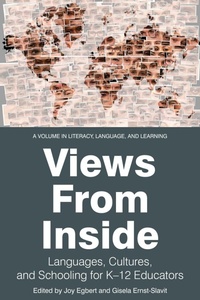
Views from Inside
Languages, Cultures, and Schooling for K-12 Educators
Published on 13. October 2017
Book
Paperback/Softback
512 pages
978-1-64113-019-6 (ISBN)
Description
The goal of this text is to help teachers in diverse classrooms understand the importance of students' culture, languages, and schooling experiences to curriculum, assessment, and student achievement. Readers will learn about aspects of specific cultures and languages that are important to their understanding of their students, and they will discover that cultures that are often considered similar may not be so (and why they aren't). Finally, the text focuses on how teachers can integrate languages and cultures into classrooms and how to account for students' backgrounds and funds of knowledge when devising tasks.
The text starts with an introduction to language and culture that presents a research-based explanation of why these concepts are important for teachers to understand (Chapter 1). Then, the middle 28 chapters each address one country/culture. Each chapter starts with a school scenario in the US. Part 2 of each chapter includes evidence-based demographic and background data on the country, including historical events that may have an impact on our students and their families. Part 3 includes a look at education, schooling, and culture, including famous people, contributions to the world, personal characteristics, important religious information, focal customs, and other aspects that are important to cultural insiders. Part 4 is about language and literacy traditions and how they relate to the culture, a number of words that teachers can learn (e.g., yes, no, thank you, please, hello), how the language is different from and similar to English, and what those differences and similarities might mean for English language learners from that culture. Part 5 comprises advice, resources, and ideas for teachers (for example, if it is an oral culture, the teacher might consider working with students on oral storytelling before transitioning to written stories, or incorporate both using technology). Each chapter also contains recommended readings and resources and short exercises that extend the chapter information. The final chapter presents parting notes for teachers and additional suggestions for addressing diversity.
The text starts with an introduction to language and culture that presents a research-based explanation of why these concepts are important for teachers to understand (Chapter 1). Then, the middle 28 chapters each address one country/culture. Each chapter starts with a school scenario in the US. Part 2 of each chapter includes evidence-based demographic and background data on the country, including historical events that may have an impact on our students and their families. Part 3 includes a look at education, schooling, and culture, including famous people, contributions to the world, personal characteristics, important religious information, focal customs, and other aspects that are important to cultural insiders. Part 4 is about language and literacy traditions and how they relate to the culture, a number of words that teachers can learn (e.g., yes, no, thank you, please, hello), how the language is different from and similar to English, and what those differences and similarities might mean for English language learners from that culture. Part 5 comprises advice, resources, and ideas for teachers (for example, if it is an oral culture, the teacher might consider working with students on oral storytelling before transitioning to written stories, or incorporate both using technology). Each chapter also contains recommended readings and resources and short exercises that extend the chapter information. The final chapter presents parting notes for teachers and additional suggestions for addressing diversity.
More details
Series
Language
English
Place of publication
Charlotte
United States
Publishing group
Emerald Publishing Inc
Target group
Professional and scholarly
Dimensions
Height: 234 mm
Width: 156 mm
Thickness: 27 mm
Weight
769 gr
ISBN-13
978-1-64113-019-6 (9781641130196)
Copyright in bibliographic data and cover images is held by Nielsen Book Services Limited or by the publishers or by their respective licensors: all rights reserved.
Schweitzer Classification
Other editions
Additional editions
E-Book
01/2017
1st Edition
Information Age Publishing
from
€62.33
Available for download
Content
Dedications and Acknowledgments.
Preface.
Section 1: Introduction To Culture And Language.
Chapter 1. Understanding Culture and Language in Education; Gisela Ernst?Slavit.
Section 2: Arab And Persian Region.
Chapter 2. The Gulf Region; Abir El Shaban, Rana Raddawi and Jacqueline Tanner.
Chapter 3. Middle East; Raed Alsawaier.
Chapter 4. Islamic Republic of Iran/Persia; Seyed Abdollah Shahrokni.
Section 3: North/Central American Region.
Chapter 5. Mexico; Brenda Barrio and Maria Morales.
Chapter 6. Puerto Rico; Gladys R. Capella Noya and Elsie Candelaria Sosa.
Chapter 7. Nicaragua; Desiree Pallais and Ilana Umansky.
Section 4: South American Region.
Chapter 8. Argentina; Sandra Mercuri and Sandra Musanti.
Chapter 9. Brazil; Eliane Rubinstein?Avila and Adriana Picoral.
Chapter 10. Peru; Gisela Ernst-Slavit.
Section 5: Southeast Asian Region.
Chapter 11. Vietnam; Eric Ambroso and Nguy?n Th? Thu Di?p.
Chapter 12. India; Rani Muthakrishnan and Sreejith Thankappan.
Chapter 13. Bangladesh; Shampa Biswas, Sayeeda Rahman, and Raihan Sharif.
Chapter 14. Pakistan; Tariq Akmal and Romella Husain.
Chapter 15. Philippines; Jeom Ja Yeo.
Section 6: Asian Region.
Chapter 16. China; Penny Wang and TingTing Wang.
Chapter 17. Taiwan; David Herman and Aichia Chang.
Chapter 18. Japan; Saeun Lee and Leslie Huff.
Chapter 19. Korea; Hyun?Gyung Lee and Saeun Lee.
Section 7: African Region.
Chapter 20. North Africa; Omran Akasha and Mohamed ElHess.
Chapter 21. Nigeria; Nathaniel J. Hunsu and Alusola Adesope.
Chapter 22. The Democratic Republic of the Congo; Kristen Pratt and Rose Lusangi Phambu.
Chapter 23. Angola; Nicolau N. Manuel and Pamela J. Bettis.
Section 8: European Region.
Chapter 24. Russia; Yuliya Ardasheva and Alexei Kochetov.
Chapter 25. Ukraine; Nataliia Borysenko and Petro Borysenko.
Chapter 26. Poland; Justyna Hjeltness.
Section 9: United States.
Chapter 27. Culture, Language, and Schooling in the United States; Joy Egbert.
About the Contributors.
Preface.
Section 1: Introduction To Culture And Language.
Chapter 1. Understanding Culture and Language in Education; Gisela Ernst?Slavit.
Section 2: Arab And Persian Region.
Chapter 2. The Gulf Region; Abir El Shaban, Rana Raddawi and Jacqueline Tanner.
Chapter 3. Middle East; Raed Alsawaier.
Chapter 4. Islamic Republic of Iran/Persia; Seyed Abdollah Shahrokni.
Section 3: North/Central American Region.
Chapter 5. Mexico; Brenda Barrio and Maria Morales.
Chapter 6. Puerto Rico; Gladys R. Capella Noya and Elsie Candelaria Sosa.
Chapter 7. Nicaragua; Desiree Pallais and Ilana Umansky.
Section 4: South American Region.
Chapter 8. Argentina; Sandra Mercuri and Sandra Musanti.
Chapter 9. Brazil; Eliane Rubinstein?Avila and Adriana Picoral.
Chapter 10. Peru; Gisela Ernst-Slavit.
Section 5: Southeast Asian Region.
Chapter 11. Vietnam; Eric Ambroso and Nguy?n Th? Thu Di?p.
Chapter 12. India; Rani Muthakrishnan and Sreejith Thankappan.
Chapter 13. Bangladesh; Shampa Biswas, Sayeeda Rahman, and Raihan Sharif.
Chapter 14. Pakistan; Tariq Akmal and Romella Husain.
Chapter 15. Philippines; Jeom Ja Yeo.
Section 6: Asian Region.
Chapter 16. China; Penny Wang and TingTing Wang.
Chapter 17. Taiwan; David Herman and Aichia Chang.
Chapter 18. Japan; Saeun Lee and Leslie Huff.
Chapter 19. Korea; Hyun?Gyung Lee and Saeun Lee.
Section 7: African Region.
Chapter 20. North Africa; Omran Akasha and Mohamed ElHess.
Chapter 21. Nigeria; Nathaniel J. Hunsu and Alusola Adesope.
Chapter 22. The Democratic Republic of the Congo; Kristen Pratt and Rose Lusangi Phambu.
Chapter 23. Angola; Nicolau N. Manuel and Pamela J. Bettis.
Section 8: European Region.
Chapter 24. Russia; Yuliya Ardasheva and Alexei Kochetov.
Chapter 25. Ukraine; Nataliia Borysenko and Petro Borysenko.
Chapter 26. Poland; Justyna Hjeltness.
Section 9: United States.
Chapter 27. Culture, Language, and Schooling in the United States; Joy Egbert.
About the Contributors.