

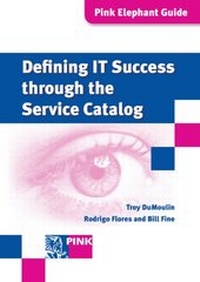
Defining IT Success Through The Service Catalog
1st Edition
Published on 12. February 2007
118 pages
978-90-8753-221-5 (ISBN)
Description

The Service Catalog is a fundamental IT tool covering the services themselves, default capabilities, measures and primary means of access and provision. In short, it represents the value IT provides to facilitate business operations.
Written by industry experts and using real case studies, this valuable title takes the reader beyond the theoretical to focus on the real business benefits of Service Catalogs and how to implement them successfully within an organization:
Services are made standard and rational, leading to lower costs and increased service availability
Standard 'service products' enable forecasting of demand, leading to better volume discounts from vendors and improved inventory and capacity planning
Controls over consumption of services are enhanced
The fulfillment of IT services is improved with the catalog. Standardization of services leads to recurrent workflows, rather than relatively expensive one-off projects
More details
Other editions
Additional editions
Troy DuMoulin | Pink Elephant | Bill Fine
Defining IT Success Through the Service Catalog
A Practical Guide About the Positioning, Design and Deployment of an Actionable Catalog of IT Services
Book
03/2007
Van Haren Publishing BV
€66.71
Shipment within 10-15 days
Bill Fine | Rodrigo Flores | Troy DuMoulin
Defining IT Success Through The Service Catalog
E-Book
02/2007
Van Haren Publishing
€47.99
Available for download
Content
1 - Colophon [Seite 5]
2 - Acknowledgements [Seite 8]
3 - Preface [Seite 10]
4 - About Pink Elephant [Seite 12]
5 - 1 Why Service Catalogs? [Seite 14]
5.1 - 1.1 Beyond Cost Center - managing business risk [Seite 15]
5.2 - 1.2 Beyond Cost Center - managing business value [Seite 18]
5.3 - 1.3 Starting with the IT Service Catalog [Seite 21]
5.4 - 1.4 Putting it all together: the front office of IT [Seite 25]
5.5 - 1.5 Looking into the future: an IT maturity model [Seite 26]
5.6 - 1.6 Case study [Seite 30]
6 - 2 IT Services [Seite 34]
6.1 - 2.1 Steps for defining IT Services [Seite 35]
6.2 - 2.2 Who's on first? Start with the Service Catalog [Seite 43]
7 - 3 Service Offerings, Agreements and Service Requests [Seite 46]
7.1 - 3.1 Services from the perspective of the customer [Seite 47]
7.2 - 3.2 Service Offerings [Seite 48]
7.3 - 3.3 Relating Service Offerings and IT Services [Seite 51]
7.4 - 3.4 Connecting to the Business Customer: Business Agreements [Seite 54]
7.5 - 3.5 Connecting to the End User: Service Requests [Seite 55]
7.6 - 3.6 Putting it all together [Seite 56]
7.7 - 3.7 Generating perceived Service Quality [Seite 58]
8 - 4 Implementing SLM [Seite 64]
8.1 - 4.1 The SLM process [Seite 65]
8.2 - 4.2 Roles of SLM [Seite 67]
8.3 - 4.3 Service Catalog and IT Tools [Seite 70]
9 - 5 Defining The Business-Focused Service Catalog [Seite 74]
9.1 - 5.1 The constitutive nature of the Service Catalog [Seite 74]
9.2 - 5.2 The actionable nature of the Service Catalog [Seite 75]
9.3 - 5.3 The governing nature of the Service Catalog [Seite 78]
9.4 - 5.4 Beyond ITIL Service Support: The Business Perspective [Seite 81]
9.5 - 5.5 Delivering business value [Seite 84]
10 - 6 A Step-by-step Approach to IT Success [Seite 96]
10.1 - 6.1 Step 1: Treat users like customers [Seite 98]
10.2 - 6.2 Step 2: Standardize and catalog best practices [Seite 100]
10.3 - 6.3 Step 3: Implement SLAs [Seite 106]
10.4 - 6.4 Step 4: Start pricing and charge-backs [Seite 108]
10.5 - 6.5 Step 5: Evaluate strategic (selective) outsourcing [Seite 111]
10.6 - 6.6 Step 6: Report, monitor and refine [Seite 114]
10.7 - 6.7 Putting it all together: transforming the IT Organization [Seite 115]
11 - 7 Guide To Supplemental Materials [Seite 116]
2 - Acknowledgements [Seite 8]
3 - Preface [Seite 10]
4 - About Pink Elephant [Seite 12]
5 - 1 Why Service Catalogs? [Seite 14]
5.1 - 1.1 Beyond Cost Center - managing business risk [Seite 15]
5.2 - 1.2 Beyond Cost Center - managing business value [Seite 18]
5.3 - 1.3 Starting with the IT Service Catalog [Seite 21]
5.4 - 1.4 Putting it all together: the front office of IT [Seite 25]
5.5 - 1.5 Looking into the future: an IT maturity model [Seite 26]
5.6 - 1.6 Case study [Seite 30]
6 - 2 IT Services [Seite 34]
6.1 - 2.1 Steps for defining IT Services [Seite 35]
6.2 - 2.2 Who's on first? Start with the Service Catalog [Seite 43]
7 - 3 Service Offerings, Agreements and Service Requests [Seite 46]
7.1 - 3.1 Services from the perspective of the customer [Seite 47]
7.2 - 3.2 Service Offerings [Seite 48]
7.3 - 3.3 Relating Service Offerings and IT Services [Seite 51]
7.4 - 3.4 Connecting to the Business Customer: Business Agreements [Seite 54]
7.5 - 3.5 Connecting to the End User: Service Requests [Seite 55]
7.6 - 3.6 Putting it all together [Seite 56]
7.7 - 3.7 Generating perceived Service Quality [Seite 58]
8 - 4 Implementing SLM [Seite 64]
8.1 - 4.1 The SLM process [Seite 65]
8.2 - 4.2 Roles of SLM [Seite 67]
8.3 - 4.3 Service Catalog and IT Tools [Seite 70]
9 - 5 Defining The Business-Focused Service Catalog [Seite 74]
9.1 - 5.1 The constitutive nature of the Service Catalog [Seite 74]
9.2 - 5.2 The actionable nature of the Service Catalog [Seite 75]
9.3 - 5.3 The governing nature of the Service Catalog [Seite 78]
9.4 - 5.4 Beyond ITIL Service Support: The Business Perspective [Seite 81]
9.5 - 5.5 Delivering business value [Seite 84]
10 - 6 A Step-by-step Approach to IT Success [Seite 96]
10.1 - 6.1 Step 1: Treat users like customers [Seite 98]
10.2 - 6.2 Step 2: Standardize and catalog best practices [Seite 100]
10.3 - 6.3 Step 3: Implement SLAs [Seite 106]
10.4 - 6.4 Step 4: Start pricing and charge-backs [Seite 108]
10.5 - 6.5 Step 5: Evaluate strategic (selective) outsourcing [Seite 111]
10.6 - 6.6 Step 6: Report, monitor and refine [Seite 114]
10.7 - 6.7 Putting it all together: transforming the IT Organization [Seite 115]
11 - 7 Guide To Supplemental Materials [Seite 116]
