

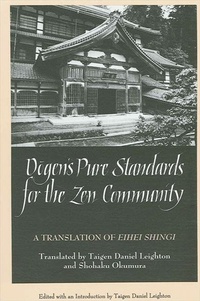
Dogen's Pure Standards for the Zen Community
Description

Presents a complete, annotated translation of Dogen's writing on Zen monasticism and the spirit of community practice. Dogen (1200-1253) is Japan's greatest Zen master.
This is a complete translation of Eihei Shingi, the major writing by the Japanese Zen master Eihei Dogen (1200-1253) on monastic practice and the role of community life in Buddhism. Dogen was the founder of the Soto branch of Japanese Zen, but his teaching was not limited by any particular school of Buddhism. His writings are generally regarded today as a great summit of Japanese Buddhist philosophy, meditation practice, psychology, and poetic insight into the nature of reality.
Eihei Shingi contains Dogen's principal guidelines and instructions for everyday life and rituals in the monastic training center he established. Included are a collection of dramatic teaching stories, or koans, on the attitude and responsibilities for practitioners in the community, the only collection of traditional koans with this practical focus.
In addition to the translation, the book includes detailed annotation, a substantial introduction, glossaries of Japanese technical terms and persons mentioned, and lineage charts, all providing relevant background in historical and religious context.
More details
Other editions
Additional editions
Persons
Taigen Daniel Leighton is a priest and teaches at Green Gulch Farm Zen Center in Muir Beach, California. He also teaches at the Institute of Buddhist Studies at the Graduate Theological Union. Shohaku Okumura is Chief Priest and Head Teacher at the Minnesota Zen Meditation Center.
Content
List of Illustrations
Foreword by Ikko Narasaki Roshi
Foreword by Jusan Kainei Edward Brown
Acknowledgments
Introduction by Taigen Daniel Leighton
Overview of Dogen's Writings
The Role of Community in Buddhism
Alignment with Nature
Cultural Adaptation and Expression
Introductions to the Individual Essays
Chan Stories and the Soto Use of Koans
Significance of the Eihei Shingi in Dogen's Teaching and Practice
Contemporary Understandings of Dogen's Historical Context
Earlier Monastic Codes
The Textual History of the Eihei Shingi
Development of Standards for the Community in the Keizan Shingi
Translation Issues: Gender and Pronouns
Dogen's Use of Language
Glossaries and Notes
Personal Experience of the Monastic Container
Conclusion
The Pure Standards of Eihei Dogen Zenji [Eihei Shingi]
Instructions for the Tenzo (Tenzokykun)
The Model for Engaging the Way (Bendoho)
The Dharma for Taking Food (Fushukuhanpo)
Regulations for the Study Hall (Shuryo Shingi)
The Dharma when Meeting Senior Instructors of Five Summer Practice Periods (Taitaiko Gogejariho)
Pure Standards for the Temple Administrators (Chiji Shingi)
Director [Kan'in]
Ino [Supervisor of Monks]
Tenzo [Chief Cook]
Work Leader [Shissui]
Appendix: Afterword to the Shohon Edition
Glossary of Japanese Terms
Glossary and Index of Names
Lineage Charts
Selected Bibliography
The Translators
