
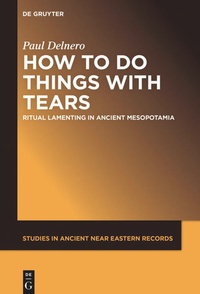
How To Do Things With Tears
Description
Alles über E-Books | Antworten auf Fragen rund um E-Books, Kopierschutz und Dateiformate finden Sie in unserem Info- & Hilfebereich.
In contrast to other traditions, cultic laments in Mesopotamia were not performed in response to a tragic event, such as a death or a disaster, but instead as a preemptive ritual to avert possible catastrophes. Mesopotamian laments provide a unique insight into the relationship between humankind and the gods, and their study sheds light on the nature of collective rituals within a crosscultural context.
Cultic laments were performed in Mesopotamia for nearly 3000 years. This book provides a comprehensive overview of this important ritual practice in the early 2nd millennium BCE, the period during which Sumerian laments were first put in writing. It also includes a new translation and critical edition of Uruamairabi ('That city, which has been plundered'), one of the most widely performed compositions of its genre.
More details
Other editions
Additional editions

Person
System requirements
File format: ePUB
Copy protection: Watermark-DRM (Digital Rights Management)
System requirements:
- Computer (Windows; MacOS X; Linux): Use a reading software that can process the file format ePUB: e.g., Adobe Digital Editions or FBReader – both free (see eBook Help).
- Tablet/Smartphone (Android; iOS): Before downloading, install the free app Adobe Digital Editions (see eBook Help).
- E-reader: Bookeen, Kobo, Pocketbook, Sony, Tolino and many more (not Kindle).
The file format ePUB works well for novels and non-fiction books – i.e., „flowing” text without complex layout. On an e-reader or smartphone, line and page breaks automatically adjust to fit the small displays.
This eBook uses Watermark-DRM, a „soft” copy protection. This means that there are no technical restrictions to prevent illegal distribution. However, there is a personalised watermark embedded in the eBook that can be used to identify the purchaser of the eBook in the event of misuse and to provide evidence for legal purposes.
For more information, see our eBook Help page.