

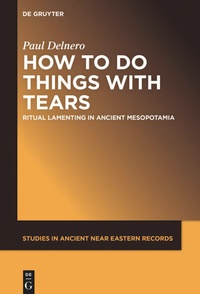
How To Do Things With Tears
Description

In contrast to other traditions, cultic laments in Mesopotamia were not performed in response to a tragic event, such as a death or a disaster, but instead as a preemptive ritual to avert possible catastrophes. Mesopotamian laments provide a unique insight into the relationship between humankind and the gods, and their study sheds light on the nature of collective rituals within a crosscultural context.
Cultic laments were performed in Mesopotamia for nearly 3000 years. This book provides a comprehensive overview of this important ritual practice in the early 2nd millennium BCE, the period during which Sumerian laments were first put in writing. It also includes a new translation and critical edition of Uruamairabi ('That city, which has been plundered'), one of the most widely performed compositions of its genre.
More details
Other editions
Additional editions
Person
Content
- Intro
- Contents
- Chapter 1 Doing Things with Tears
- Chapter 2 Lamenting in the Early Second Millennium
- Chapter 3 Writing and the Performance of Sumerian Laments
- Chapter 4 Emotion and Sumerian Laments
- Chapter 5 Sound and Meaning in Sumerian Laments
- Chapter 6 Conclusion - the Cultural Function of Mesopotamian Lamenting
- Appendix 1 Edition of uru⊂&2&/sub&-am⊂&3&/sub&-ma-i-ra-bi (Kirugus 1-5)
- Appendix 2 Catalogue and List of Old Babylonian Sources for Sumerian Laments by Type
- Appendix 3 Lists of Phonetic Writings in Phonetically Written Lament Sources
- Bibliography
- Index
