

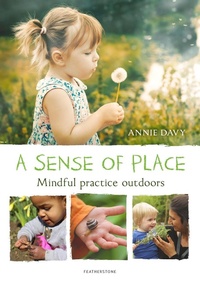
A Sense of Place
Mindful Practice Outdoors
1st Edition
Published on 7. February 2019
128 pages
978-1-4729-5366-7 (ISBN)
Description

Tried-and-tested, accessible strategies that support the wellbeing and learning journey of children through mindfulness, with a focus on learning outdoors and connecting with the world.
Being outside and connecting with nature is key to young children's learning and wellbeing, especially in a busy, fast-changing and digitalised world. Outdoors, children can more easily connect to their bodies, and learn about themselves and others and how to be in the world. They use their senses to explore, understand and become mindful of the earth and the people around them.
But how can Early Years practitioners best support young children as they engage with nature, while also passing on the values about the future of the planet?
A Sense of Place is an easily accessible guide that will make outdoor learning more interesting and fun, while also supporting children's development of resilience and resourcefulness so that they can survive and thrive in the world as they grow.
More details
Edition
1. Auflage
Language
English
Place of publication
London
United Kingdom
Publishing group
Bloomsbury Publishing PLC
Target group
Professional and scholarly
ISBN-13
978-1-4729-5366-7 (9781472953667)
Copyright in bibliographic data and cover images is held by Nielsen Book Services Limited or by the publishers or by their respective licensors: all rights reserved.
Schweitzer Classification
Other editions
Additional editions
Book
02/2019
Featherstone
€44.79
Article exhausted; check different version
Person
Annie Davy has experience that spans Early Years teaching, inspection and training. A freelance writer and facilitator, she has a track record of incubating successful community projects, connecting people and transforming environments. As Head of Early Years in Oxfordshire, she led an award-winning service for 12 years and is founder and director of several community-based projects. She is passionate about 're-wilding' and connecting to nature - within workspace, learning space and in our day-to-day lives. You can find her through www.thenatureeffect.co.uk.
Content
- Cover
- Title
- Copyright
- Contents
- Author preface
- Introduction
- About this book
- Ecological identity and Earth-mindedness
- Structure of the book
- The structure of each chapter
- Part 1: Setting the scene - landscapes for learning in a changing world
- Chapter 1: Changing lives, changing landscapes
- Human developments and challenges of our time
- A systemic and ecological view of child development
- Each child and adult's experience is unique
- Changes over time
- Understanding the system of culture, values and beliefs
- 'Nature deficit disorder' or a sense of place?
- A sense of belonging to a place
- Chapter 2: A place to play - learning with the landscape
- Roots of outdoor Early Years practice and concerns of our time
- Landscapes not laboratories
- Different kinds of play equipment and affordances of the environment
- The seven criteria for outdoor play
- Learning with head, heart, hands
- A word about technology
- Scale and pace
- The psychology of reading messages from our environment
- Transitions
- Biophilia and ecophobia
- Part 2: Doorways, windows, skylights - learning through the senses
- Chapter 3: Sense doorways - sight, sound, touch, smell and taste
- What are the sense doorways?
- Early sensory development
- The sight doorway
- The sound doorway
- The touch doorway
- The smell doorway
- The taste doorway
- Sense doorways, memory and learning
- Sensory differences
- Chapter 4: Sense windows - survival, wellbeing, independence, meaning
- The sense windows - SWIM
- The sense window of survival
- The sense window of wellbeing
- The sense window of independence
- The sense window of meaning
- Sensory processing and integration
- Chapter 5: Sense skylights - values for a living world
- The sense skylights are values
- British values outdoors - values for the living world
- Pedagogical approaches to teaching and learning values outdoors
- Kindness and compassion
- Freedom, rights and responsibilities
- Justice, fairness and the rule of law
- Fairness and consequences
- Purpose
- Connection
- Part 3: A sense of place - mindfulness, resilience and community
- Chapter 6: Mindfulness pedagogy in the Early Years
- What is mindful pedagogy?
- Mindfulness - origins and sources
- Being too busy and not having enough time
- The four As: awareness, attention, attunement and affordance
- Focusing on breath
- Savouring slowness and being still
- Spontaneous and seasonal responses to the affordances of nature
- Companionship learning
- Appreciating beauty and awakening gratitude
- Chapter 7: Roots of resilience - a systemic approach
- Being and becoming: what we want for children
- Resilience for you as teacher and carer
- Resilient children - a systemic view
- The four Gs: gateways to nature, connection and resilience
- Resilience in your setting
- Chapter 8: Nature pedagogy, community, and conscious action
- Environment matters - tending the garden
- Education for sustainability
- A pedagogy for nature
- From source to resource
- Think global, act local
- Conscious community action
- References and further reading
