

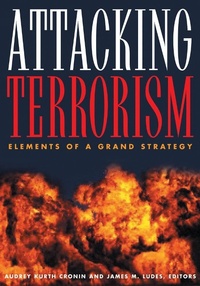
Attacking Terrorism
Description

The definition and understanding of "terrorism" is in a state of unprecedented evolution. No longer are acts of terrorism rare and far-flung. Following the horrendous attacks on the World Trade Center and the Pentagon, U.S. citizens have had their eyes opened to a new world where this nightmare stalks the daily news and is never far from consciousness.
Attacking Terrorism brings together some of the world's finest experts, people who have made the study of this rising menace their life's work, to provide a comprehensive picture of the challenges and opportunities of the campaign against international terrorism. Part one, "The Nature of Terrorism," provides an overview and foundation for the current campaign, placing it within the political and historical context of previous threats and responses. Part two, "The Responses to Terrorism," looks at the range of policy instruments required in an effective strategy against terrorism.
The contributors to this volume bring finely honed analyses and nuanced perspectives to the terrorist realities of the twenty-first century-history, analyses, and perspectives that have been too often oversimplified or myopic. They bring a new depth of understanding and myriad new dimensions to the crisis of terrorism. And they reach into aspects of counterterrorism that broaden our grasp on such important tools as diplomacy, intelligence and counterintelligence, psycho-political means, international law, criminal law enforcement, military force, foreign aid, and homeland security, showing not only how these tools are currently being employed but how often they are being underutilized as well.
Attacking Terrorism demonstrates that there are no easy answers-and that the road toward victory will be long and arduous, frightening and dangerous-but as Audrey Kurth Cronin states in her introduction, "As the campaign against international terrorism unfolds, a crucial forward-looking process of strategic reassessment is under way in the United States, and this book is intended to be a part of it."
More details
Other editions
Additional editions
Persons
Audrey Kurth Cronin is a professor of public policy at George Mason University.
James M. Ludes is executive director of the Pell Center for International Relations and Public Policy at Salve Regina University in Newport, Rhode Island.
Content
Introduction: Meeting and Managing the Threat
Audrey Kurth Cronin
Part I: The Nature of Terrorism
1. Sources of Contemporary Terrorism
Audrey Kurth Cronin
2. The Four Waves of Modern Terrorism
David C. Rapoport
3. Terrorism, Strategies, and Grand Strategies
Martha Crenshaw
Part II: Policy Instruments in the Campaign Against International Terrorism
4. Diplomacy
Michael A. Sheehan
5. Intelligence
Paul R. Pillar
6. Law Enforcement
Lindsay Clutterbuck
7. Military Force
Timothy D. Hoyt
8. The Laws of War
Adam Roberts
9. Psychological-Political Instruments
Carnes Lord
10. Foreign Aid
Patrick M. Cronin
11. Homeland Security
Daniel Gouré
Conclusion: Toward an Effective Grand Strategy
Audrey Kurth Cronin
