

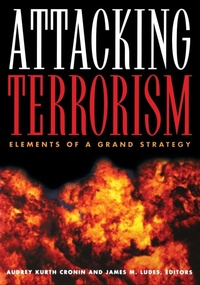
Attacking Terrorism
Elements of a Grand Strategy
Published on 14. January 2004
Book
Paperback/Softback
328 pages
978-0-87840-347-9 (ISBN)
Description
The definition and understanding of "terrorism" is in a state of unprecedented evolution. No longer are acts of terrorism rare and far-flung. Following the horrendous attacks on the World Trade Center and the Pentagon, U.S. citizens have had their eyes opened to a new world where this nightmare stalks the daily news and is never far from consciousness. Attacking Terrorism brings together some of the world's finest experts, people who have made the study of this rising menace their life's work, to provide a comprehensive picture of the challenges and opportunities of the campaign against international terrorism. Part one, "The Nature of Terrorism," provides an overview and foundation for the current campaign, placing it within the political and historical context of previous threats and responses. Part two, "The Responses to Terrorism," looks at the range of policy instruments required in an effective strategy against terrorism. The contributors to this volume bring finely honed analyses and nuanced perspectives to the terrorist realities of the twenty-first century-history, analyses, and perspectives that have been too often oversimplified or myopic.
They bring a new depth of understanding and myriad new dimensions to the crisis of terrorism. And they reach into aspects of counterterrorism that broaden our grasp on such important tools as diplomacy, intelligence and counterintelligence, psycho-political means, international law, criminal law enforcement, military force, foreign aid, and homeland security, showing not only how these tools are currently being employed but how often they are being underutilized as well. Attacking Terrorism demonstrates that there are no easy answers-and that the road toward victory will be long and arduous, frightening and dangerous-but as Audrey Kurth Cronin states in her introduction, "As the campaign against international terrorism unfolds, a crucial forward-looking process of strategic reassessment is under way in the United States, and this book is intended to be a part of it."
They bring a new depth of understanding and myriad new dimensions to the crisis of terrorism. And they reach into aspects of counterterrorism that broaden our grasp on such important tools as diplomacy, intelligence and counterintelligence, psycho-political means, international law, criminal law enforcement, military force, foreign aid, and homeland security, showing not only how these tools are currently being employed but how often they are being underutilized as well. Attacking Terrorism demonstrates that there are no easy answers-and that the road toward victory will be long and arduous, frightening and dangerous-but as Audrey Kurth Cronin states in her introduction, "As the campaign against international terrorism unfolds, a crucial forward-looking process of strategic reassessment is under way in the United States, and this book is intended to be a part of it."
Reviews / Votes
"This volume brings together many of the world's foremost experts on terrorism and counterterrorism, who begin the important process of developing a grand strategy to address contemporary, real-world threats. Scholars and policymakers alike will benefit from the advice of contributors to reject anachronistic thinking about the relative importance of state and nonstate threats, as well as their warning that an uninformed, emotional response that ignores the dynamic relationship between terrorism and counterterrorism could increase the risk of catastrophic attack." - Jessica Stern, lecturer in public policy, Harvard University, and author of Terror in the Name of God: Why Religious Militants Kill; "Most studies of terrorism have been descriptive works about specific groups. The new priority of the problem heightens the need for policy-relevant literature that provides analytical, comparative, and functional assessments of policy instruments. This timely book, with solid and comprehensive coverage by an impressive array of expert academics and practitioners, does much to meet this need." - Richard K. Betts, director of the Institute of War and Peace Studies at Columbia University, and adjunct senior fellow at the Council on Foreign Relations; "[A]n unusually interesting, readable, and well integrated look at the essential elements needed for an American grand strategy to confront the scourge of global terrorism. This volume successfully seeks to explore the many components of American power necessary to construct a national campaign of substantial duration and effort against international terrorism.... This compendium demonstrates the extraordinarily rich analysis being done by a new generation of strategic thinkers who are tackling the problems born from post 9/11 international circumstances, much in the way an earlier generation of strategic thinkers thought about American purpose at the advent of the cold war." - Kurt M. Campbell, senior vice president and director of the International Security Program, Center for Strategic and International Studies"More details
Language
English
Place of publication
Washington, DC
United States
Target group
Professional and scholarly
US School Grade: College Graduate Student and over
Product notice
Paperback (trade)
Illustrations
Not illustrated
Dimensions
Height: 255 mm
Width: 180 mm
Thickness: 25 mm
Weight
682 gr
ISBN-13
978-0-87840-347-9 (9780878403479)
Copyright in bibliographic data and cover images is held by Nielsen Book Services Limited or by the publishers or by their respective licensors: all rights reserved.
Schweitzer Classification
Other editions
Additional editions
E-Book
01/2004
Georgetown University Press
€36.99
Available for download
Persons
Audrey Kurth Cronin is a professor of public policy at George Mason University. James M. Ludes is former editor-in-chief of National Security Studies Quarterly, and coeditor of Twenty-First Century Weapons Proliferation: Are We Ready?
Content
Introduction: Meeting and Managing the ThreatAudrey Kurth Cronin Part I: The Nature of Terrorism 1. Sources of Contemporary TerrorismAudrey Kurth Cronin 2. The Four Waves of Modern TerrorismDavid C. Rapoport 3. Terrorism, Strategies, and Grand StrategiesMartha Crenshaw Part II: Policy Instruments in the Campaign Against International Terrorism 4. DiplomacyMichael A. Sheehan 5. IntelligencePaul R. Pillar 6. Law EnforcementLindsay Clutterbuck 7. Military ForceTimothy D. Hoyt 8. The Laws of WarAdam Roberts 9. Psychological-Political InstrumentsCarnes Lord 10. Foreign AidPatrick M. Cronin 11. Homeland SecurityDaniel Goure Conclusion: Toward an Effective Grand StrategyAudrey Kurth Cronin