

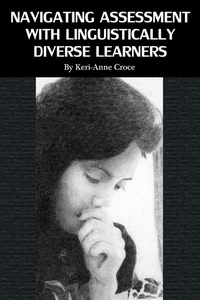
Navigating Assessment with Linguistically Diverse Learners
1st Edition
Published on 4. January 2017
139 pages
978-1-68123-827-2 (ISBN)
Description

This book addresses how to assess and instruct students while also honoring their cultural and linguistic backgrounds. Many individuals want to support their multilingual learners but do not have the language skills to work in a bilingual or duallanguage setting. The chapters in this book examine assessment in classrooms where English is the language of instruction; yet, students are also encouraged to communicate in multiple languages.
The thesis of this book revolves around the idea that linguistically diverse learners may engage in critical thinking in ways that we may not anticipate. Students who are learning in an additional language do not need to "catch up." Assessment should instead measure the new ways that students are interacting with the world. This book helps you discover the many ways to help students develop as critically thinking readers, writers and speakers.
There is a scarcity of research addressing literacy among linguistically diverse learners within math and science. The information contained in this book will hopefully advance a dialogue between teachers and linguistically diverse students as they read and write multiple genres together. This book also encourages teachers, family, and community members to come together to form supportive environments where best practices are fostered.
Some of the questions addressed by this book:
1. How do I determine a student's strengths and needs if he or she is not talking in class in any language?
2. Do I teach monolingual and multilingual learners to read in similar ways?
3. How can I support my students as they read math word problems?
4. What do students need to know about the structures of science texts?
5. How should we develop math and science literacy assessments?
6. Should I have specific language goals for students as speakers?
The thesis of this book revolves around the idea that linguistically diverse learners may engage in critical thinking in ways that we may not anticipate. Students who are learning in an additional language do not need to "catch up." Assessment should instead measure the new ways that students are interacting with the world. This book helps you discover the many ways to help students develop as critically thinking readers, writers and speakers.
There is a scarcity of research addressing literacy among linguistically diverse learners within math and science. The information contained in this book will hopefully advance a dialogue between teachers and linguistically diverse students as they read and write multiple genres together. This book also encourages teachers, family, and community members to come together to form supportive environments where best practices are fostered.
Some of the questions addressed by this book:
1. How do I determine a student's strengths and needs if he or she is not talking in class in any language?
2. Do I teach monolingual and multilingual learners to read in similar ways?
3. How can I support my students as they read math word problems?
4. What do students need to know about the structures of science texts?
5. How should we develop math and science literacy assessments?
6. Should I have specific language goals for students as speakers?
All prices
More details
Other editions
Additional editions
Keri-Anne Croce
Navigating Assessment with Linguistically Diverse Learners
Book
03/2017
Information Age Publishing
€55.60
Shipment within 3-4 weeks
Content
1 - Front Cover [Seite 1]
2 - Navigating Assessment With Linguistically Diverse Learners [Seite 2]
2.1 - Dedication [Seite 6]
3 - CONTENTS [Seite 8]
3.1 - Chapter 1: Understanding Linguistically Diverse Learners' Early Development 1 [Seite 8]
3.2 - Chapter 2: Understanding Linguistically Diverse Learners' Continuing Development 19 [Seite 8]
3.3 - Chapter 3: Linguistically Diverse Learners Reading and Writing Math 35 [Seite 8]
3.4 - Chapter 4: Linguistically Diverse Learners Reading and Writing Science 55 [Seite 8]
3.5 - Chapter 5: Linguistically Diverse Learners Developing as Speakers During Math and Science Discussions 75 [Seite 8]
3.6 - Chapter 6: School Teachers, Family, and Community Members Helping to Shape Assessment 95 [Seite 8]
3.7 - Navigating Assessment With Linguistically Diverse Learners [Seite 4]
3.7.1 - By [Seite 4]
3.7.2 - Keri-Anne Croce Towson University [Seite 4]
3.7.2.1 - Information Age Publishing, Inc. [Seite 4]
3.7.2.2 - Charlotte, North Carolina www.infoagepub.com [Seite 4]
3.7.2.3 - Acknowledgments [Seite 10]
3.7.2.4 - Introduction [Seite 12]
3.8 - CHAPTER 1 [Seite 14]
3.8.1 - Understanding Linguistically Diverse Learners' Early Development [Seite 14]
3.8.1.1 - EXAMINING A STUDENT'S RESPONSES TO VERBAL QUESTIONS [Seite 16]
3.8.1.2 - Assessing Readers [Seite 17]
3.8.1.3 - Assessing a Student's Understandings of Story Structures [Seite 18]
3.8.2 - Table 1.1. Examples of Story Structures [Seite 20]
3.8.2.1 - 1. As we turned the pages of the wordless picture book together, I asked the student the same question. For example, "What is happening?" Often I did not get a response to this question. The objective was to give the student an opportunity to exp... [Seite 20]
3.8.2.2 - 2. Next, I put a piece of blank construction paper in front of the student. I also placed puppets in front of the student. I believed that some of these puppets depicted the characters in the story and some did not. I asked the student to hold up a c... [Seite 20]
3.8.2.3 - 3. I then handed the student a plastic bag with felt pieces. Some, but not all, of the pieces in the bag could be used to depict some elements of the setting. The bag included items such as a sun, umbrella, or boat. After the student selected some fe... [Seite 20]
3.8.2.4 - 4. After the student was finished creating the setting, I picked up a character and moved it up and down while saying, "Show me." I was hoping to encourage the student to show me her understandings of the structural elements of the story. [Seite 21]
3.8.2.5 - Assessing a Student's Understandings of Structures within Informational Texts [Seite 22]
3.8.2.6 - ASSESSING A STUDENT'S CONNECTIONS TO ENVIRONMENTAL PRINT [Seite 25]
3.8.2.7 - SELECTING CHILDREN'S LITERATURE FOR USE IN THE CLASSROOM [Seite 26]
3.8.2.8 - Assessing Developing Writers [Seite 27]
3.9 - CHAPTER 2 [Seite 32]
3.9.1 - Understanding Linguistically Diverse Learners' Continuing Development [Seite 32]
3.9.1.1 - 1. What part of speech would be appropriate? [Seite 33]
3.9.1.2 - 2. What would make sense in the sentence? [Seite 33]
3.9.1.3 - 3. What would make sense in the story? [Seite 33]
3.9.1.4 - 4. What sounds does the word make? (Y. Goodman, 2003). [Seite 33]
3.9.1.5 - ASSESSING DEVELOPING READERS OF INFORMATIONAL TEXTS [Seite 36]
3.9.1.6 - A CLOSE LOOK AT THREE MULTILINGUAL READERS OF SCIENTIFIC INFORMATIONAL TEXTS [Seite 38]
3.9.1.6.1 - Daw Bik [Seite 38]
3.9.1.6.2 - Tuang [Seite 41]
3.9.1.6.3 - Van [Seite 42]
3.9.1.7 - CHOOSING TEXTS FOR ASSESSMENTS [Seite 43]
3.9.1.8 - ASSESSING DEVELOPING LINGUISTICALLY DIVERSE WRITERS OF INFORMATIONAL TEXTS [Seite 43]
3.9.2 - Table 2.1. Scaffolding Students' Development as Writers of Informational Texts [Seite 46]
3.10 - CHAPTER 3 [Seite 48]
3.10.1 - Linguistically Diverse Learners Reading and Writing Math [Seite 48]
3.10.1.1 - Math Textbooks Around the World [Seite 49]
3.10.1.2 - How is Math Literacy Unique? [Seite 50]
3.10.1.3 - Bilingualism and Code-Switching in Mathematics [Seite 51]
3.10.1.4 - HOW TO SUPPORT MATHEMATICAL LITERACY AMONG LINGUISTICALLY DIVERSE LEARNERS [Seite 53]
3.10.1.5 - Encouraging Linguistically Diverse Students to Investigate Math Texts [Seite 53]
3.10.1.6 - USING SHARED READING TO EXAMINE LANGUAGE PATTERNS IN MATH TEXTS [Seite 54]
3.10.2 - Table 3.2. Example of a Class Chart [Seite 59]
3.10.3 - Table 3.3. Blank Chart for Examining Math Languages [Seite 60]
3.10.3.1 - USING MATH LITERATURE CIRCLES TO EXAMINE LANGUAGE PATTERNS IN MATH TEXTS [Seite 60]
3.10.3.2 - LINGUISTICALLY DIVERSE STUDENTS COMMUNICATING WITH MATHEMATICIANS [Seite 62]
3.10.3.2.1 - 1. What defines strong reasoning? [Seite 62]
3.10.3.2.2 - 2. What problem solving process do mathematicians engage in when they do not understand how to address a problem? [Seite 62]
3.10.3.2.3 - 3. Do mathematicians ever have trouble communicating their ideas to someone in their field? [Seite 62]
3.10.3.2.4 - 1. Our textbook uses pictures of dominoes to show fractions. Is that how you learned about fractions? What images would you use to describe fractions? [Seite 63]
3.10.3.2.5 - 2. We created another way to show images of fractions. We wrote these sentences underneath each picture. What do you think of this language? [Seite 63]
3.10.3.2.6 - 3. What are you working on now? Are you having problems? What are you doing to solve the problems? [Seite 63]
3.10.3.3 - Using Math Literacy Assessments with Students [Seite 63]
3.10.4 - Table 3.1. Language Patterns in Four Math Texts [Seite 57]
3.11 - CHAPTER 4 [Seite 68]
3.11.1 - Linguistically Diverse Learners Reading and Writing Science [Seite 68]
3.11.1.1 - Why Do We Ask Students to Read Science Texts? [Seite 69]
3.11.1.2 - Science Educators Discuss Science [Seite 69]
3.11.1.3 - Science Literacy [Seite 71]
3.11.1.4 - WHAT IS CRITICAL SCIENTIFIC LITERACY? [Seite 71]
3.11.1.5 - HOW TO USE CRITICAL SCIENTIFIC LITERACY TO ANALYZE TEXTS [Seite 72]
3.11.1.5.1 - 1. What do you notice? [Seite 72]
3.11.1.5.2 - 2. What is a topic or idea mentioned in this piece? What sources are used to support this idea? Are different sources used to contradict this idea? [Seite 72]
3.11.1.5.3 - 3. Does the author's use of sources (or lack of sources) express an opinion of the topic/idea? [Seite 72]
3.11.1.5.4 - 4. Does the author talk about disagreement among scientists? [Seite 73]
3.11.1.5.5 - 5. How might scientists disagree about this topic or idea? [Seite 73]
3.11.1.5.6 - 6. What is your opinion? [Seite 73]
3.11.1.6 - ASSESSING LINGUISTICALLY DIVERSE STUDENTS' USE OF CRITICAL SCIENTIFIC LITERACY [Seite 74]
3.11.2 - Table 4.1. Elements to Consider When Assessing a Student as a Reader of Science Texts [Seite 75]
3.11.2.1 - UNDERSTANDING THE LANGUAGE PATTERNS IN SCIENCE TEXTS [Seite 75]
3.11.2.2 - AN EXAMPLE OF AN ANALYSIS OF LANGUAGE PATTERNS IN A TEXT [Seite 77]
3.11.2.2.1 - Location of Text Elements on a Page [Seite 78]
3.11.2.2.2 - Language Patterns Within Text Elements [Seite 78]
3.11.2.3 - Encouraging Students to Analyze Language Patterns in Multiple Science Texts [Seite 80]
3.11.2.4 - How to Analyze Students' Language Patterns [Seite 81]
3.11.3 - Table 4.2. Social Semiotic Patterns Found in 16 Scientific Informational Texts [Seite 82]
3.11.4 - Table 4.3. Examples of Possible Class Chart [Seite 83]
3.11.5 - Table 4.4. Students Talk About Science Texts [Seite 84]
3.11.5.1 - CREATING AN ASSESSMENT GRID THAT REFLECTS LANGUAGE PATTERNS [Seite 85]
3.11.5.2 - CONCLUSIONS [Seite 86]
3.11.5.3 - Permissions [Seite 86]
3.12 - CHAPTER 5 [Seite 88]
3.12.1 - Linguistically Diverse Learners Developing as Speakers During Math and Science Discussions [Seite 88]
3.12.1.1 - The Power of Students' Language Choices [Seite 89]
3.12.1.2 - Language and the Content Areas [Seite 90]
3.12.2 - Table 5.1. Observation Sheet for Discussions in Math and Science [Seite 91]
3.12.2.1 - STUDENTS' ORAL LANGUAGE DEVELOPMENT IN THE SCIENCES [Seite 91]
3.12.2.2 - Language and Context in Science [Seite 92]
3.12.2.3 - ASSESSING STUDENTS AS THEY COMMUNICATE ABSTRACT THINKING [Seite 95]
3.12.3 - Table 5.2. Observation Sheet for Discussions in Science [Seite 95]
3.12.4 - Table 5.3. Patterns in the Questions Used in My Conversation With Sebastian [Seite 97]
3.12.5 - Table 5.4. Conversation Prompts That Celebrate Debate in Math and Science [Seite 98]
3.12.5.1 - Linguistically Diverse Students' Oral Language Development in Math [Seite 100]
3.12.5.2 - STUDENTS CRITIQUING MATH TEXTS DURING SHARED READING [Seite 100]
3.12.5.3 - USING MATH MENTOR TEXTS TO ENCOURAGE CRITICAL THINKING [Seite 101]
3.12.5.4 - HELPING STUDENTS CLARIFY IDEAS IN MATHEMATICS [Seite 103]
3.12.6 - Table 5.6. Critical Thinking Skills Within Math Conversations [Seite 104]
3.12.6.1 - Conclusions [Seite 105]
3.13 - CHAPTER 6 [Seite 108]
3.13.1 - School Teachers, Family, and Community Members Helping to Shape Assessment [Seite 108]
3.13.1.1 - FAMILY AND COMMUNITY MEMBERS SHARE AND DISCUSS INFORMATIONAL TEXTS [Seite 109]
3.13.1.1.1 - 1. What job duties take up the most time? [Seite 111]
3.13.1.1.2 - 2. What job duties take up the least time? [Seite 111]
3.13.1.1.3 - 3. What are you still learning about your job? [Seite 111]
3.13.1.1.4 - 4. What surprised you about your job? [Seite 111]
3.13.1.2 - Family Members Interpreting Assessments [Seite 112]
3.13.1.3 - Conclusions [Seite 112]
3.13.2 - Appendixes [Seite 114]
3.13.2.1 - Appendix 1. Assessment Grid [Seite 115]
3.13.2.2 - Appendix 2. Oral Language Observation Sheet [Seite 116]
3.13.2.3 - Appendix 3. Math Observation Form [Seite 117]
3.13.2.4 - Appendix 4. Blank Chart for Math Literacy [Seite 118]
3.13.2.5 - Appendix 5. Math Literature Circle Discussion Form [Seite 119]
3.13.2.6 - APPENDIX 6. OBSERVATION SHEET FOR DISCUSSIONS IN MATH AND SCIENCE [Seite 120]
3.13.2.7 - Appendix 7. Conversation Prompts That Celebrate Debate in Math and Science [Seite 121]
3.13.3 - References [Seite 122]
3.13.4 - About the Author [Seite 134]
3.13.5 - About the Illustrator [Seite 136]
3.13.6 - Index [Seite 138]
3.14 - Untitled [Seite 140]
2 - Navigating Assessment With Linguistically Diverse Learners [Seite 2]
2.1 - Dedication [Seite 6]
3 - CONTENTS [Seite 8]
3.1 - Chapter 1: Understanding Linguistically Diverse Learners' Early Development 1 [Seite 8]
3.2 - Chapter 2: Understanding Linguistically Diverse Learners' Continuing Development 19 [Seite 8]
3.3 - Chapter 3: Linguistically Diverse Learners Reading and Writing Math 35 [Seite 8]
3.4 - Chapter 4: Linguistically Diverse Learners Reading and Writing Science 55 [Seite 8]
3.5 - Chapter 5: Linguistically Diverse Learners Developing as Speakers During Math and Science Discussions 75 [Seite 8]
3.6 - Chapter 6: School Teachers, Family, and Community Members Helping to Shape Assessment 95 [Seite 8]
3.7 - Navigating Assessment With Linguistically Diverse Learners [Seite 4]
3.7.1 - By [Seite 4]
3.7.2 - Keri-Anne Croce Towson University [Seite 4]
3.7.2.1 - Information Age Publishing, Inc. [Seite 4]
3.7.2.2 - Charlotte, North Carolina www.infoagepub.com [Seite 4]
3.7.2.3 - Acknowledgments [Seite 10]
3.7.2.4 - Introduction [Seite 12]
3.8 - CHAPTER 1 [Seite 14]
3.8.1 - Understanding Linguistically Diverse Learners' Early Development [Seite 14]
3.8.1.1 - EXAMINING A STUDENT'S RESPONSES TO VERBAL QUESTIONS [Seite 16]
3.8.1.2 - Assessing Readers [Seite 17]
3.8.1.3 - Assessing a Student's Understandings of Story Structures [Seite 18]
3.8.2 - Table 1.1. Examples of Story Structures [Seite 20]
3.8.2.1 - 1. As we turned the pages of the wordless picture book together, I asked the student the same question. For example, "What is happening?" Often I did not get a response to this question. The objective was to give the student an opportunity to exp... [Seite 20]
3.8.2.2 - 2. Next, I put a piece of blank construction paper in front of the student. I also placed puppets in front of the student. I believed that some of these puppets depicted the characters in the story and some did not. I asked the student to hold up a c... [Seite 20]
3.8.2.3 - 3. I then handed the student a plastic bag with felt pieces. Some, but not all, of the pieces in the bag could be used to depict some elements of the setting. The bag included items such as a sun, umbrella, or boat. After the student selected some fe... [Seite 20]
3.8.2.4 - 4. After the student was finished creating the setting, I picked up a character and moved it up and down while saying, "Show me." I was hoping to encourage the student to show me her understandings of the structural elements of the story. [Seite 21]
3.8.2.5 - Assessing a Student's Understandings of Structures within Informational Texts [Seite 22]
3.8.2.6 - ASSESSING A STUDENT'S CONNECTIONS TO ENVIRONMENTAL PRINT [Seite 25]
3.8.2.7 - SELECTING CHILDREN'S LITERATURE FOR USE IN THE CLASSROOM [Seite 26]
3.8.2.8 - Assessing Developing Writers [Seite 27]
3.9 - CHAPTER 2 [Seite 32]
3.9.1 - Understanding Linguistically Diverse Learners' Continuing Development [Seite 32]
3.9.1.1 - 1. What part of speech would be appropriate? [Seite 33]
3.9.1.2 - 2. What would make sense in the sentence? [Seite 33]
3.9.1.3 - 3. What would make sense in the story? [Seite 33]
3.9.1.4 - 4. What sounds does the word make? (Y. Goodman, 2003). [Seite 33]
3.9.1.5 - ASSESSING DEVELOPING READERS OF INFORMATIONAL TEXTS [Seite 36]
3.9.1.6 - A CLOSE LOOK AT THREE MULTILINGUAL READERS OF SCIENTIFIC INFORMATIONAL TEXTS [Seite 38]
3.9.1.6.1 - Daw Bik [Seite 38]
3.9.1.6.2 - Tuang [Seite 41]
3.9.1.6.3 - Van [Seite 42]
3.9.1.7 - CHOOSING TEXTS FOR ASSESSMENTS [Seite 43]
3.9.1.8 - ASSESSING DEVELOPING LINGUISTICALLY DIVERSE WRITERS OF INFORMATIONAL TEXTS [Seite 43]
3.9.2 - Table 2.1. Scaffolding Students' Development as Writers of Informational Texts [Seite 46]
3.10 - CHAPTER 3 [Seite 48]
3.10.1 - Linguistically Diverse Learners Reading and Writing Math [Seite 48]
3.10.1.1 - Math Textbooks Around the World [Seite 49]
3.10.1.2 - How is Math Literacy Unique? [Seite 50]
3.10.1.3 - Bilingualism and Code-Switching in Mathematics [Seite 51]
3.10.1.4 - HOW TO SUPPORT MATHEMATICAL LITERACY AMONG LINGUISTICALLY DIVERSE LEARNERS [Seite 53]
3.10.1.5 - Encouraging Linguistically Diverse Students to Investigate Math Texts [Seite 53]
3.10.1.6 - USING SHARED READING TO EXAMINE LANGUAGE PATTERNS IN MATH TEXTS [Seite 54]
3.10.2 - Table 3.2. Example of a Class Chart [Seite 59]
3.10.3 - Table 3.3. Blank Chart for Examining Math Languages [Seite 60]
3.10.3.1 - USING MATH LITERATURE CIRCLES TO EXAMINE LANGUAGE PATTERNS IN MATH TEXTS [Seite 60]
3.10.3.2 - LINGUISTICALLY DIVERSE STUDENTS COMMUNICATING WITH MATHEMATICIANS [Seite 62]
3.10.3.2.1 - 1. What defines strong reasoning? [Seite 62]
3.10.3.2.2 - 2. What problem solving process do mathematicians engage in when they do not understand how to address a problem? [Seite 62]
3.10.3.2.3 - 3. Do mathematicians ever have trouble communicating their ideas to someone in their field? [Seite 62]
3.10.3.2.4 - 1. Our textbook uses pictures of dominoes to show fractions. Is that how you learned about fractions? What images would you use to describe fractions? [Seite 63]
3.10.3.2.5 - 2. We created another way to show images of fractions. We wrote these sentences underneath each picture. What do you think of this language? [Seite 63]
3.10.3.2.6 - 3. What are you working on now? Are you having problems? What are you doing to solve the problems? [Seite 63]
3.10.3.3 - Using Math Literacy Assessments with Students [Seite 63]
3.10.4 - Table 3.1. Language Patterns in Four Math Texts [Seite 57]
3.11 - CHAPTER 4 [Seite 68]
3.11.1 - Linguistically Diverse Learners Reading and Writing Science [Seite 68]
3.11.1.1 - Why Do We Ask Students to Read Science Texts? [Seite 69]
3.11.1.2 - Science Educators Discuss Science [Seite 69]
3.11.1.3 - Science Literacy [Seite 71]
3.11.1.4 - WHAT IS CRITICAL SCIENTIFIC LITERACY? [Seite 71]
3.11.1.5 - HOW TO USE CRITICAL SCIENTIFIC LITERACY TO ANALYZE TEXTS [Seite 72]
3.11.1.5.1 - 1. What do you notice? [Seite 72]
3.11.1.5.2 - 2. What is a topic or idea mentioned in this piece? What sources are used to support this idea? Are different sources used to contradict this idea? [Seite 72]
3.11.1.5.3 - 3. Does the author's use of sources (or lack of sources) express an opinion of the topic/idea? [Seite 72]
3.11.1.5.4 - 4. Does the author talk about disagreement among scientists? [Seite 73]
3.11.1.5.5 - 5. How might scientists disagree about this topic or idea? [Seite 73]
3.11.1.5.6 - 6. What is your opinion? [Seite 73]
3.11.1.6 - ASSESSING LINGUISTICALLY DIVERSE STUDENTS' USE OF CRITICAL SCIENTIFIC LITERACY [Seite 74]
3.11.2 - Table 4.1. Elements to Consider When Assessing a Student as a Reader of Science Texts [Seite 75]
3.11.2.1 - UNDERSTANDING THE LANGUAGE PATTERNS IN SCIENCE TEXTS [Seite 75]
3.11.2.2 - AN EXAMPLE OF AN ANALYSIS OF LANGUAGE PATTERNS IN A TEXT [Seite 77]
3.11.2.2.1 - Location of Text Elements on a Page [Seite 78]
3.11.2.2.2 - Language Patterns Within Text Elements [Seite 78]
3.11.2.3 - Encouraging Students to Analyze Language Patterns in Multiple Science Texts [Seite 80]
3.11.2.4 - How to Analyze Students' Language Patterns [Seite 81]
3.11.3 - Table 4.2. Social Semiotic Patterns Found in 16 Scientific Informational Texts [Seite 82]
3.11.4 - Table 4.3. Examples of Possible Class Chart [Seite 83]
3.11.5 - Table 4.4. Students Talk About Science Texts [Seite 84]
3.11.5.1 - CREATING AN ASSESSMENT GRID THAT REFLECTS LANGUAGE PATTERNS [Seite 85]
3.11.5.2 - CONCLUSIONS [Seite 86]
3.11.5.3 - Permissions [Seite 86]
3.12 - CHAPTER 5 [Seite 88]
3.12.1 - Linguistically Diverse Learners Developing as Speakers During Math and Science Discussions [Seite 88]
3.12.1.1 - The Power of Students' Language Choices [Seite 89]
3.12.1.2 - Language and the Content Areas [Seite 90]
3.12.2 - Table 5.1. Observation Sheet for Discussions in Math and Science [Seite 91]
3.12.2.1 - STUDENTS' ORAL LANGUAGE DEVELOPMENT IN THE SCIENCES [Seite 91]
3.12.2.2 - Language and Context in Science [Seite 92]
3.12.2.3 - ASSESSING STUDENTS AS THEY COMMUNICATE ABSTRACT THINKING [Seite 95]
3.12.3 - Table 5.2. Observation Sheet for Discussions in Science [Seite 95]
3.12.4 - Table 5.3. Patterns in the Questions Used in My Conversation With Sebastian [Seite 97]
3.12.5 - Table 5.4. Conversation Prompts That Celebrate Debate in Math and Science [Seite 98]
3.12.5.1 - Linguistically Diverse Students' Oral Language Development in Math [Seite 100]
3.12.5.2 - STUDENTS CRITIQUING MATH TEXTS DURING SHARED READING [Seite 100]
3.12.5.3 - USING MATH MENTOR TEXTS TO ENCOURAGE CRITICAL THINKING [Seite 101]
3.12.5.4 - HELPING STUDENTS CLARIFY IDEAS IN MATHEMATICS [Seite 103]
3.12.6 - Table 5.6. Critical Thinking Skills Within Math Conversations [Seite 104]
3.12.6.1 - Conclusions [Seite 105]
3.13 - CHAPTER 6 [Seite 108]
3.13.1 - School Teachers, Family, and Community Members Helping to Shape Assessment [Seite 108]
3.13.1.1 - FAMILY AND COMMUNITY MEMBERS SHARE AND DISCUSS INFORMATIONAL TEXTS [Seite 109]
3.13.1.1.1 - 1. What job duties take up the most time? [Seite 111]
3.13.1.1.2 - 2. What job duties take up the least time? [Seite 111]
3.13.1.1.3 - 3. What are you still learning about your job? [Seite 111]
3.13.1.1.4 - 4. What surprised you about your job? [Seite 111]
3.13.1.2 - Family Members Interpreting Assessments [Seite 112]
3.13.1.3 - Conclusions [Seite 112]
3.13.2 - Appendixes [Seite 114]
3.13.2.1 - Appendix 1. Assessment Grid [Seite 115]
3.13.2.2 - Appendix 2. Oral Language Observation Sheet [Seite 116]
3.13.2.3 - Appendix 3. Math Observation Form [Seite 117]
3.13.2.4 - Appendix 4. Blank Chart for Math Literacy [Seite 118]
3.13.2.5 - Appendix 5. Math Literature Circle Discussion Form [Seite 119]
3.13.2.6 - APPENDIX 6. OBSERVATION SHEET FOR DISCUSSIONS IN MATH AND SCIENCE [Seite 120]
3.13.2.7 - Appendix 7. Conversation Prompts That Celebrate Debate in Math and Science [Seite 121]
3.13.3 - References [Seite 122]
3.13.4 - About the Author [Seite 134]
3.13.5 - About the Illustrator [Seite 136]
3.13.6 - Index [Seite 138]
3.14 - Untitled [Seite 140]

