


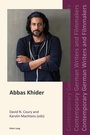
Abbas Khider
Description

Abbas Khider (b. 1973) has established himself as one of the leading literary voices of refugees and marginalised communities in Germany today. Born in Baghdad, Iraq, Khider was at a young age a vocal critic of Saddam Hussein's regime, during which he was jailed and tortured before fleeing the country. As a refugee, he crossed many countries before arriving in Germany, where he was eventually granted asylum. His own life experiences have served as a departure point for his novels, which similarly explore the refugee experience and the challenges that migrants to Europe face. This volume represents the first collection of essays devoted to Khider's works to date. The contributions analyse his narrative works and probe important questions relating to political, cultural, and linguistic identity in Germany today. While his works explore what it means to be an immigrant, they do so with a wry sense of humour and an insight into the human condition that also reflect on the political situation in Germany today. His award-winning novels, including Der falsche Inder (2008, The Village Indian, 2013) and Ohrfeige (2016, A Slap in the Face, 2019), which have been translated into English, are discussed in detail. Additionally, an original interview with the author offers insight into his writing process and influences.
More details
Other editions
Additional editions
Persons
David N. Coury is Frankenthal Professor of the Humanities, German, and Global Studies at the University of Wisconsin-Green Bay.
Karolin Machtans is Associate Professor of German Studies at Connecticut College.
Content
Contents: Karolin Machtans, Trans. David N. Coury: Interview with Abbas Khider - Katherine Anderson: Productive Ruptures: Trauma as Both a Disruptive and Generative Force in Abbas Khider's Der falsche Inder and Die Orangen des Präsidenten - Markus Hallensleben: Portraying the Refugee as a Transitional Figure of Plurality: The Performance of Gender and Ethnicity in the Postmigrant Narratives of Abbas Khider's Der falsche Inder and Ohrfeige - Warda El-Kaddouri: Islam and the Image of God in Abbas Khider's Der falsche Inder and Ohrfeige - Carolin Müller: The Transience of Prisoners' Memoirs in Abbas Khider's Die Orangen des Präsidenten - Sabine Zimmermann: Refuge and Refuse: Waste Imagery in Abbas Khider's Die Orangen des Präsidenten and Ohrfeige - Jara Schmidt: «[W] enn die anderen rausbekämen, dass ich eine Mannfrau bin»: Grotesque Physicality and Carnivalesque Subversions in Abbas Khider's Ohrfeige - Beate Baumann and Corinne Puglisi: «German Is My New Tongue»: The Role of (Foreign) Language in the Construction of Identity - Karolin Machtans: Multilingual Aesthetics in Abbas Khider's Deutsch für alle: Das endgültige Lehrbuch.
