

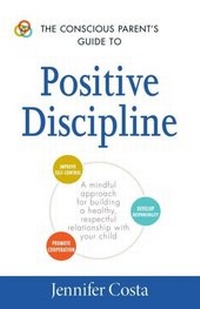
The Conscious Parent's Guide to Positive Discipline
A Mindful Approach for Building a Healthy, Respectful Relationship with Your Child
1st Edition
Published on 1. January 2016
240 pages
978-1-4405-9436-6 (ISBN)
Description

Help your child learn self-discipline, cooperation, and responsibility!
When a child misbehaves, the situation can quickly escalate into an uphill battle of yelling, tears, and resistance--on both sides. But what if you could avoid all that? Conscious parenting is about being present with your child and taking the time to understand the reasons and motivations behind behaviors. This relationship-centered approached means that you respect your child's point of view as you both learn how to create a mutually-beneficially set of behavioral rules. By practicing this mindful method, you can support your child emotionally and help nurture important social development.
Parent coach Jennifer Costa teaches you how to:
When a child misbehaves, the situation can quickly escalate into an uphill battle of yelling, tears, and resistance--on both sides. But what if you could avoid all that? Conscious parenting is about being present with your child and taking the time to understand the reasons and motivations behind behaviors. This relationship-centered approached means that you respect your child's point of view as you both learn how to create a mutually-beneficially set of behavioral rules. By practicing this mindful method, you can support your child emotionally and help nurture important social development.
Parent coach Jennifer Costa teaches you how to:
- Communicate openly with your child about proper behavior
- Build a supportive home environment
- Determine your child's behavioral triggers
- Learn strategies that will help your child feel calm
- Teach your child long-term coping skills
- Discipline your child without embracing anger
More details
Other editions
Additional editions
Jennifer Costa
The Conscious Parent's Guide to Positive Discipline
A Mindful Approach for Building a Healthy, Respectful Relationship with Your Child
Book
02/2016
Adams Media Corporation
€14.50
No shipping information available
Person
Jennifer Costa is a behavioral specialist, social worker, and author. As a parent coach and mentor, she develops positive behavioral interventions and support materials for her clients, and has taught positive discipline courses, conscious parenting practices, and behavioral support curriculum for schools and non-profits. Jennifer is a contributing author for several regional parenting magazines, and as a mother of two, is an active proponent of positive parenting practices. She lives in Vero Beach, FL.
Content
- Intro
- Title Page
- Copyright Page
- Introduction
- Chapter 1: Conscious Parenting
- The Benefits of Conscious Parenting
- Giving Your Child Your Full Attention
- Understanding Behavior
- Important Points to Consider
- Chapter 2: The Basics of Discipline
- Conscious versus Unconscious Discipline
- How Discipline Affects Your Relationship
- Classical Conditioning in a Nutshell
- Understanding Instruction
- Principles of Positive Correction
- Behavior Snapshot
- Important Points to Consider
- Chapter 3: Meeting the Challenges of Discipline
- Your Attitude Matters
- Guidance for the Future
- Risking Resentment
- Keeping Priorities in Order
- Behavior Snapshot
- Important Points to Consider
- Chapter 4: Understanding the Limits of Parental Control
- Placing Parental Influence in Perspective
- Recognizing the Extent of Parental Responsibility
- To Change Your Child, Change Yourself
- Handling Attention Problems
- Discipline Through Medication
- Behavior Snapshot
- Important Points to Consider
- Chapter 5: The Principle of Consent
- Consciously Working for Consent
- Compromising to Get Consent
- Handling Frustration
- Dealing with Anger Through Mindfulness
- The Power of Choice
- Internal Locus of Control
- Behavior Snapshot
- Important Points to Consider
- Chapter 6: Communicating with Courtesy
- Dignity of Personhood
- The Power of Discourtesy
- Teaching Your Child to Apologize
- Modeling Forgiveness to Let Go of Hurt
- Communicating the Wrong Message
- Adjusting for Growth Cycles
- Behavior Snapshot
- Important Points to Consider
- Chapter 7: Consciously Dealing with Differences
- Recognizing and Respecting Different Personalities
- Two Parents, Two Views
- Balancing Acceptance and Demands
- Different Genders
- Learning Styles
- The Danger of "Good" and "Bad"
- Behavior Snapshot
- Important Points to Consider
- Chapter 8: Mindful Parental Authority
- Modeling Behavior for Your Child
- Being Deliberate in Your Choices
- Talking the Talk and Walking the Walk (Being a Mentor)
- Ways You Communicate Authority
- Behavior Snapshot
- Important Points to Consider
- Chapter 9: Raising Responsible Children
- Two Elements
- Teaching Responsible Behavior
- A Model for Teaching Responsible Behavior
- Teaching Responsibility
- Teaching Two-Step Thinking
- The Choice/Consequence Connection
- Casting Off Responsibility
- Counting and Earning Systems
- Behavior Snapshot
- Important Points to Consider
- Chapter 10: Guidance: The First Factor
- The Power of Persuasion
- Partnering with Your Child
- Giving Constructive Feedback about Performance
- Sharing about Yourself
- Behavior Snapshot
- Important Points to Consider
- Chapter 11: Supervision: The Second Factor
- Good Parents Never Give Up
- The Power of Pursuit
- Be Relentless, but Not Emotional
- Surveillance
- Balancing Time Alone
- The Messy Room
- Resisting Schoolwork
- The Power of Supervision
- Behavior Snapshot
- Important Points to Consider
- Chapter 12: Punishment: The Third Factor
- Violence Teaches Violence
- Good Parents Never Back Off
- The Power of Enforcement
- The Limits of Punishment
- External and Natural Consequences
- Isolation As Punishment
- Deprivation As Punishment
- Reparation As Punishment
- The Negative Attention Trap
- Behavior Snapshot
- Important Points to Consider
- Chapter 13: Exchange Points: The Fourth Factor
- Good Parents Get As Well As Give
- The Power of Mutuality
- Predictable Behaviors in Parents
- Taking Back the Initiative
- Being Part of the Family
- Behavior Snapshot
- Important Points to Consider
- Chapter 14: Discipline Changes with Age
- Early Childhood (Up to Age Three)
- Late Childhood (Ages Four to Eight)
- Transition Into Adolescence (Ages Nine to Ten)
- Early and Midadolescence (Ages Nine to Fifteen)
- Late Adolescence (Ages Fifteen to Eighteen)
- Trial Independence (Ages Eighteen to Twenty-Three)
- Once a Parent, Always a Parent
- Behavior Snapshot
- Important Points to Consider
- Chapter 15: Disciplining the Teenager
- Parenting the Teenager
- The Problem of Hurry-Up Growth
- Readjusting Expectations
- The Four Stages of Adolescence
- Substance Abuse and Informing Your Child
- The Freedom Contract
- Behavior Snapshot
- Important Points to Consider
- Chapter 16: Constructive Conflict
- Why Conflict Is Necessary
- The Nature of Conflict
- The Dance of Conflict
- Tactics to Avoid
- Rules for Family Conflict
- Behavior Snapshot
- Important Points to Consider
- Chapter 17: Early Adolescence (Ages Nine to Thirteen)
- Signs of Early Adolescence
- Understanding Insecurity and Low Self-Esteem
- Separation from Childhood
- The Negative Attitude
- Recognizing Rebellion
- Early Experimentation
- Behavior Snapshot
- Important Points to Consider
- Chapter 18: Midadolescence (Ages Thirteen to Fifteen)
- Your Adolescent's Worldview
- Relationship Strains and Maintaining a Positive Perspective
- Connecting Through the Shell of Self-Centeredness
- Modeling Responsibility When Your Child Avoids It
- The Battle Against Authority
- Communicating with Your Teen
- The Power of Peers
- Adolescent Lies
- Behavior Snapshot
- Important Points to Consider
- Chapter 19: Late Adolescence (Ages Fifteen to Eighteen) and Beyond
- The Learning Curve of High School
- Driving a Car
- Holding a Part-Time Job
- The Teen Social Scene
- The Culture of Sex
- Sexual Gaming
- Romantic Relationships
- What to Say about Having Sex
- Preparing for Independence
- Trial Independence (Ages Eighteen to Twenty-Three)
- Behavior Snapshot
- Important Points to Consider
- Appendix A: Helpful Websites
- Appendix B: Additional Resources
